
LinkedIn Directory: Find People & Companies (Plus CSV Exports)
(updated)
A LinkedIn profile can appear in Google even when the directory won't open. I tested the directory, found an accessible regional page, and turned its profile links into a CSV.
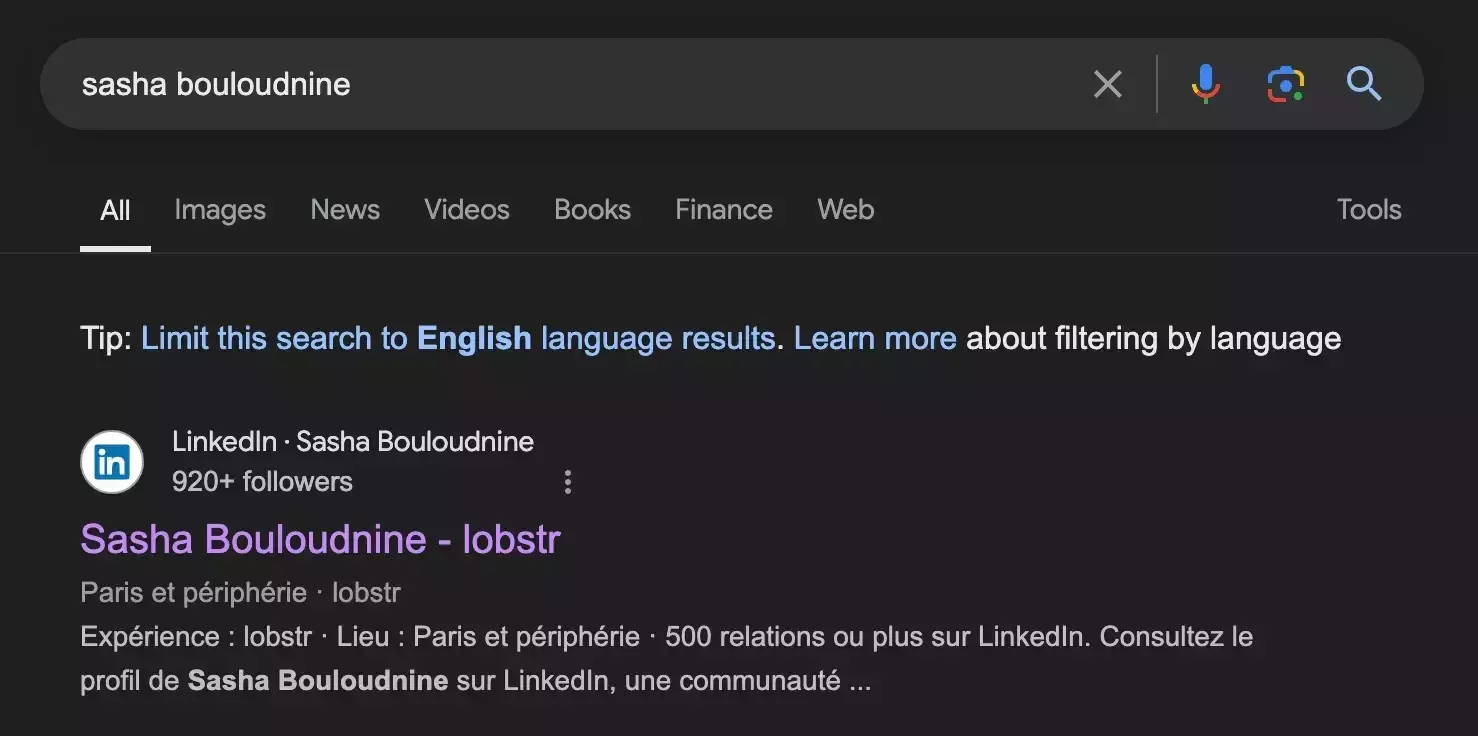
Here's what worked, what failed, and which URLs to use when you want people or companies rather than an error page:
- what the LinkedIn directory is, and where it actually lives;
- what our September 2026 access tests actually showed;
- how to find profiles and export people or company search results.
What is the LinkedIn directory?
The LinkedIn directory is a set of public pages that list members in plain A-to-Z order.
The page I extracted contained names and links, not contact records. Profile details and email enrichment are separate steps.
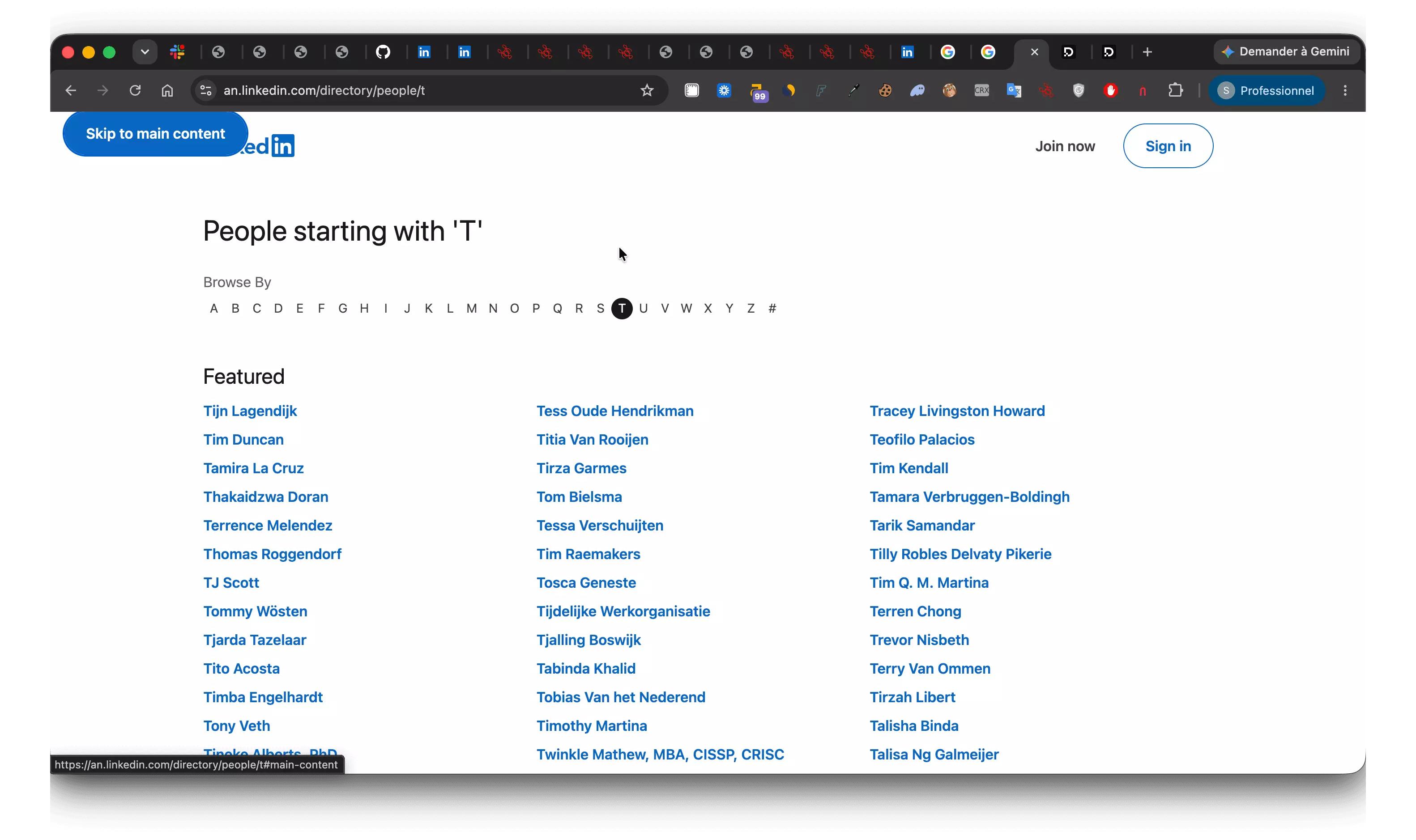
Think of it as a phone book without the phone numbers. Useful for discovering names; less useful for finding a Berlin sales director.
Its links can also help search engines discover profiles. But a directory page, a public profile, and a Google result are different things.
An alphabetical directory is not a downloadable member database. Public visibility, indexing, and live access each have their own limits. Finding a URL doesn't guarantee you can open the page or retrieve every field.
Start by recognizing which kind of URL you have.
Inside the directory: the real URL structure
/directory/. These are the people-directory addresses to recognize, not a promise that each will load:The root opens the index; letter paths select a starting letter:
https://www.linkedin.com/directory/people
https://www.linkedin.com/directory/people/a
https://www.linkedin.com/directory/people/bf
You may also encounter the legacy name-directory pattern in search results:
https://www.linkedin.com/pub/dir/+/+f
/pub/dir/John/Smith redirected straight to the people search results, with the name applied as exact-match filters:https://www.linkedin.com/search/results/people/?origin=SEO_PSERP&firstName=%22John%22&lastName=%22Smith%22f
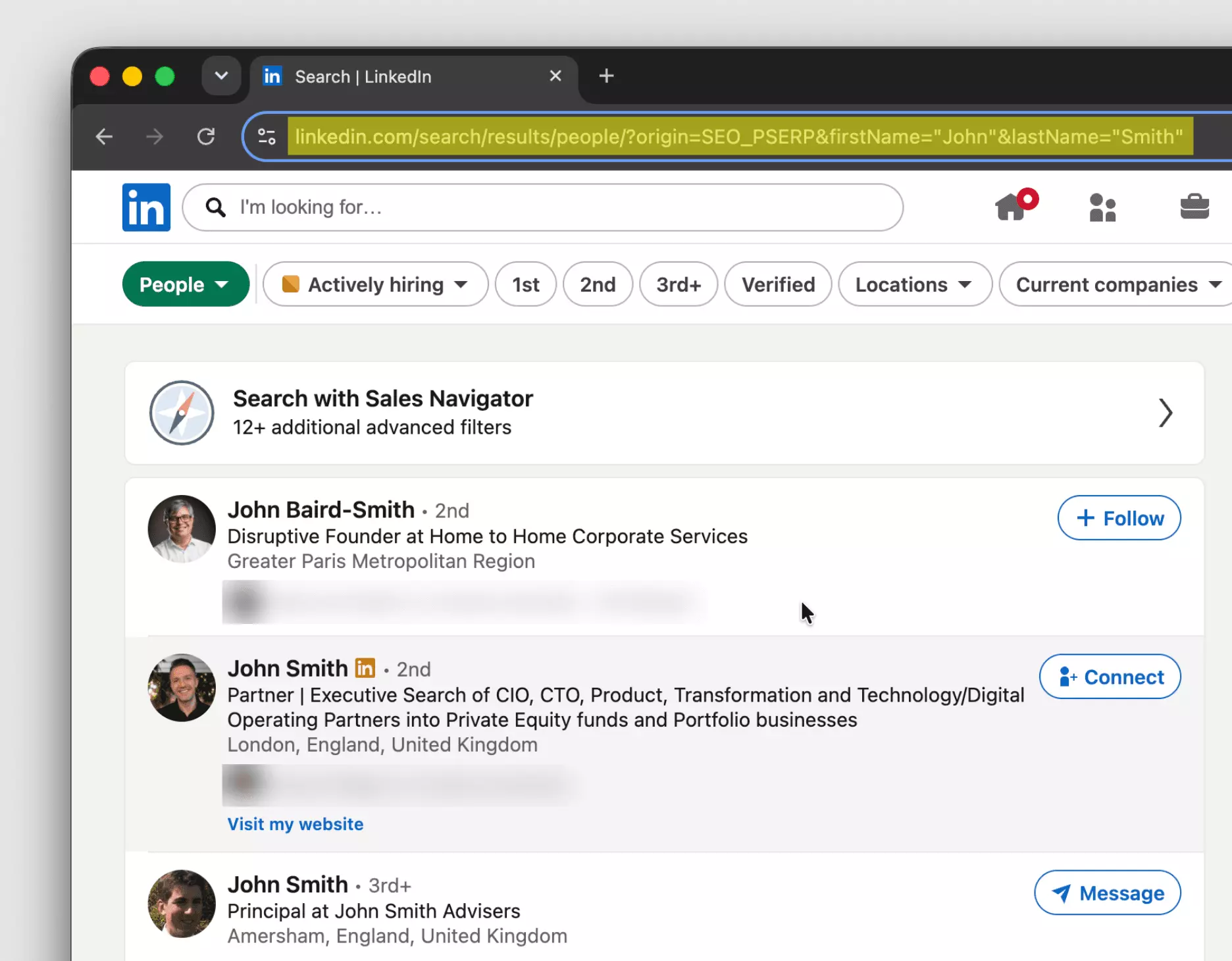
origin=SEO_PSERP parameter — likely "SEO people SERP" — suggests the redirect targets visitors landing from search engines.People are only one branch. Here are the main directory URLs:
| Directory | Path on linkedin.com |
|---|---|
| People | /directory/people |
| Companies | /directory/companies |
| Jobs | /directory/jobs |
| Posts | /directory/posts |
| Products | /directory/products |
| Featured content | /directory/featured |
fr.linkedin.com for France and in.linkedin.com for India.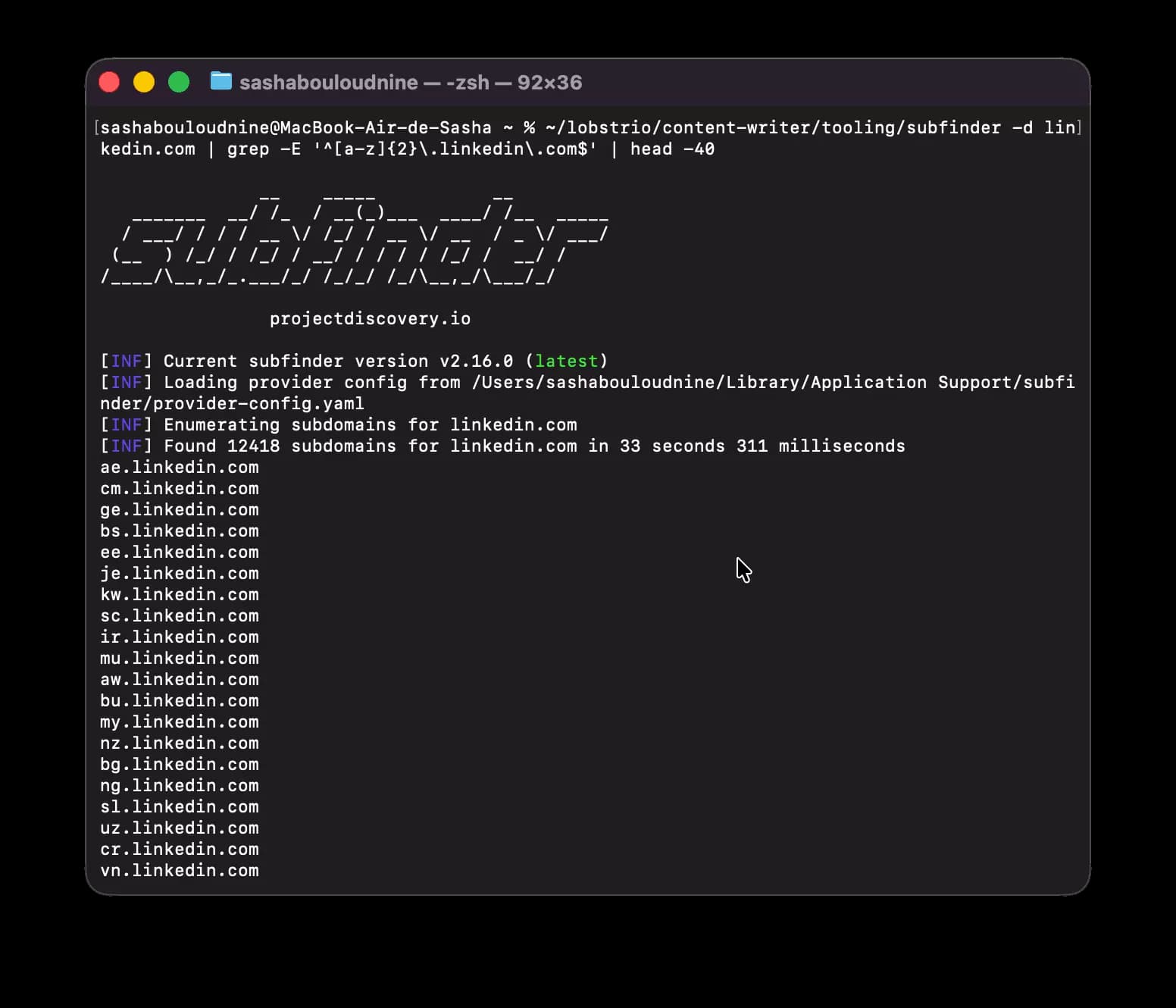
The result: 248 LinkedIn subdomains matching country and territory codes.
But do their directory pages still open? We tested that next.
Does the LinkedIn directory still work in 2026?
On September 10, 2026, the main people directory returned an error in our browser test.
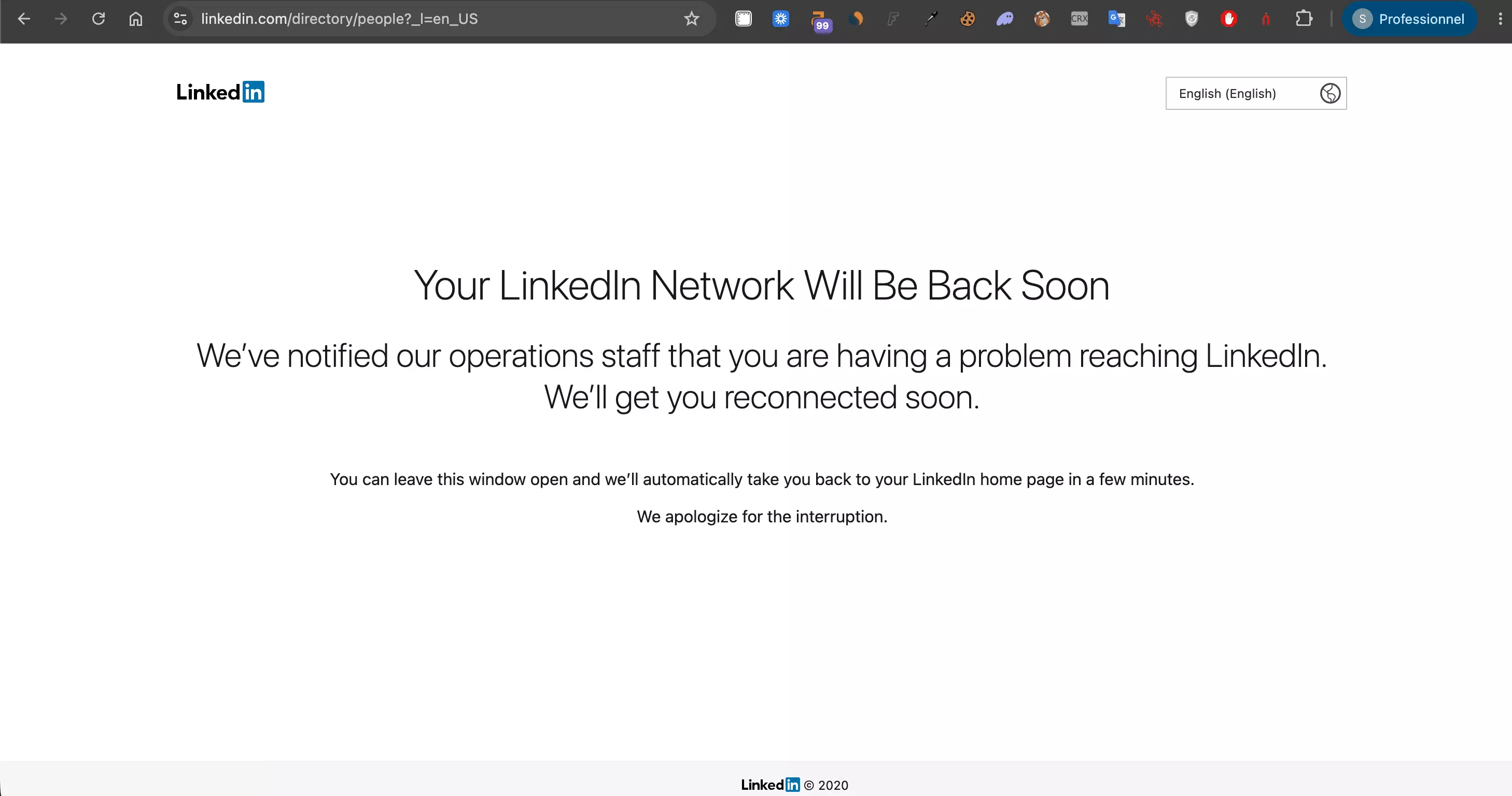
"Your LinkedIn Network Will Be Back Soon." That's the screen I saw in a normal browser window.
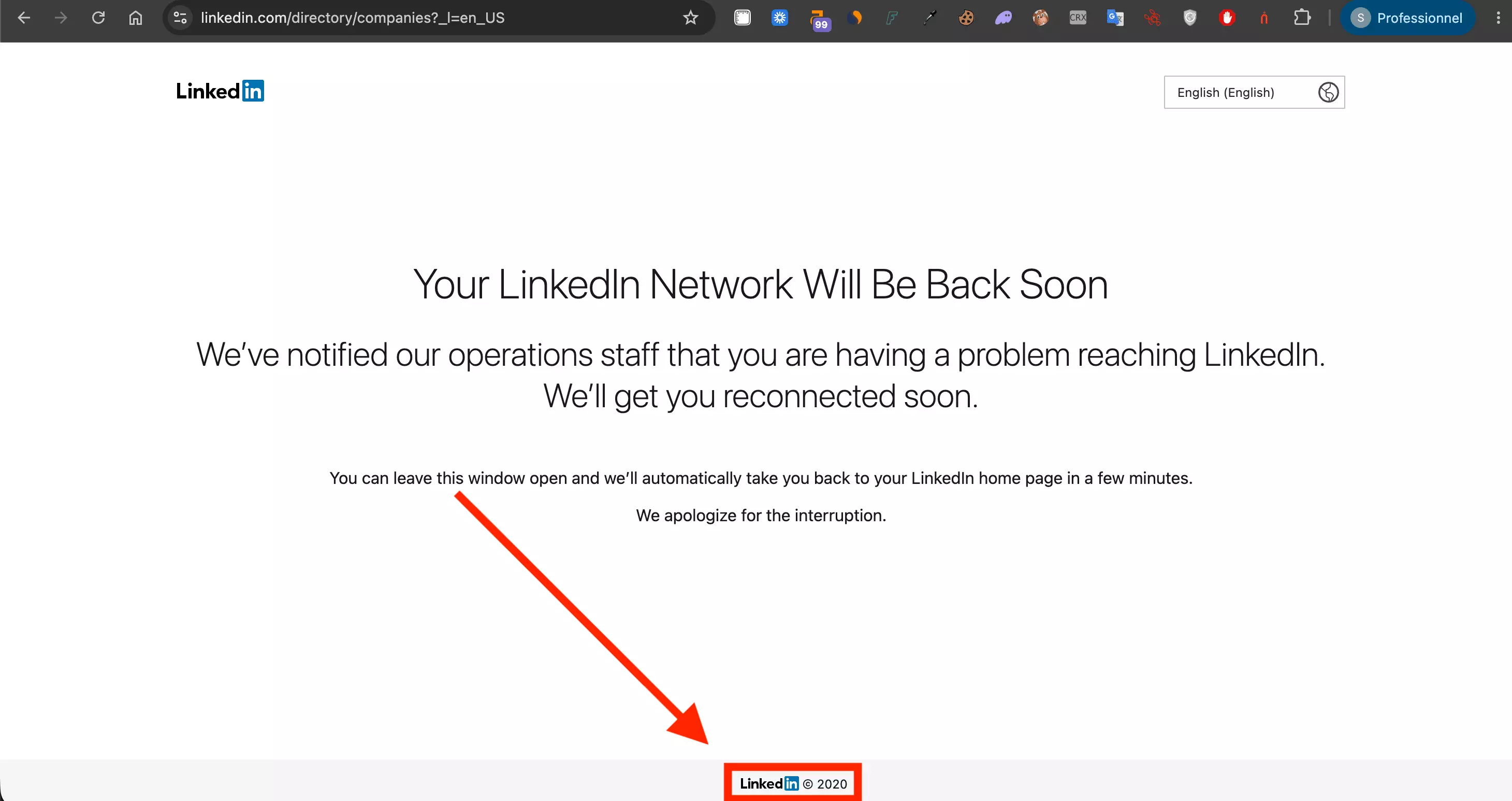
The companies directory showed the same message. The footer says 2020, but that doesn't tell us when the directory changed.
Our automated requests also failed, returning HTTP 999. Here's the people-directory response:
$ curl -sI https://www.linkedin.com/directory/people
HTTP/2 999f
The browser error alone doesn't identify its cause, either. A screenshot cannot establish whether LinkedIn blocked a session or retired an endpoint.
an.linkedin.com/directory/people/t loaded a directory page in our test, with "Join now" and "Sign in" visible.Main directory — Error in our September 10 test
Regional directory — Loaded in our September 10 test
That contrast establishes partial access during testing, not a reliable country-by-country availability map. Results varied with request conditions.
Indexed doesn't mean accessible. Google can retain a URL while a direct visit fails. Our tests don't establish a shutdown date, and a regional page that worked for us may fail for you.
If the directory won't open, start with search instead.
Find public profiles without logging in
site: operator narrows results to LinkedIn profile URLs:site:linkedin.com/in/ "recruiter" "curacao"f
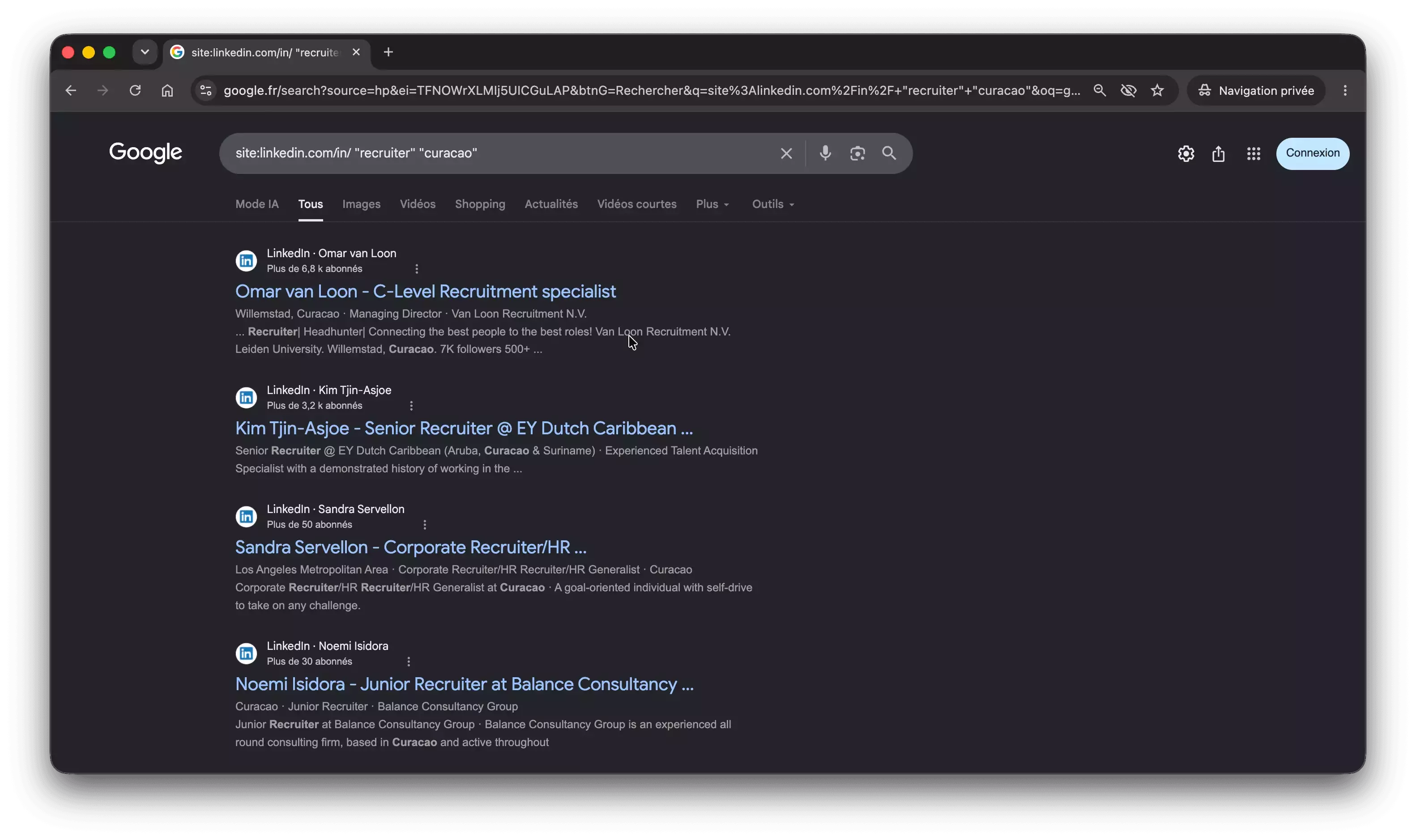
Recruiters call this X-ray search. It searches what Google indexed, not necessarily the full or current LinkedIn profile.
intitle: forces a word into the page title, and a minus sign drops the noise:site:linkedin.com/in/ intitle:"head of sales" "berlin" -jobsf
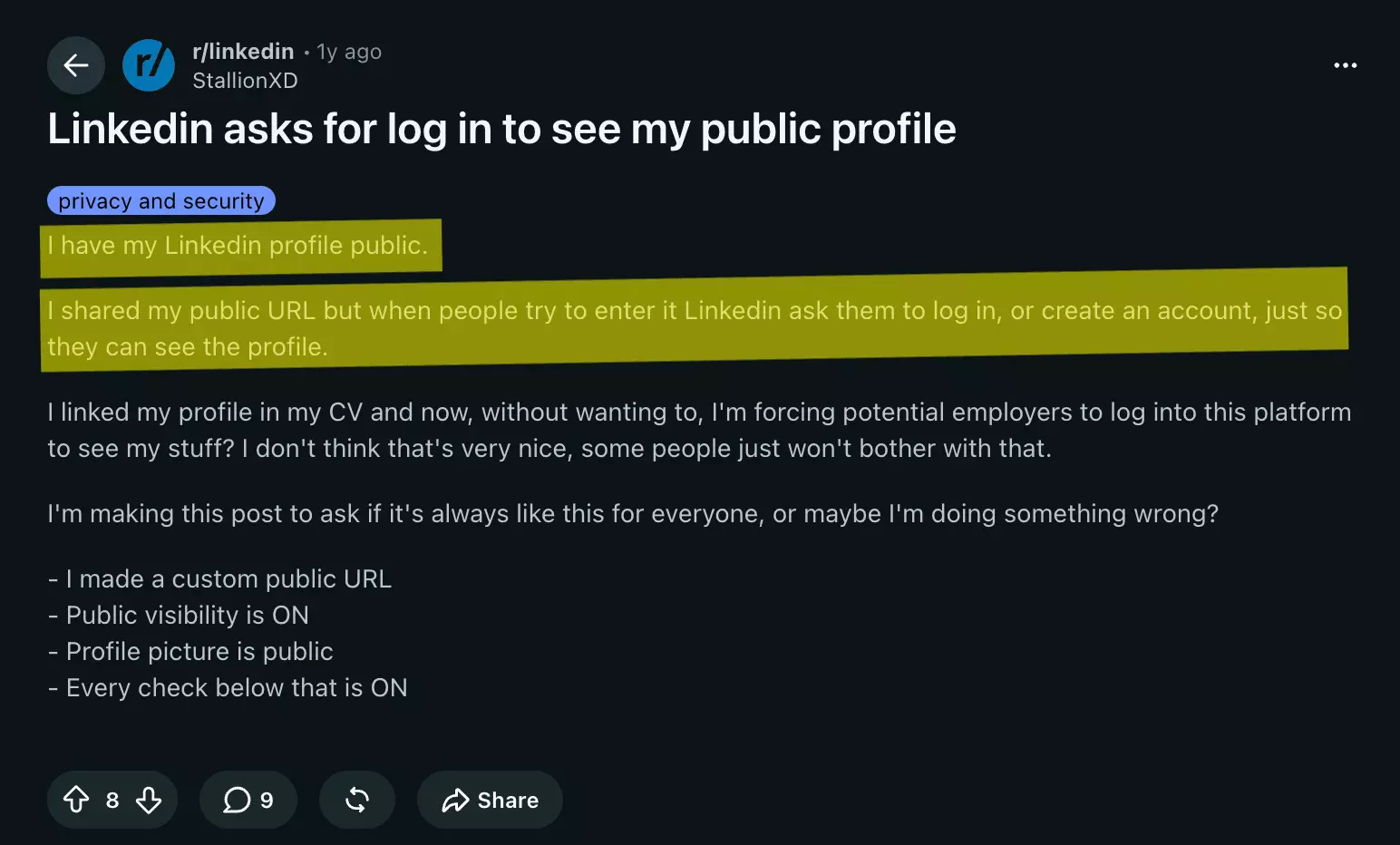
Clicking a result may open a public preview, a login prompt, or an error. Google isn't a guaranteed way around LinkedIn's access restrictions.
Need structured filters instead of keyword matches? Use LinkedIn's own search.
Search the directory: LinkedIn People Search
Once you are logged in, the raw directory is the wrong tool anyway.
https://www.linkedin.com/search/results/people/f
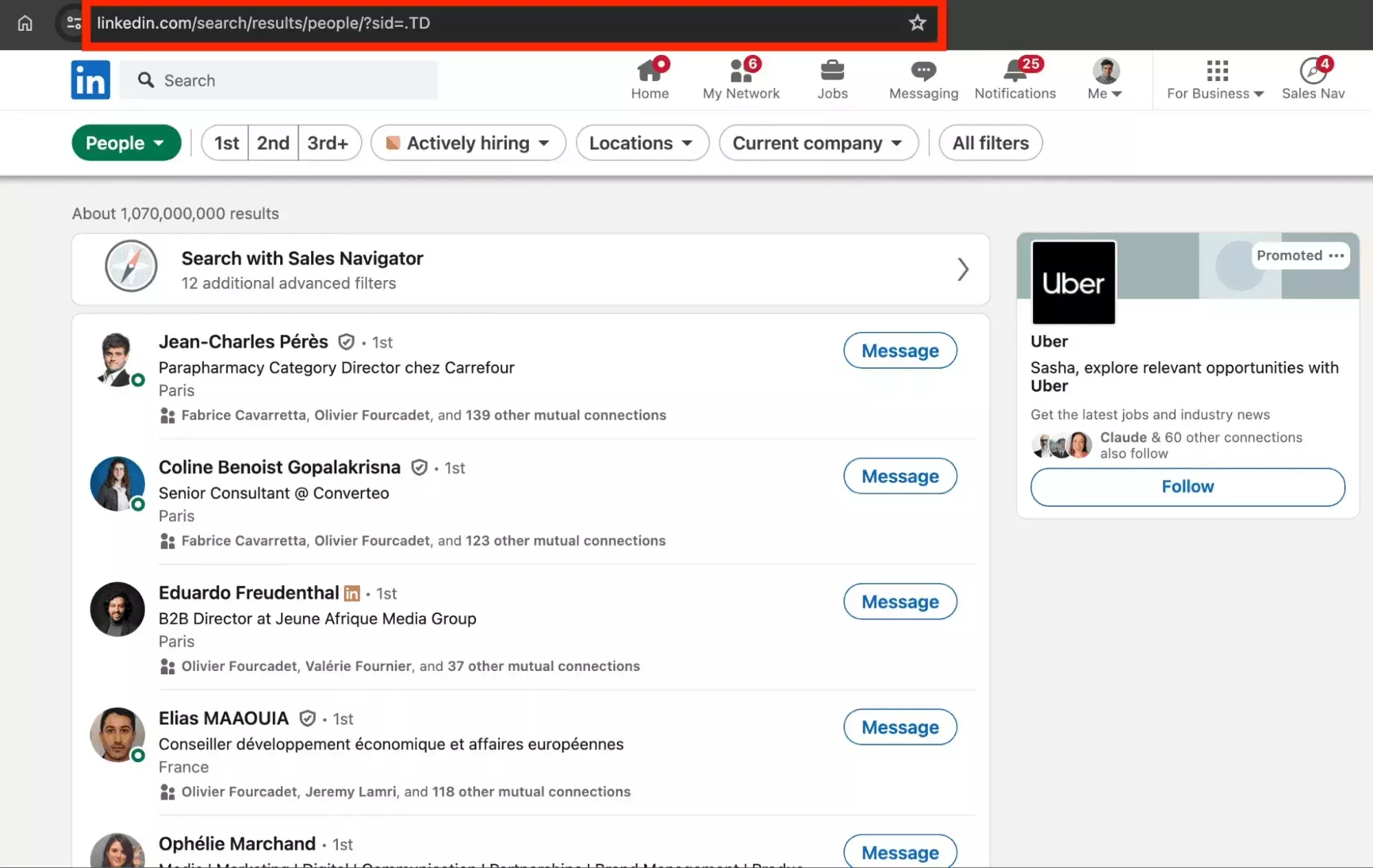
Where the directory only sorts by letter, People Search filters.
All filters to narrow the search. Available options include companies, locations, and connection degrees; the interface varies by account.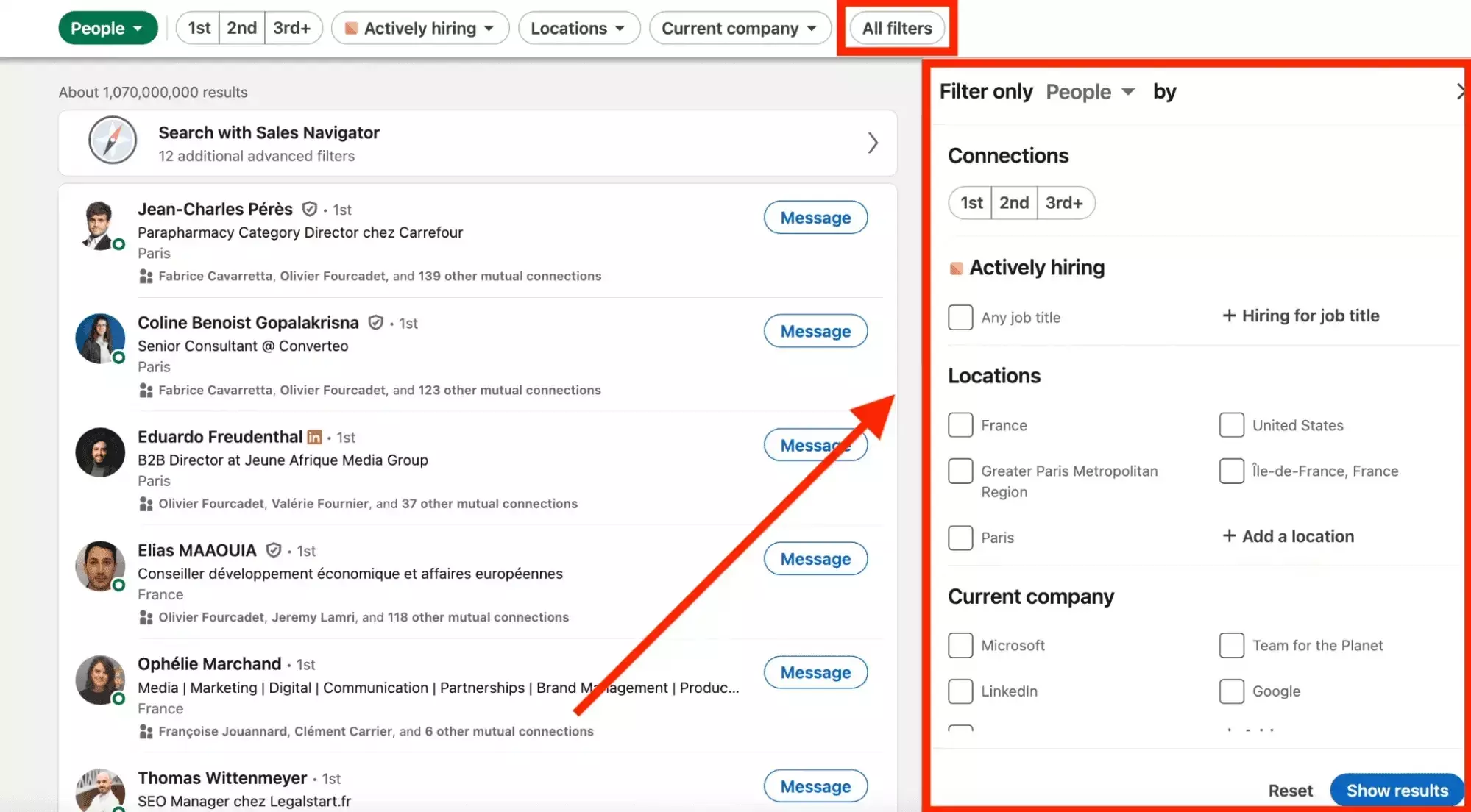
"amazon" AND ("yale" OR "mit") AND NOT "harvard"f
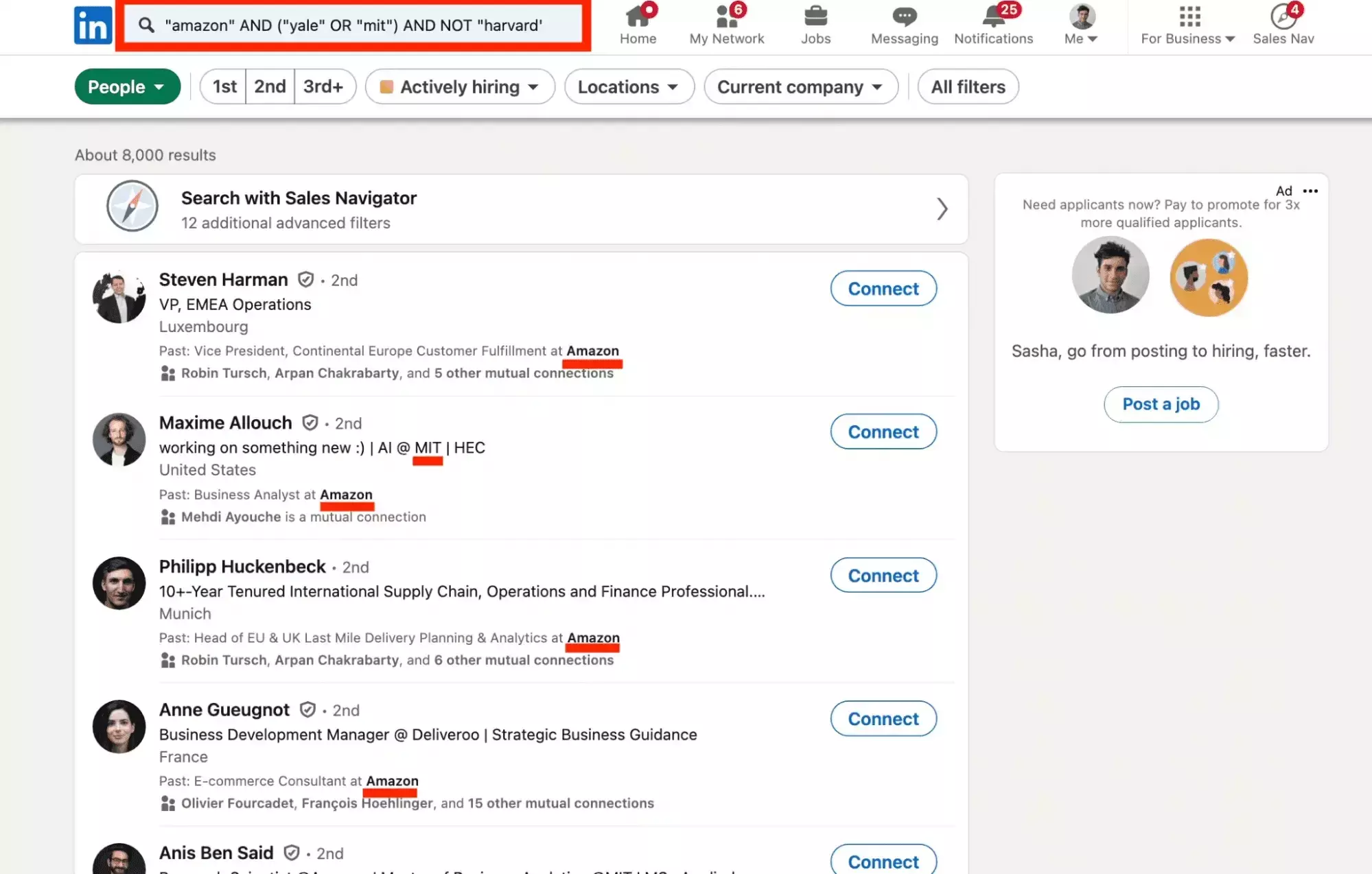
These are keyword matches. Use company and school filters when you need employment or education criteria, not just those words somewhere in a profile.
Browse, Google, or search — all three still leave you clicking one profile at a time. The job most people actually have is turning the directory into a file.
Export directory profiles to CSV: our test
The directory page had no CSV download. So I made one.
an.linkedin.com/directory/people/t, we extracted 492 name-and-profile-URL rows into a CSV. That is the captured page's output, not a country-wide total.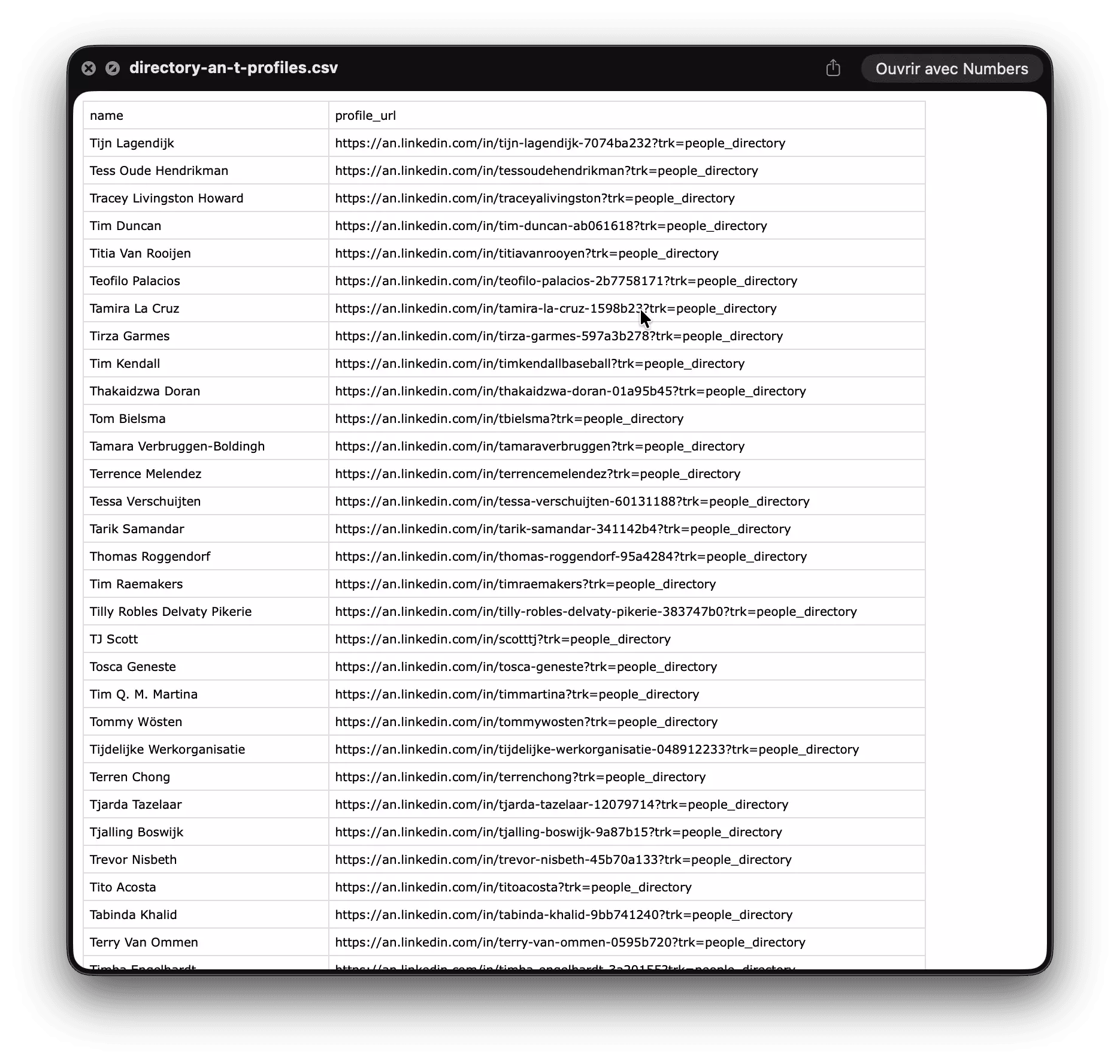
Next, choose a small batch of profile URLs. There is no reason to enrich the entire list before checking relevance.
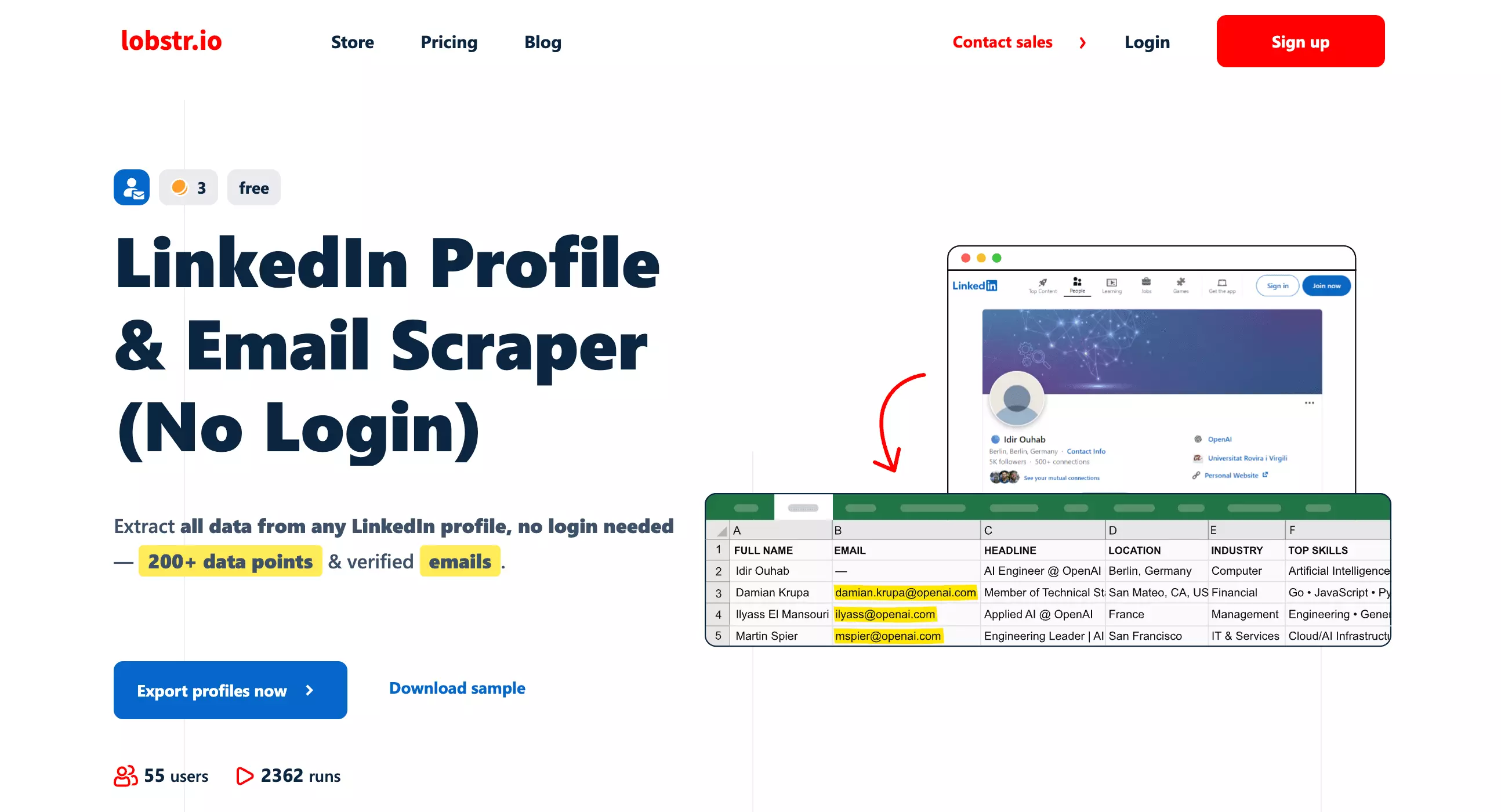
I ran 10 of those directory profiles through it.
The run returned nine records. Three had an email with status "valid"; six had no email value.
| Measured step | Result |
|---|---|
| Directory rows extracted | 492 names and profile URLs |
| Profile URLs submitted | 10 |
| Output records | 9 |
| Emails marked valid | 3 |
Here is the actual export behind those counts. The table above summarizes it without the technical ID columns.
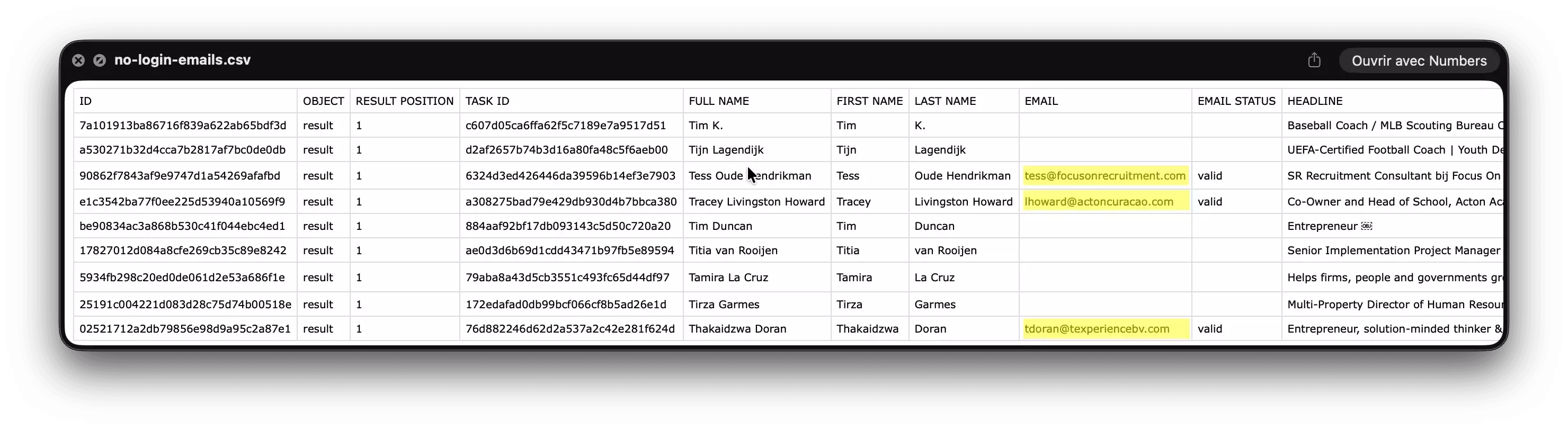
That status is the tool's validation result. It doesn't establish that the address was publicly displayed on LinkedIn or guarantee delivery.
No code needed — paste URLs, launch, download the CSV.
pip install --upgrade lobstrio
lobstr config set-token YOUR_API_TOKEN
lobstr go linkedin-profile-email-scraper-no-login \
  "https://www.linkedin.com/in/some-profile/" \
  -k linkedin_url -p max_unique_results_per_run=1 -o downloads.csvf
downloads.csv.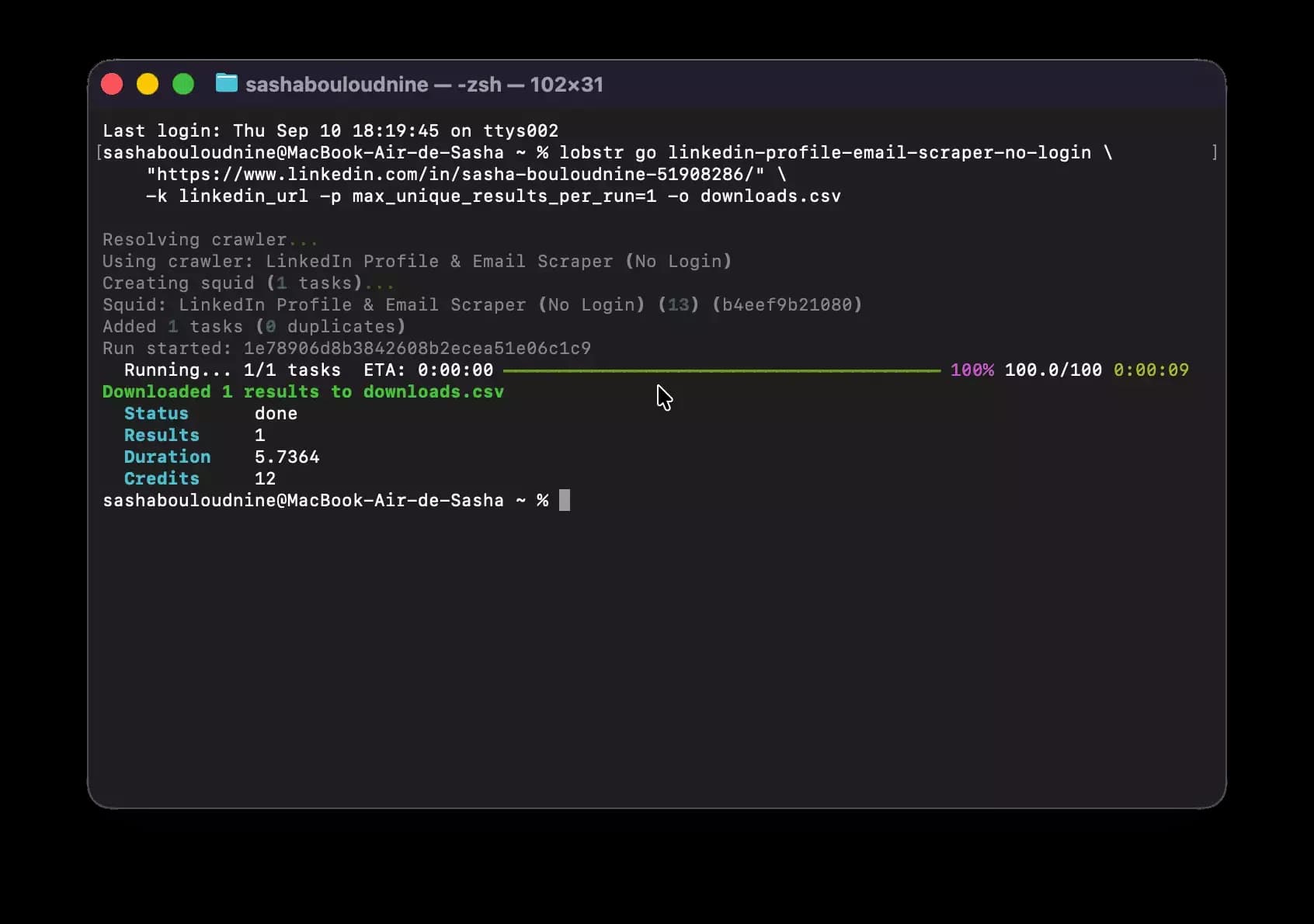
For Claude Code, the setup command is:
claude mcp add --transport http lobstr https://mcp.lobstr.io/mcpf
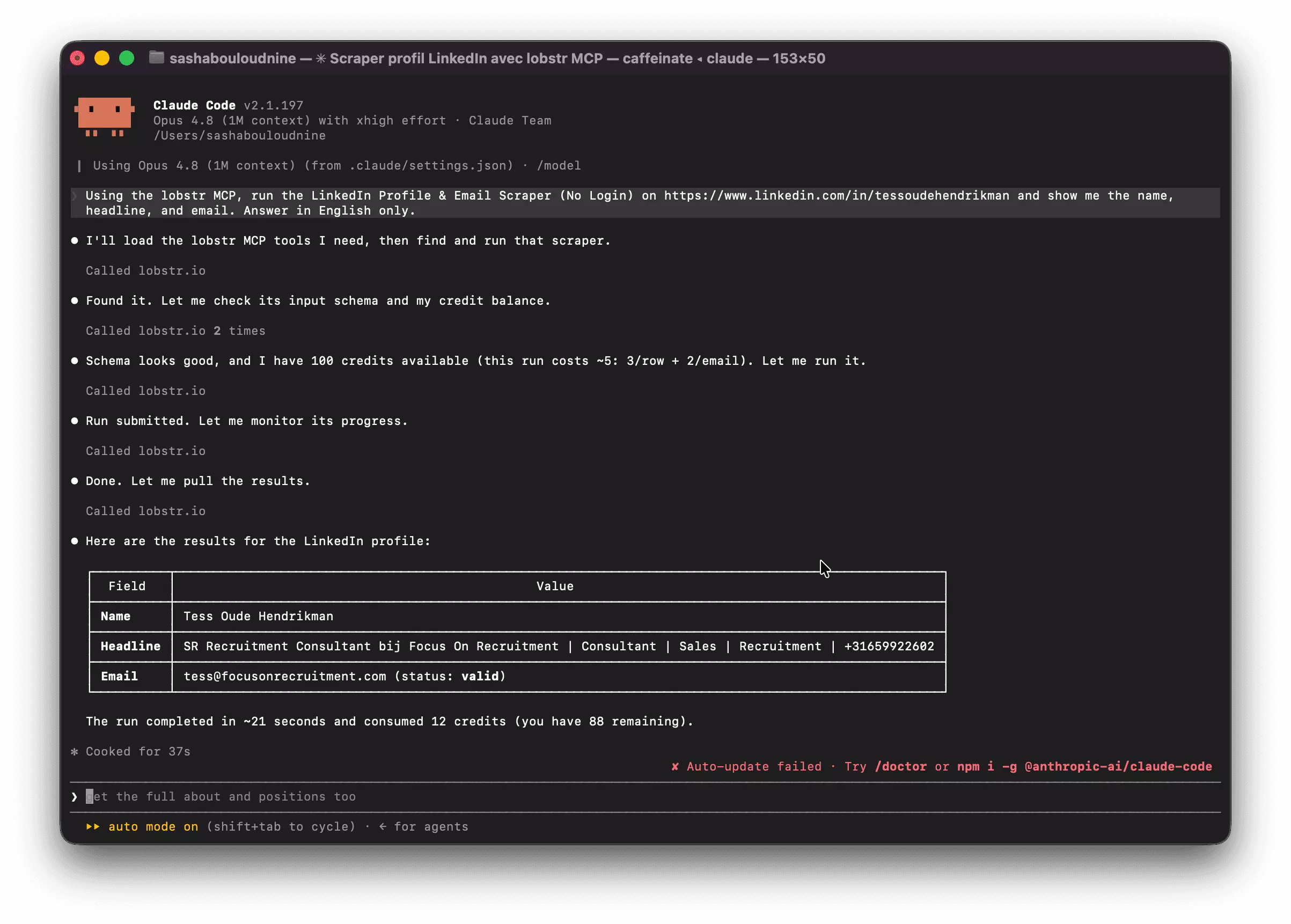
Ask the agent to inspect inputs, submit your selected URLs, monitor the run, and retrieve results. Runs consume credits; check scope before confirming.
CLI and MCP are alternative controls for the workflow, not separate data sources. Neither turns missing fields into guaranteed results.
Export people & companies from search results
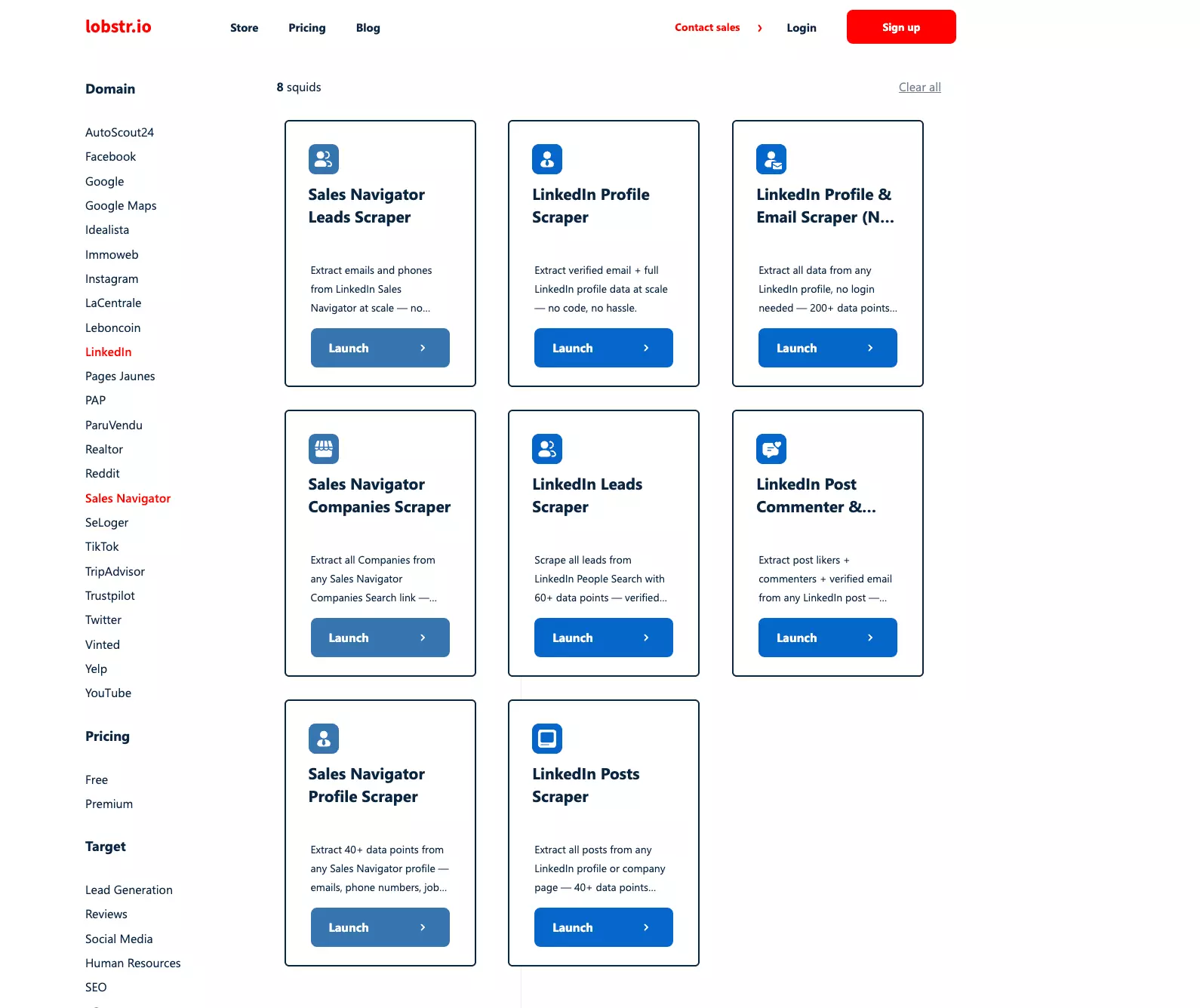
Already know your target audience? Skip alphabetical browsing. Build a filtered search, then give its URL to the matching scraper.
| You have | Use | LinkedIn access needed |
|---|---|---|
People Search URL: /search/results/people/ | LinkedIn Leads Scraper | Connected LinkedIn account |
Sales Navigator lead-search URL: /sales/search/people | Sales Navigator Leads Scraper | Connected Sales Navigator account |
Sales Navigator account-search URL: /sales/search/company | Sales Navigator Companies Scraper | Connected Sales Navigator account |
Connect your account, paste your search URL into the matching scraper, launch, and download the CSV.
FAQ
Is the LinkedIn people directory still available in 2026?
Partly. Our September 10 tests found errors on the main people and company directories, but an accessible regional people page. That's an observation, not a guarantee of access from your browser.
What is the LinkedIn directory URL?
https://www.linkedin.com/directory/people/directory/companies. These identify the directory endpoints; they may return errors. Individual profiles generally use /in/, not /directory/.Can I browse the LinkedIn directory without an account?
Sometimes. Our regional page loaded logged out. You can also search Google without LinkedIn credentials, but opening a result may require login. Neither method guarantees complete profile access.
How many profiles are in the LinkedIn directory?
Unknown. We haven't established a complete directory count. LinkedIn's total membership is not the number of accessible directory entries. Our captured letter page yielded 492 name-and-URL rows.
Is it legal to scrape the LinkedIn directory?
How do I export directory profiles to a CSV?
In stages. Extract profile URLs from an accessible page, then submit selected URLs to a profile scraper. For filtered prospect lists, use a search scraper instead. Email availability and populated fields vary.
What's the difference between the directory and LinkedIn search?
Sorting versus filtering. The directory offers alphabetical browsing. People Search provides an interactive interface with filters and Boolean operators. It requires a LinkedIn account and is subject to usage limits.
Can I export companies instead of people?
Yes. Sales Navigator Companies Scraper accepts account-search URLs and requires connected Sales Navigator access. Use a leads scraper for people. A company export doesn't automatically include its employees or their email addresses.
Final thoughts
The directory is worth understanding, but not depending on. Our test produced a real CSV from one accessible page, not a universal access method.
Use Google for discovery, LinkedIn search for filtering, and the scraper matching your input for export. Check the resulting data before using it.
site:linkedin.com/in/ "sasha bouloudnine"f