How to Scrape Google Search Results: Unlimited Keywords, No Code
(updated)
15-Second Summary
- This guide shows you how to scrape Google search results from unlimited keywords, no code, ranks and People Also Ask included
- Google has no public API for google.com results. The Custom Search JSON API is closed to new customers, gone January 1, 2027
- Building your own scraper is a nightmare, between JavaScript walls, CAPTCHAs and IP blocks
- lobstr.io does it without code, at about 250-350 results a minute on one Slot in my runs, from $2 down to $0.50 per 1,000 results
- You'll get the 5-step setup, search operators, city-level results and AI integrations
Ever tried plugging Google Search into your local LLM, your LLM API, your agent or your SEO app?
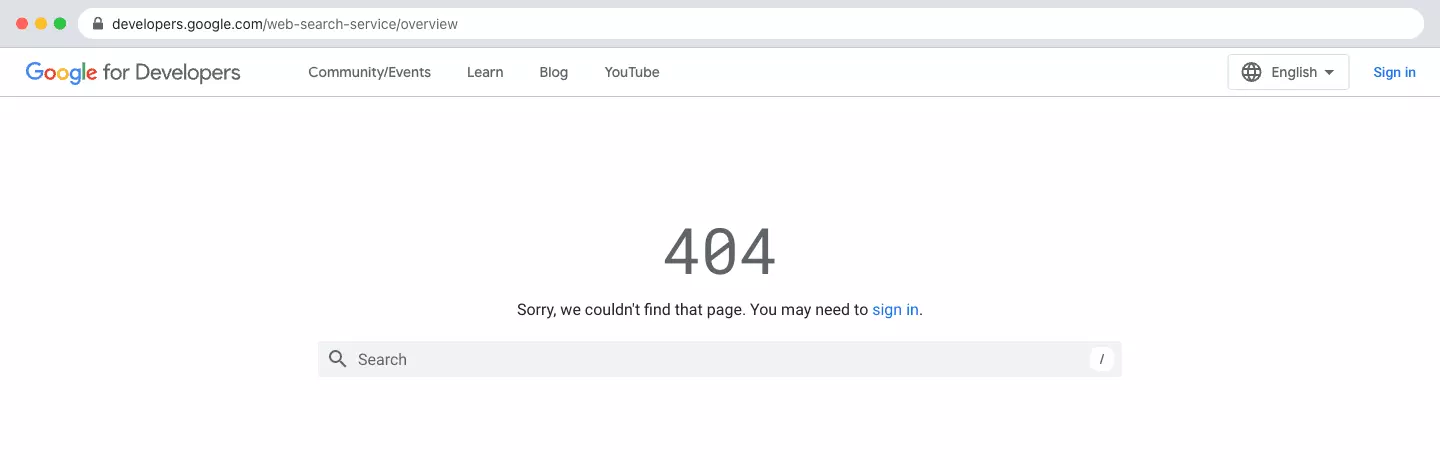
And Google isn't helping. It closed its own search API to new customers, then deleted the docs of its partner-only one.
The third-party scrapers and SERP APIs? Mostly super expensive and terribly slow.

Don't worry, I got you 😉 I'll show you how to collect all search results from unlimited queries, fast, at scale and affordably.
But wait, doesn't Google have an official API for this?
Does Google have an official search API?
I'll give it to you straight: No. Google gives the public no official API for google.com results.
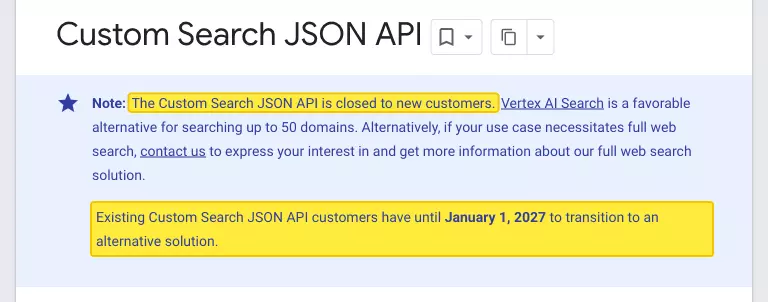
Even when it was open, it was a toy:
- 100 free queries a day, then $5 per 1,000, up to 10K a day
- 10 results per call, and never more than 100 per query
- Results from "a subset of the total Google Web Search corpus", with no real-time results
Google's suggested replacement, Vertex AI Search, covers up to 50 domains. That's site search, not google.com.
And that's exactly why you need a scraper.
But is it even legal to scrape Google search results?
Is it legal to scrape Google search results?
Disclaimer
This section is for general informational purposes only. It's based on publicly available sources and practical interpretation, not legal advice.
Laws vary by country and change over time. If compliance, contracts, or platform risk matter to you, talk to a qualified legal professional.
Does Google allow scraping?
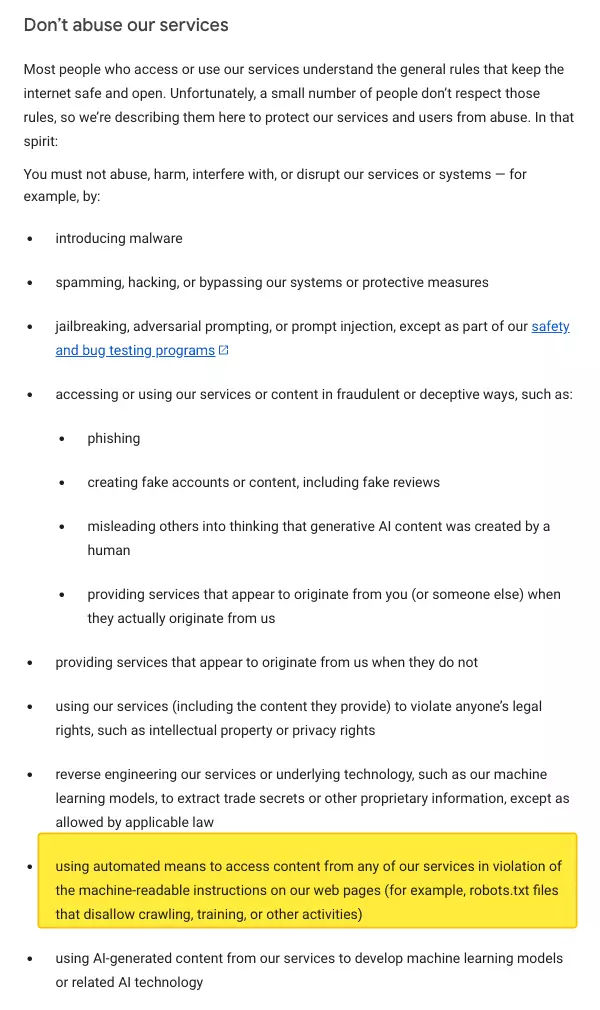
But does that make it illegal?
Is it actually legal?
Absolutely yes! It's generally legal. Google search results are public data anyone can see.
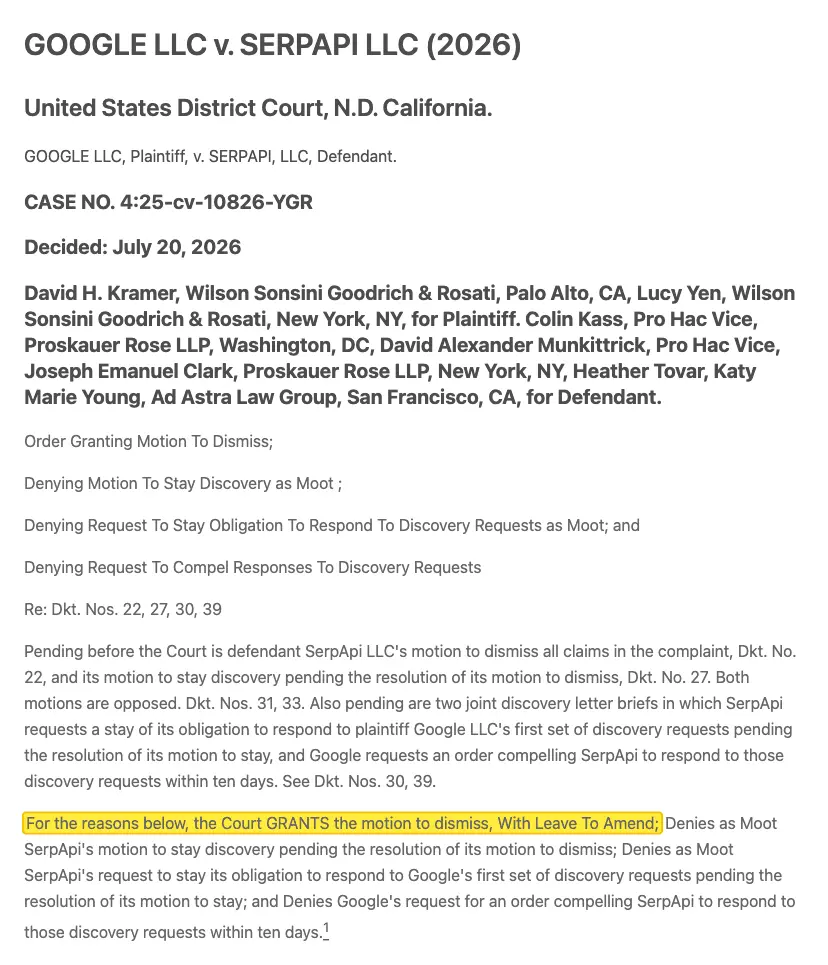
Google did sue SerpApi in December 2025 under the DMCA's anti-circumvention rules, for bypassing its SearchGuard system. SerpApi won round one.
Google got to amend only the copyrighted parts, like Knowledge Panel snippets, and its narrower complaint faces a second motion to dismiss, still pending.
But legal doesn't mean reckless. You still need to:
- Respect rate limits
- Comply with GDPR when results involve EU citizens
- Never republish scraped content as your own
- Use the data responsibly
But how do I actually scrape Google search results at scale?
2 ways to scrape Google search results
You've got two options: build your own scraper, or use a ready-made one.
Build your own scraper
This one's for the nerds. Push any real volume and Google hits you with CAPTCHAs and IP blocks, so now you're paying for proxies.
num=100 parameter, and the layout keeps changing under your parser.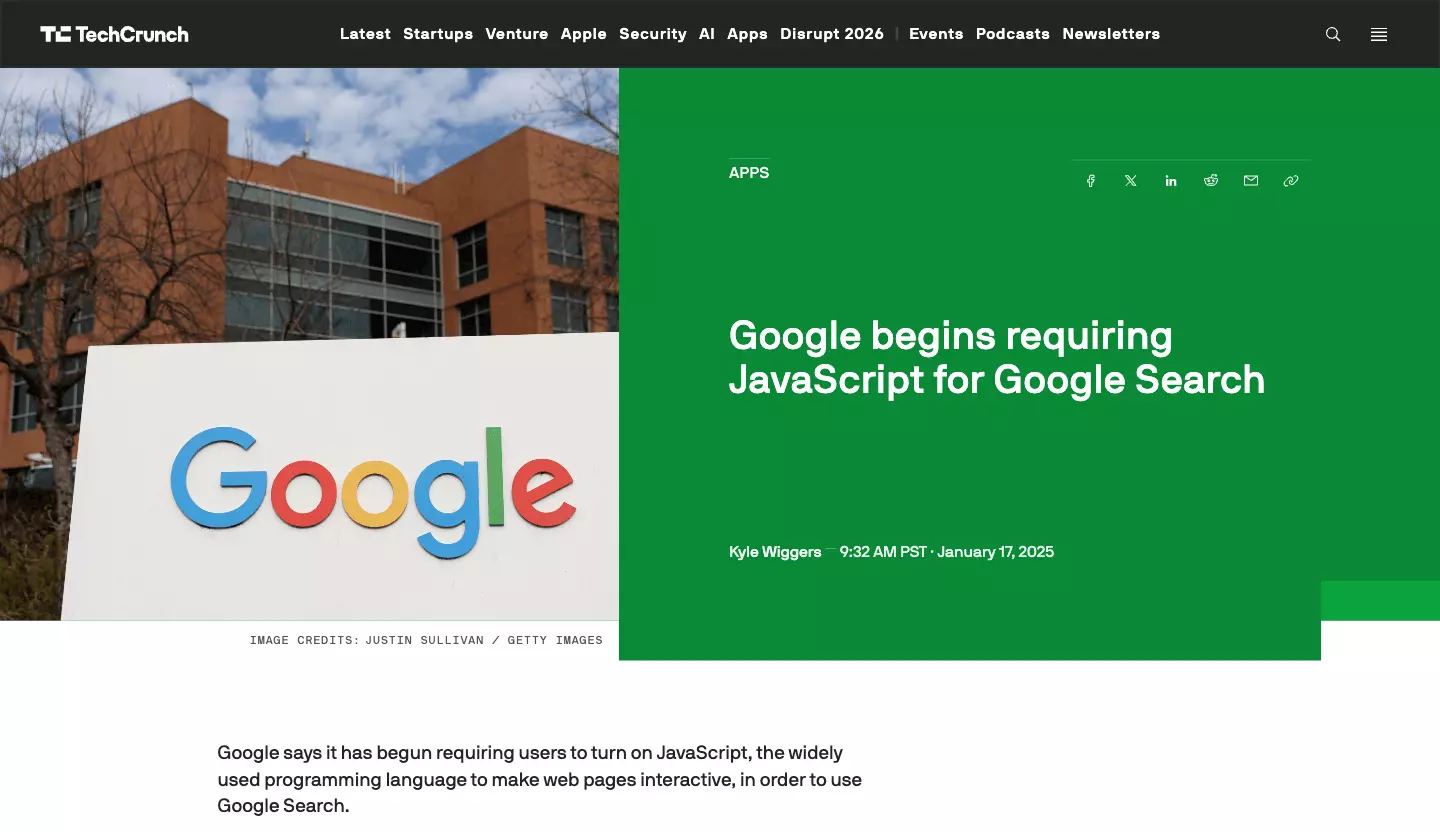
And you maintain all of it. Forever.
Use a ready-made scraper
Best Google search scraper: lobstr.io
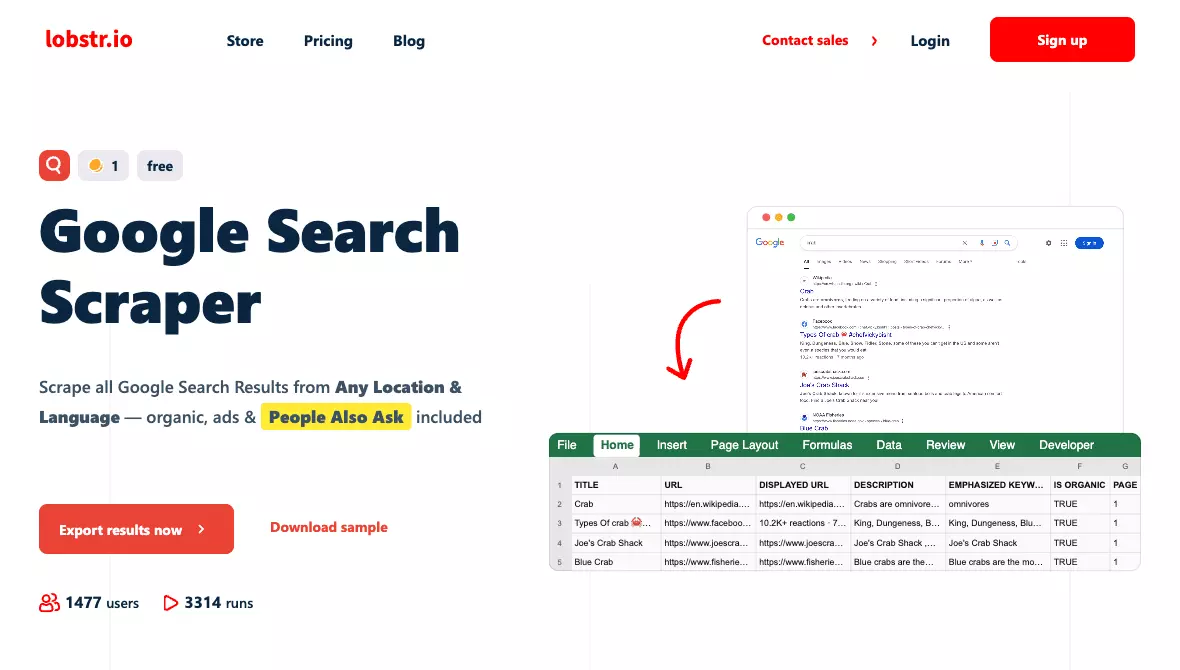
Features
- Full results pages with organic results, ads, People Also Ask and related searches
- The rank of every result in
RESULT POSITION - No keyword cap: you pay per unique result, and each Squid holds up to 10,000 keywords
- Search operators like
site:,intitle:,filetype:andOR - Any country, city or language, with 250 countries and 114 languages
- Up to 300-400 results per keyword, as many as Google shows
- About 250-350 results a minute on one Slot, in my runs
- No Google account needed
- Scheduling, exports and auto-delivery to Google Sheets, S3, SFTP, email or webhook
- MCP server, n8n, Make and API integrations
Data
| 🏆 RESULT POSITION | 📝 TITLE | 🔗 URL |
|---|---|---|
| 🌐 DISPLAYED URL | 📄 DESCRIPTION | ✂️ SNIPPET SEGMENTS |
| ❓ QUESTION | 💬 ANSWER | 🙋 IS QUESTION ANSWER |
| 🔁 IS RELATED QUERY | 🌱 IS ORGANIC | 💰 IS PAID |
| 🔢 TOTAL RESULTS | 📅 DATE | ✨ EMPHASIZED KEYWORDS |
| 📑 PAGE |
Pricing
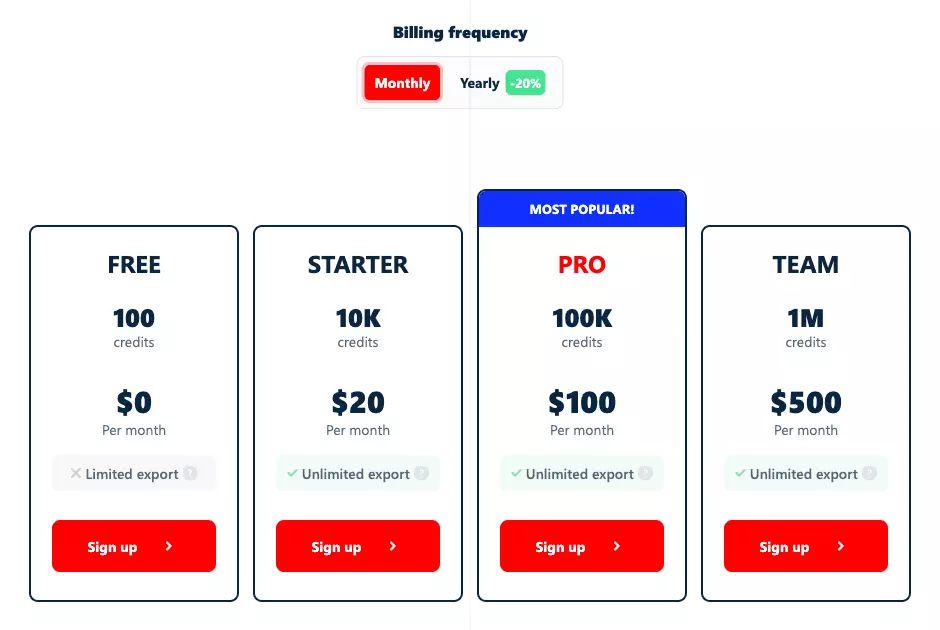
1 credit = 1 unique result. Google repeats results across its pages, but duplicates are never charged: 179 rows collected, 104 billed in my test.
- 100 free results a month, with exports capped at 30 rows and no scheduling
- Starts at $2 per 1,000 results
- Drops to $0.50 per 1,000 results at scale
- Community Story Rewards... share a genuine lobstr.io story on Reddit or LinkedIn and Free accounts get 2,000 credits plus 30 days without the cap (how it works)
So how do you set it up?
How to scrape Google search results using lobstr.io [Step by Step Guide]
Scraping Google search results with lobstr.io takes less than 2 minutes. Here's the process:
- Create a Squid
- Add tasks
- Adjust behavior
- Launch
- Enjoy
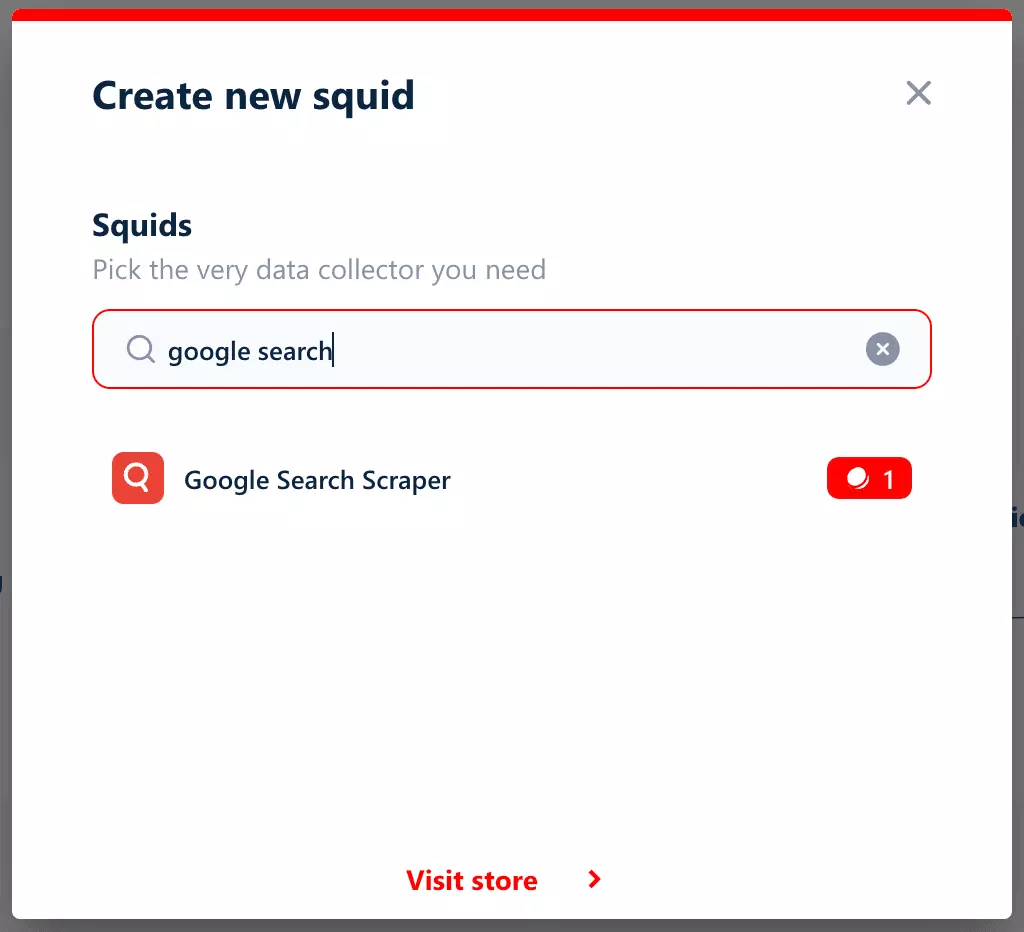
Step 1: Create a Squid
A Squid is just a scraper instance. To create one:
- Log in to your lobstr.io dashboard (no account yet? start here)
- Click New Squid
- Type
google searchin the search bar - Select Google Search Scraper
Step 2: Add tasks
A task is your input. Here, one task is one keyword.
Type it in the Keyword field and click Add +.
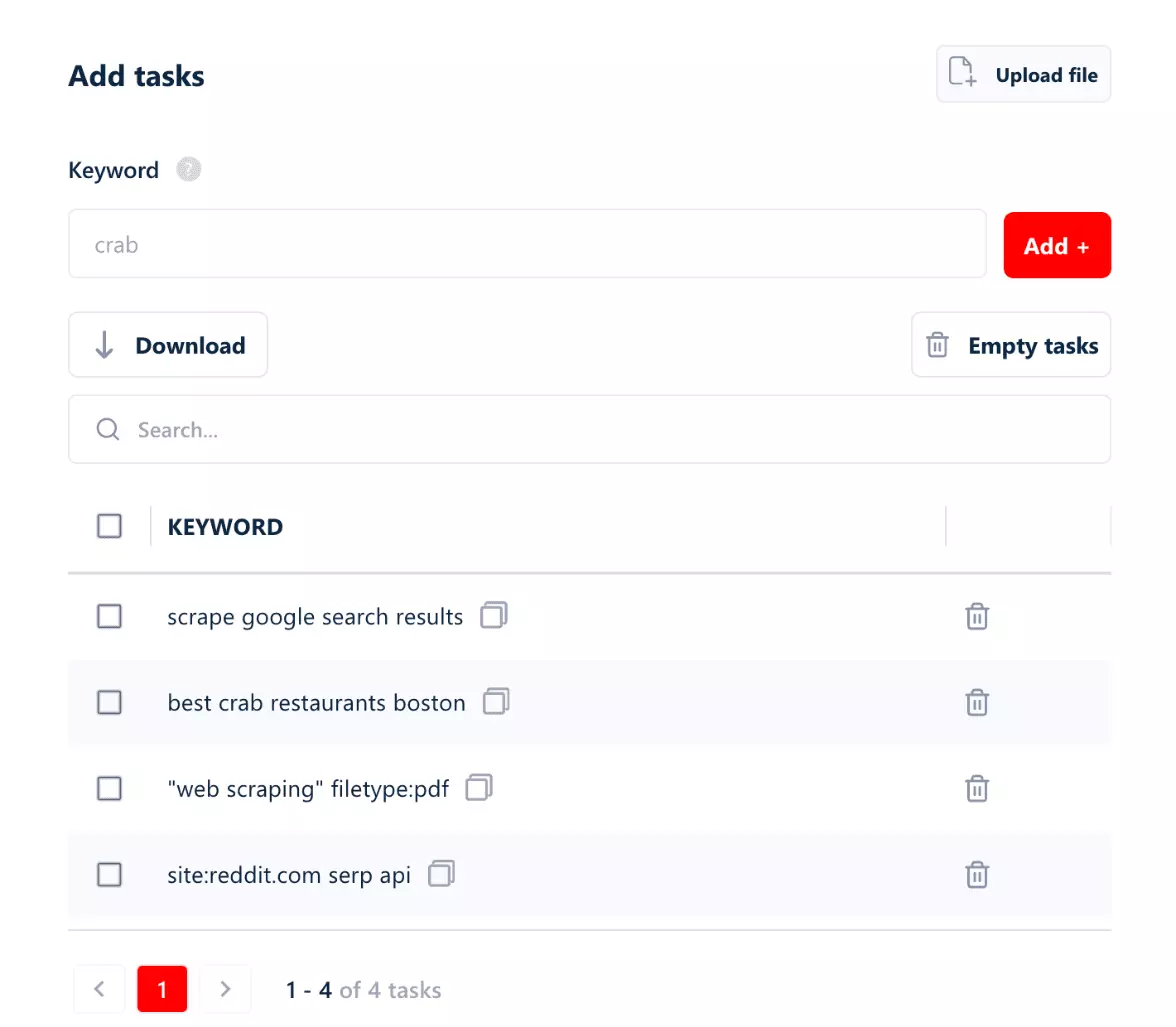
keyword column, and click Upload file. The header has to match, case included, or nothing imports.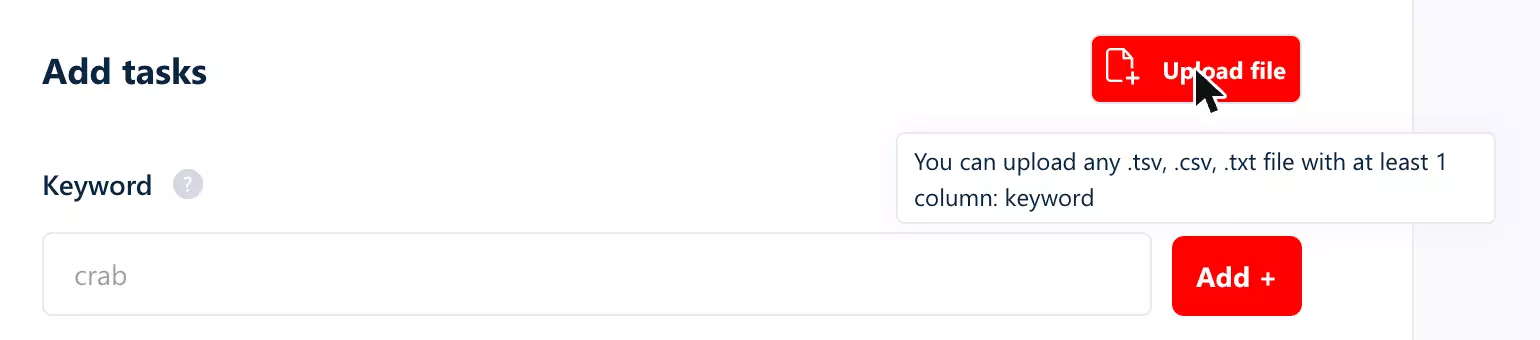
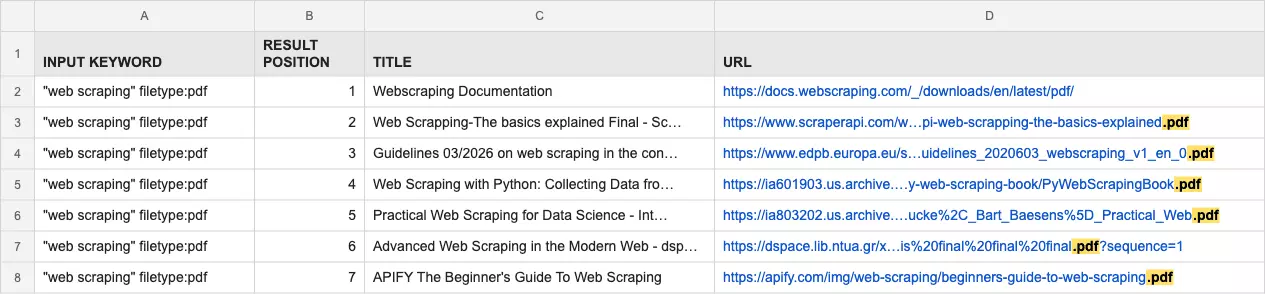
And yes, search operators work. Type them in like you would on Google. Here's what I tested:
"web scraping" filetype:pdf... only PDF filesintitle:"google search scraper" -github... every title has the phrase, zero GitHubcrab cakes recipe -reddit... recipe sites, no Redditsite:reddit.com serp api... Reddit threads only"serp api" after:2026-01-01... every organic result dated 2026best crab restaurants OR crab shack boston... results for both terms
Step 3: Adjust behavior
The Settings tab controls how your Squid behaves. Let me cover the ones you'll actually use.
Max pages... how many result pages to crawl per keyword. Leave it empty to get every page Google shows.
Google shows up to 300-400 results per keyword, but it decides how many. Often it's fewer, and it sometimes omits results. My test keyword got 10 pages.
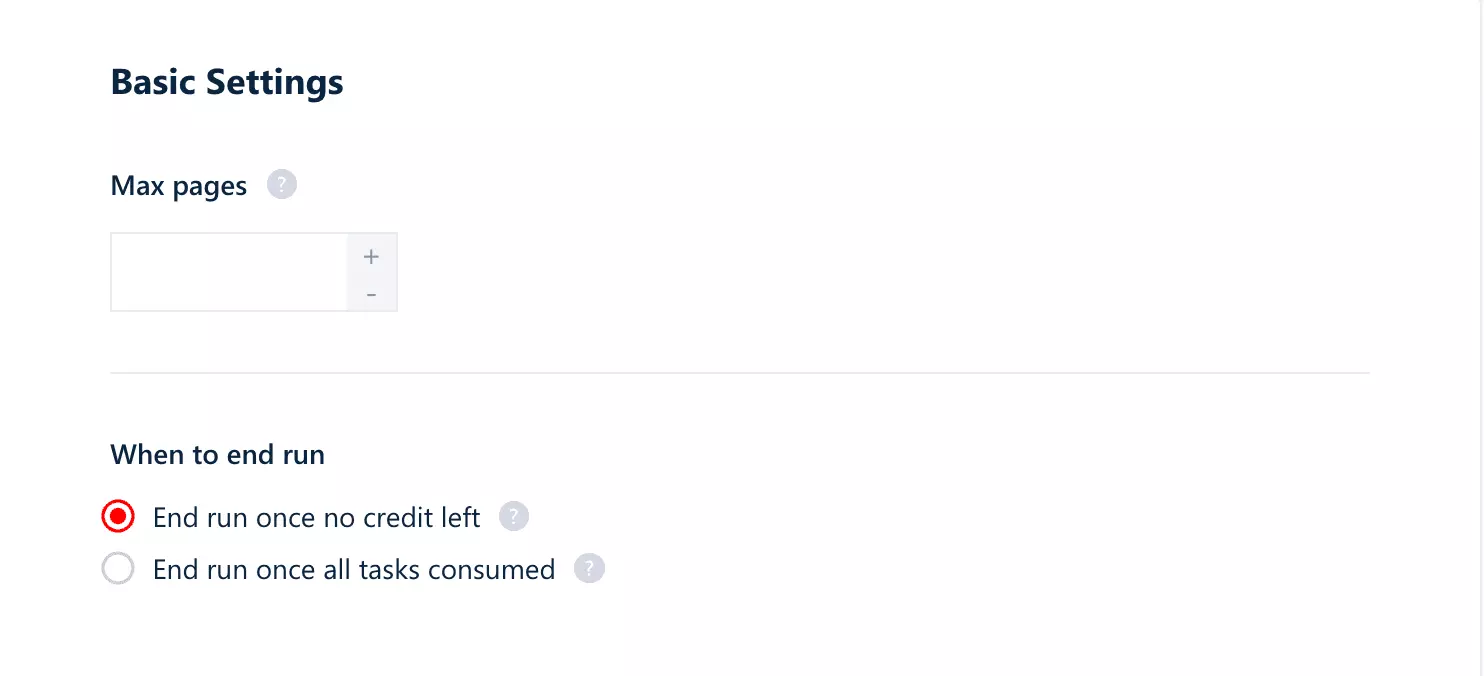
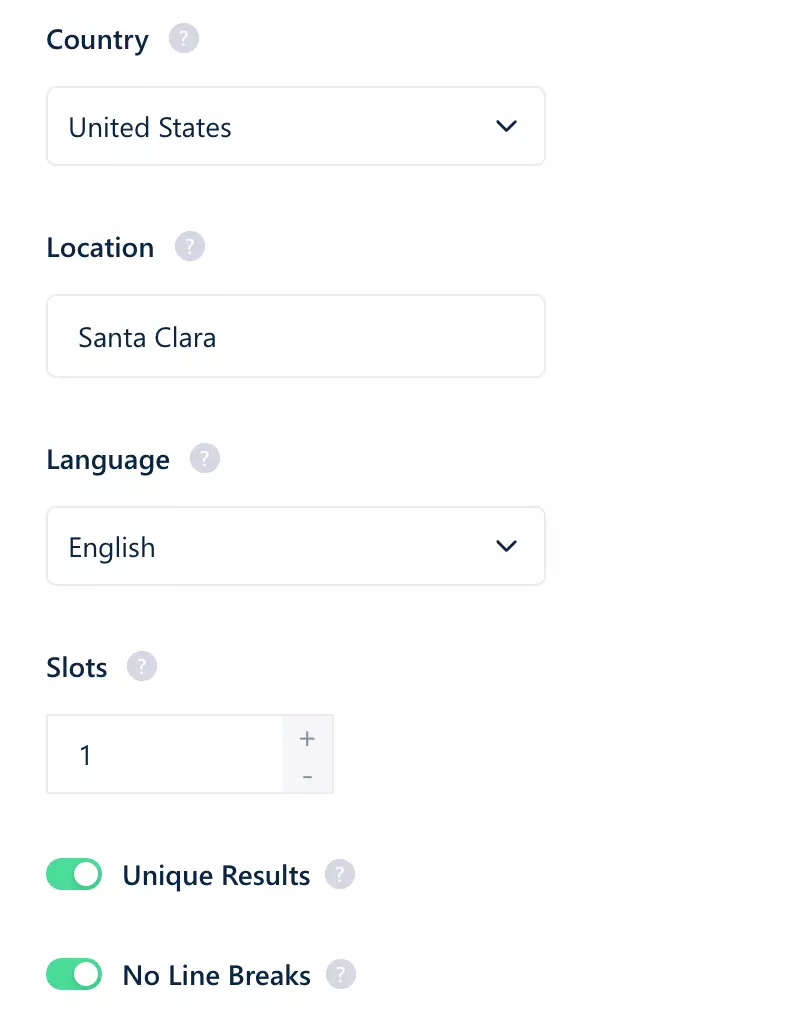
Under Advanced settings:
- Max Unique Results... caps unique results across the whole run (empty means unlimited)
- Country... 250 options, sets the IP origin and the Google domain
- Location... a state, city or district, like "Santa Clara, California"
- Language... 114 options (default English)
- Slots... 1 per Squid for this scraper
- Unique Results... removes duplicate rows (on by default)
- No Line Breaks... keeps text fields Excel-friendly (on by default)
Last, the Notification tab emails you on success, on error, or never.
Step 4: Launch
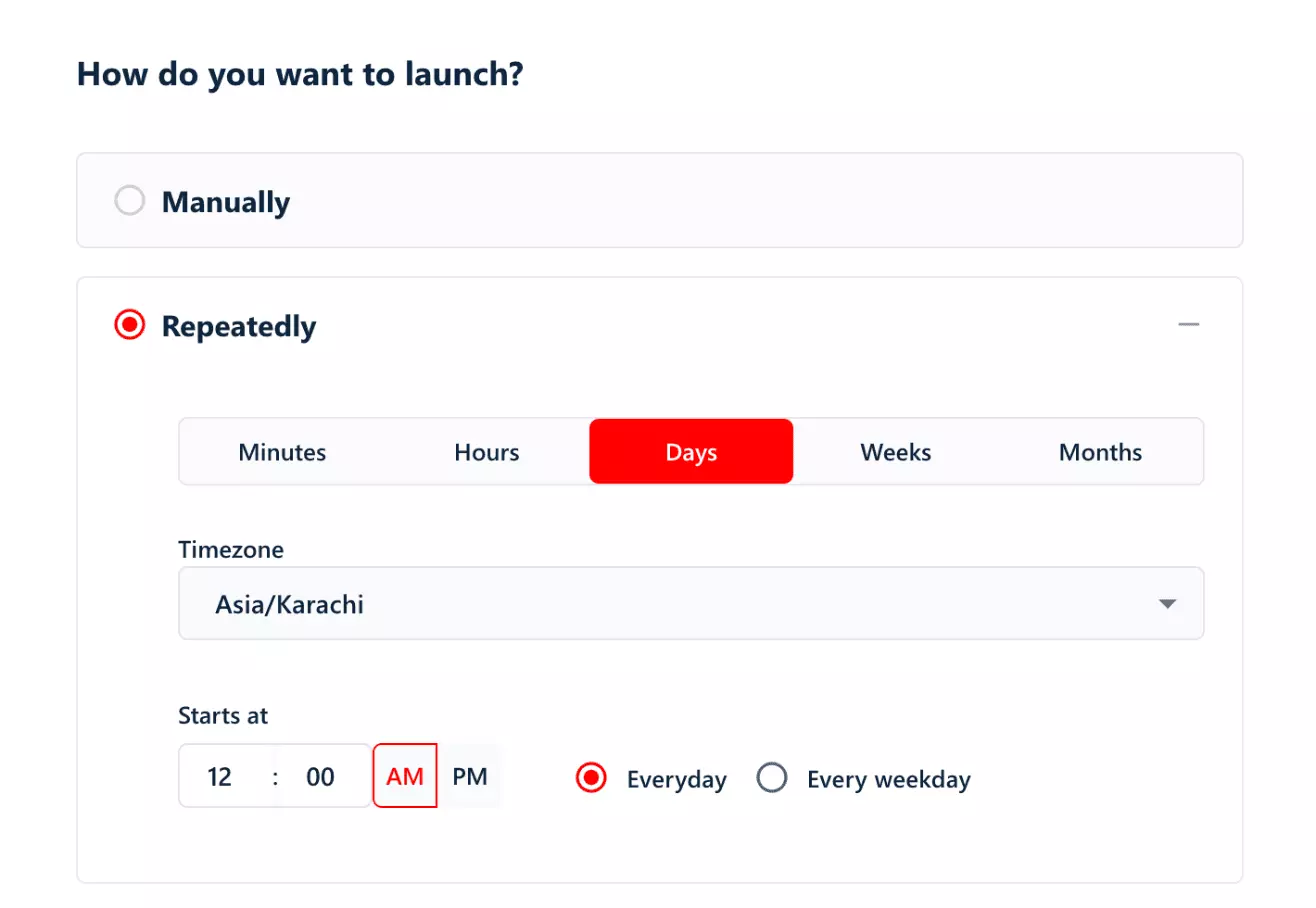
In the Launch tab, you've got two options: Manually or Repeatedly.
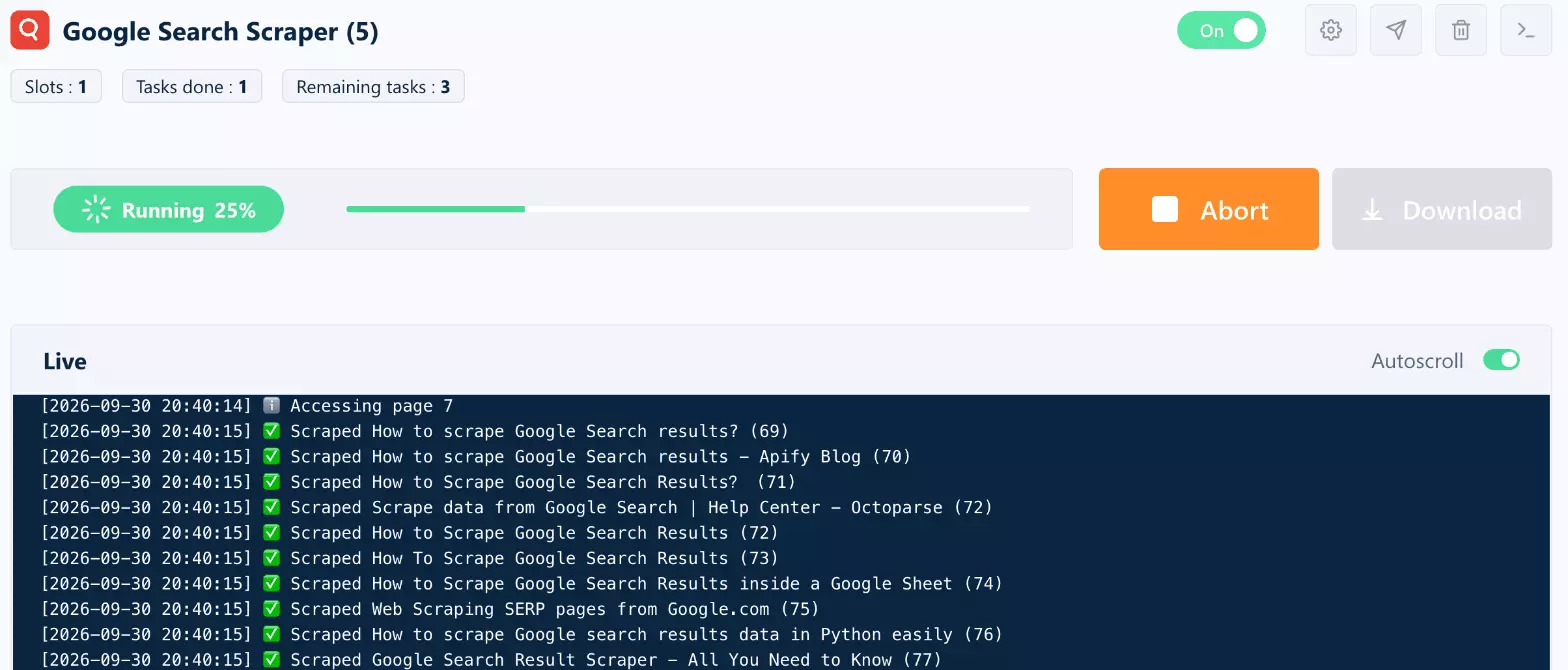
Manually means right now. Click Save & Extract and watch the live console fill up.
But what if you want to track rankings over time?
Step 5: Enjoy
RESULT POSITION, with flags for organic results, ads, People Also Ask and related searches.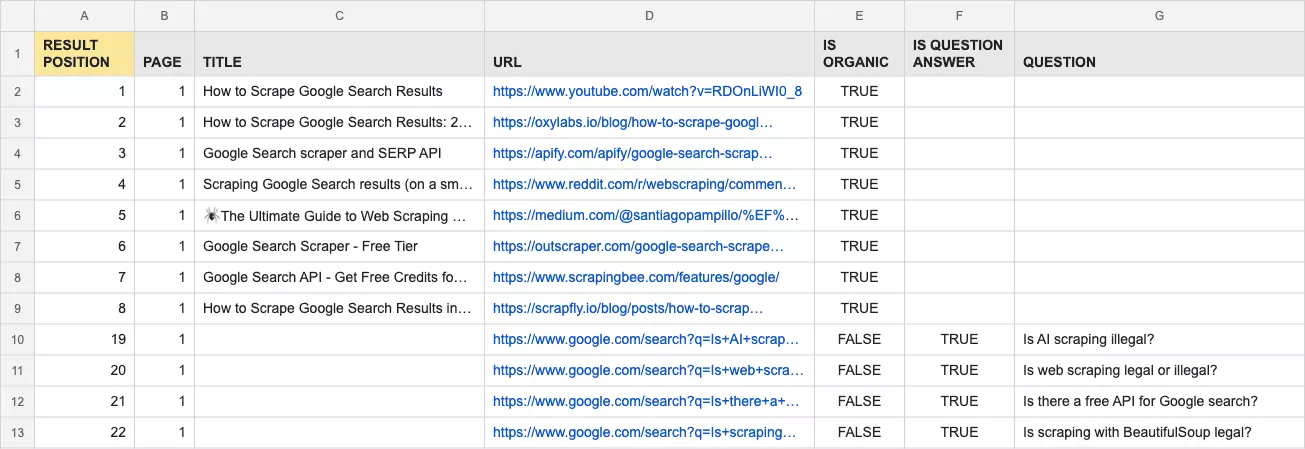
But downloading by hand every time? Nah.
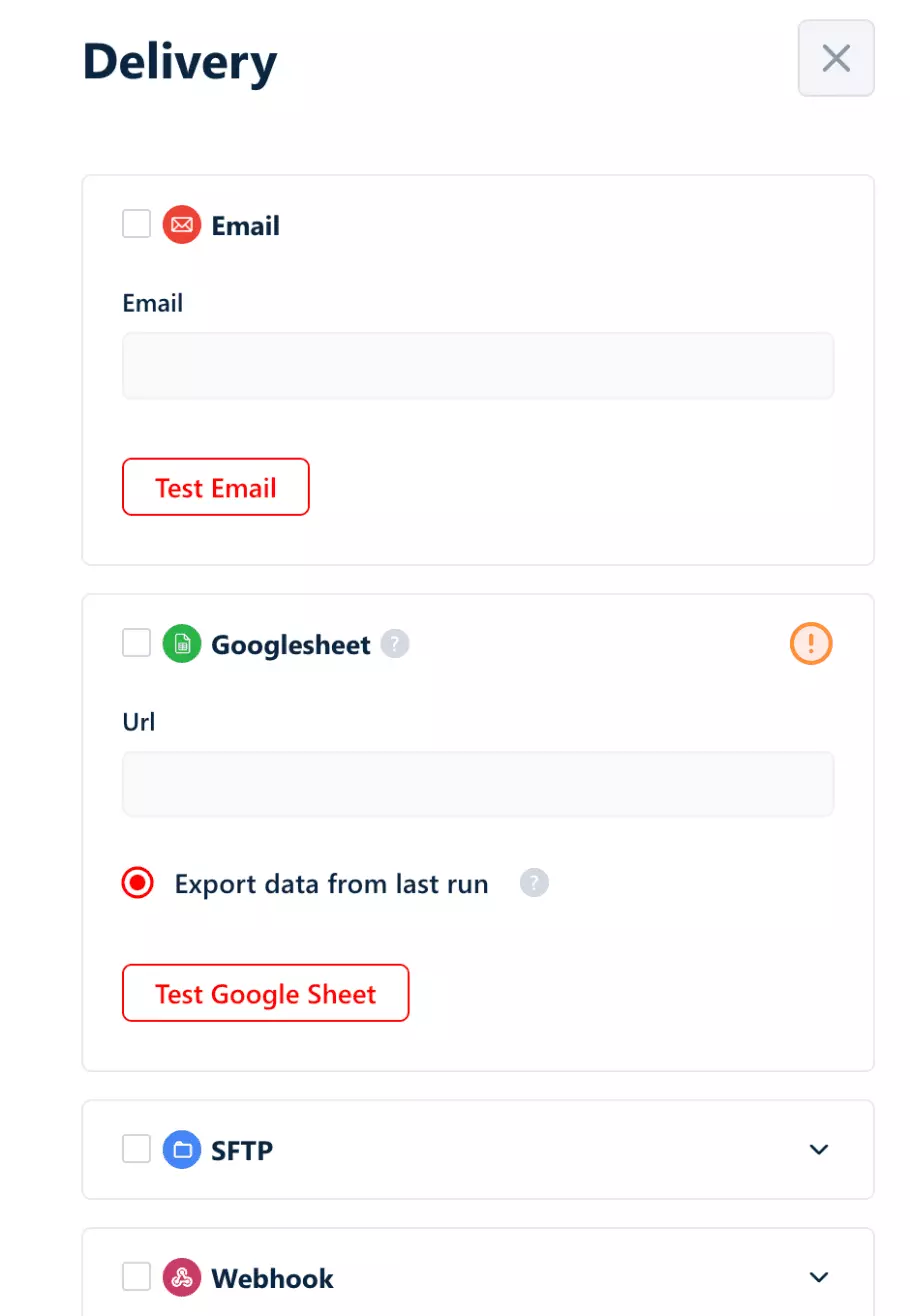
But a spreadsheet is just the start.
What can you do with scraped Google search results?
You've got the results. Now what?
https://mcp.lobstr.io/mcp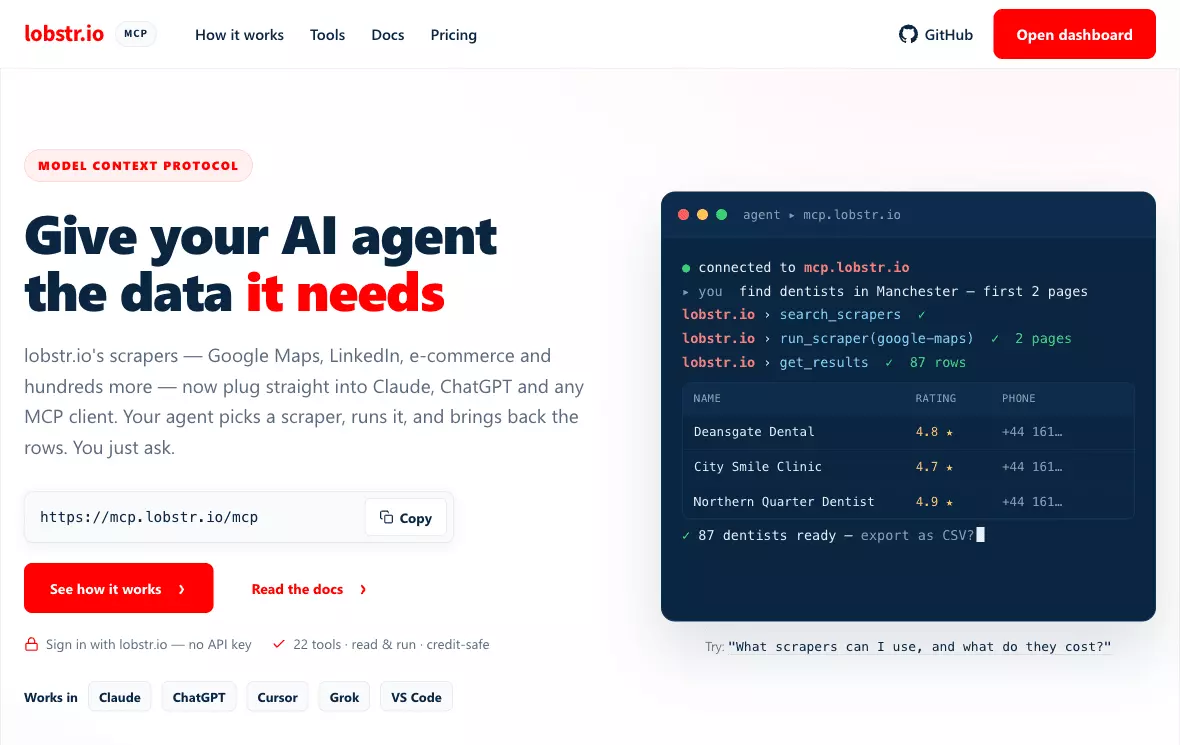
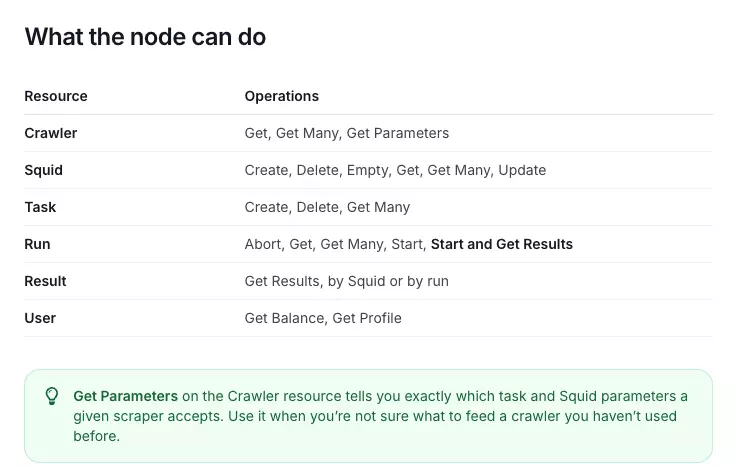
lobstr go google-search-scraper "crab" -o results.csvf
1. Feed LLMs and agents live Google results. The problem from the top, solved: Claude, ChatGPT, Cursor or Grok through the MCP, or a local LLM through n8n, Make or the API.
RESULT POSITION, city by city, no keyword cap. It's the organic side of local SEO, next to Google Maps rankings and the Google Maps Leads Scraper.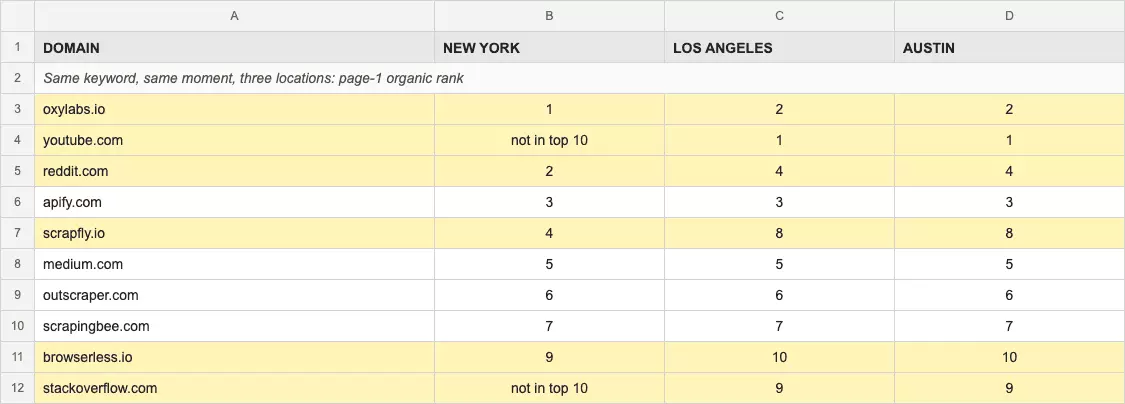
is_paid flag splits ads from organic results. Schedule your money keywords and see who ranks and who advertises, run after run.Still got questions?
FAQs
Is it legal to scrape Google search results?
How many results can I scrape per keyword?
Up to 300-400, if Google shows them. Google decides, often shows fewer and sometimes omits some. My test keyword returned 10 pages.
Can I scrape Google results for a specific city?
Yes, down to a state, city or district, with the Country, Location and Language settings.
Can I use it with ChatGPT, Claude or my own LLM?
Yes, through the lobstr.io MCP server, or n8n, Make and the API for a local LLM.
Do I pay for duplicate results?
No, 1 credit per unique result. In my test, 179 rows collected, 104 billed.
How does it compare to Ahrefs or Semrush rank tracking?
lobstr.io charges per unique result, with no keyword cap, while Ahrefs starts at $129 a month (750 keywords, weekly), Semrush at $139 (500). They add difficulty and volume, but you don't control the tracking.
Is there a free plan?
Final thoughts
That's a wrap on how to scrape Google search results... unlimited keywords, no code, no waiting on Google for a public API. Set it up once and your agent, your rank checks and your content research run on fresh results.
Happy scraping,
Shehriar