
Best SeLoger Scrapers of 2026 [No-Code + API]
⚡ 30-Second Summary
- I bought the paid plan of every dedicated SeLoger scraper and ran the same jobs through each one... thousands of listings, multiple runs, then counted exactly what came back on data, usability, speed, cost, scalability, and support
- lobstr.io is the best overall pick (8.9/10). The cleanest, most ready-to-use data of the three... a flat, pre-parsed row where every field is usable out of the box instead of buried in page noise. 260 listings/min, built-in scaling to 20 Slots per Squid, and a free tier. Pick it for anything at volume or anything you want ready-to-use. Trade-off: it's neither the cheapest nor the richest, and page details crawl at 1 listing/min
- Piloterr is the specialist runner-up (7.4/10). By far the cheapest ($0.13 per 1k at scale), the most data (~114 meaningful fields), and the only tool with SeLoger's market valuation, mortgage estimate, and heating type. Pick it for a pure-API pipeline where price and data depth beat convenience. Trade-off: API-only with no no-code app, a deeply nested raw page dump you have to parse yourself, and real data loss when a run fails
- Apify is the fast third place (6.9/10). The quickest single run at 290 listings/min, a solid no-code app, and the biggest integration catalog. Pick it for a fast one-off if you already live on Apify. Trade-off: the SeLoger actor is community-maintained (Apify's own support can't fix it), it has no meaningful unique data, and it takes one URL at a time
- Didn't make the cut: general-purpose platforms like Bright Data, Octoparse, and Zyte, plus DIY scripts and browser extensions. Reasons at the end
If you've tried to pull SeLoger listings at scale, you've hit the same wall everyone does.
There's no official API to fall back on. So a scraper isn't the convenient option here... it's the only option.
And most "best SeLoger scraper" lists are recycled marketing. Nobody runs the same job through every tool and counts what comes back.
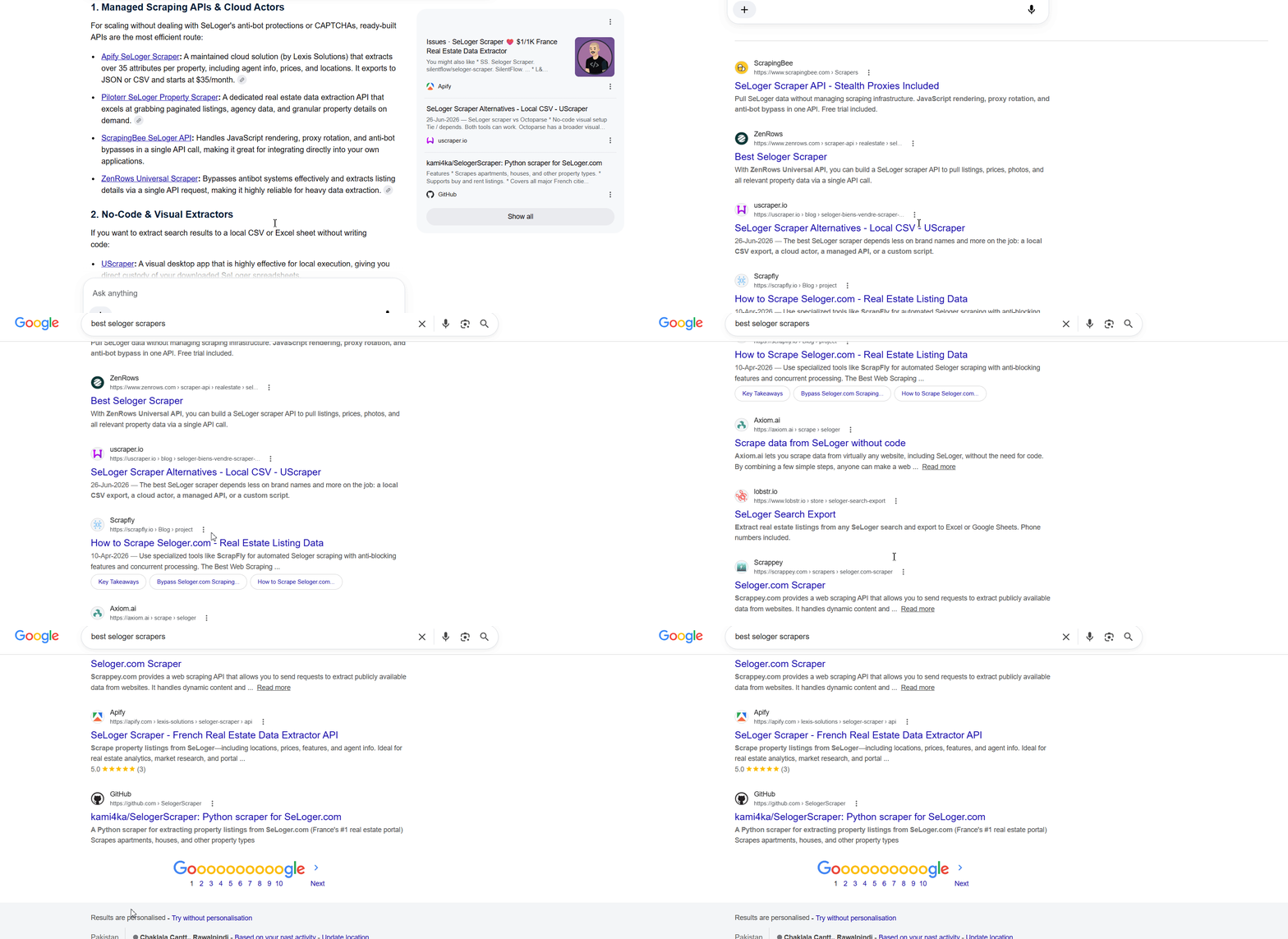
So I did.
I bought the paid plan of every dedicated SeLoger scraper and ran the same searches through each.
Then I counted the results, field by field.
Three tools have a real, dedicated SeLoger setup: lobstr.io, Piloterr, and a community actor on Apify. Here's how they stack up.
Just tell me which one
| Criteria | Winner | Why |
|---|---|---|
| Data depth | Piloterr | ~114 meaningful fields, incl. exclusive valuation, mortgage, and heating |
| Data quality | lobstr.io | Flat, pre-parsed rows at ~83% signal... cleanest and most ready-to-use |
| Usability | lobstr.io | No-code app + full API, bulk URL upload, no data loss on failed runs |
| Speed | Apify | 290 listings/min, edging lobstr.io (260) and Piloterr (210) |
| Cost | Piloterr | $0.13 per 1k at scale, 5 to 8x cheaper than the rest |
| Scalability | lobstr.io | 20 Slots/Squid (~224.6M/month), no engineering, no data loss |
| Support | lobstr.io | Live chat + email, Capterra 5.0 (33) |
| Overall | lobstr.io | Highest aggregate at 8.9/10 |
That's the snapshot. Here's the full scorecard it's built on, with every criteria and every measured number side by side.
| Criteria | lobstr.io | Piloterr | Apify |
|---|---|---|---|
| Overall score (/10) | 8.9 | 7.4 | 6.9 |
| Meaningful data points | ~70 | ~114 | ~62 |
| Usable ratio (meaningful ÷ total) | ~83% | ~35% | ~41% |
| Data format | Flat, pre-parsed | Raw dump (depth 11) | Nested (depth 7) |
| No-code app | ✅ | ❌ API only | ✅ |
| API / CLI / SDK / MCP | ✅ | ✅ | ✅ |
| Multiple URLs | ✅ bulk (1000s) | ⚠️ programmatic | ❌ one at a time |
| Data deduplication | ✅ | ❌ | ❌ |
| Page details | ✅ (paid add-on) | ✅ (separate endpoint, paid) | ❌ n/a |
| Scheduling | ✅ built-in | ❌ DIY cron | ✅ built-in |
| Integrations | ✅ Make + API | ❌ API only | ✅ Make, n8n, Zapier + |
| Export formats | CSV, JSON, JSONL, Excel | CSV, JSON | CSV, JSON, Excel, XML, HTML + |
| Auto-delivery | ✅ Sheets + S3 | ❌ DIY | ✅ via integrations |
| Data retention | 28 days | ❌ none | 30 days |
| Data-loss protection | ✅ pause + partial | ❌ lost on failure | ⚠️ partial + resurrect |
| Speed (search, /min) | 260 | 210 | 290 |
| Speed (with details, /min) | 1 | 1.5 | n/a |
| Max listings/month (24/7) | ~224.6M (20 Slots) | ~9.1M | ~12.5M |
| Concurrency | ✅ 20/Squid, up to 100/account | ⚠️ DIY (but API limits) | ⚠️ memory-driven |
| Free tier | 200/mo | ~9k once | 3k+/mo |
| Cost /1k search (entry → scale) | $1 → $0.25 | $0.16 → $0.13 | $1.5 → $0.9 |
| Cost /1k with details (entry → scale) | $9 → $2.25 | $5.60 → $4.66 | n/a |
| Support | 💯 Live chat + email | 💯 Live chat + email | 👎 Community actor |
| User Rating | Capterra 5.0 (33) | Capterra 4.8 (33) | Store 5.0 (1) |
But before the breakdown, two quick questions... the missing API and the legal one.
Why not just use SeLoger's official API?
Short version: there isn't one.
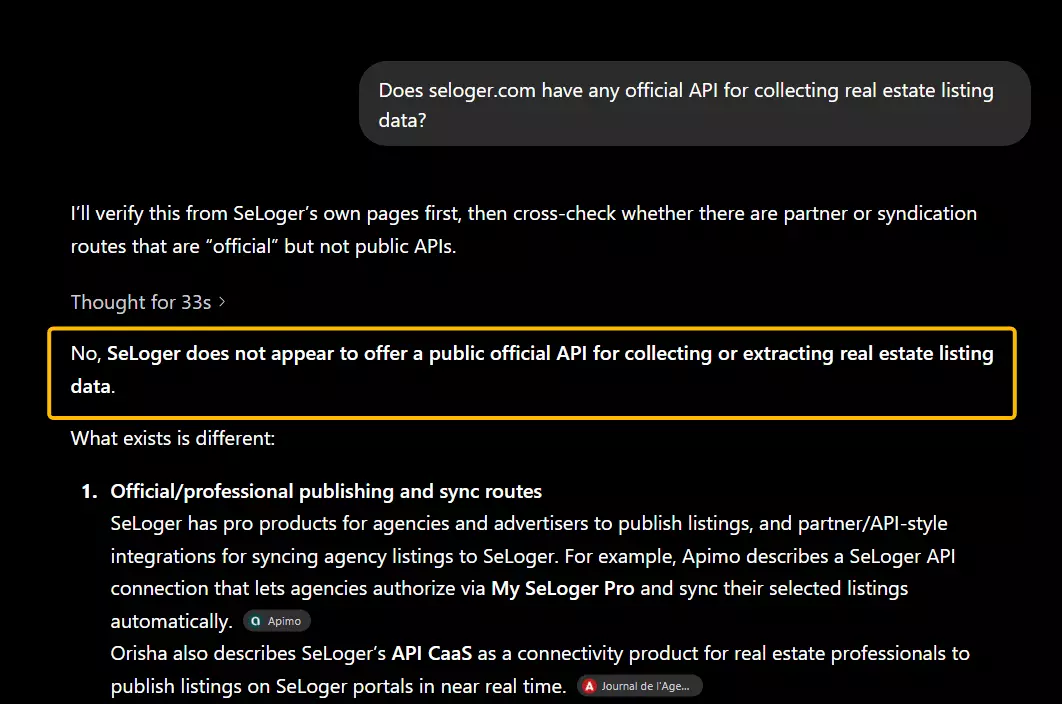
SeLoger publishes no public API ... no developer portal, no self-service keys, no documented endpoints.
There are internal, undocumented endpoints that power the SeLoger site and app, and yes, people reverse-engineer them.
But they're unofficial, unversioned, and change without warning.
Build on them and you're maintaining a scraper anyway... just a more fragile one.
So the real question isn't "API or scraper." It's "which scraper."
But is scraping SeLoger even legal?
Is scraping SeLoger legal?
Disclaimer: I'm not a lawyer and this isn't legal advice. For anything serious, talk to one.
Does SeLoger allow it?
No... SeLoger's Terms of Service ban automated access.
But that's a private contract, and in France a ToS ban alone doesn't decide the legal question.
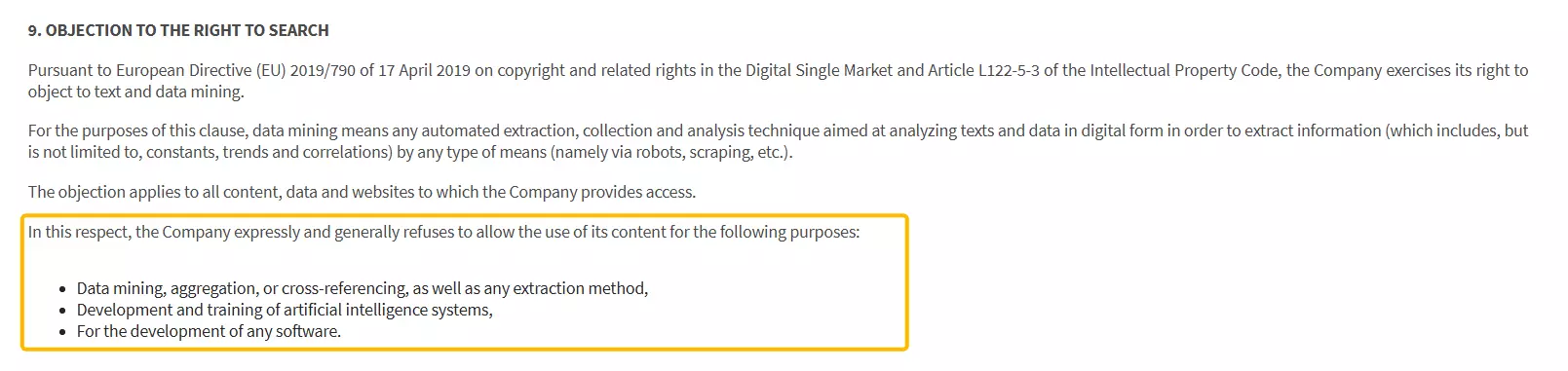
Is scraping Seloger illegal?
Short answer: No
Under EU and French law, extracting non-substantial parts of a public database is completely legal.
Public factual data (prices, surfaces, locations) carries no copyright either.
Two limits decide the rest:
- GDPR ... personal data needs a lawful basis to collect or store
- Use case ... don't lift a whole category to republish unmodified in competition... that's what got a scraper fined €50,000 in Entreparticuliers v. Leboncoin (2021)
Scraping's on the table. Now, which tool.
How did I choose the best SeLoger scrapers?
I've been testing and improving scrapers for years now.
During repeated tests, the same pattern of pain points keeps surfacing.
- Cost ... cost per 1,000 listings, from entry to scale, with paid add-ons folded in
- Data ... I pulled 1k rows from the same SeLoger search, same listings, then compared each scraper's depth and quality
- Speed ... I ran multiple scrapes on a 1k-result baseline, timing each tool for a listings-per-minute estimate
- Usability ... URL to clean data, plus multi-URL input, scheduling, exports, and surviving a failed run
- Scalability ... the realistic 24/7 monthly ceiling, and what that volume actually costs you
- Customer support ... what channels exist, and whether anyone can actually fix the scraper when SeLoger breaks it
That's what every user cares about most when paying for a scraper. So that's exactly our criteria.
I bought every tool's paid plan and pointed all three at the same SeLoger search... same listings.
Multiple runs each, then I compared the raw output field by field.
What I excluded and why:
- General-purpose scraping platforms like Bright Data, Octoparse, and Zyte ... they can technically hit SeLoger, but none ship a dedicated, pre-built SeLoger scraper, so you're hand-building and maintaining the parser yourself
- DIY scripts ... they break the moment SeLoger changes a class name or ships a new anti-bot check
- Browser extensions ... fine for grabbing a handful of listings, useless past a few hundred
Three tools had a real, dedicated SeLoger setup. Here they are.
Best SeLoger Scrapers of 2026
| Criteria | lobstr.io | Piloterr | Apify |
|---|---|---|---|
| Overall score (/10) | 8.9 | 7.4 | 6.9 |
| Meaningful data points | ~70 | ~114 | ~62 |
| Usable ratio (meaningful ÷ total) | ~83% | ~35% | ~41% |
| Data format | Flat, pre-parsed | Raw dump (depth 11) | Nested (depth 7) |
| No-code app | ✅ | ❌ API only | ✅ |
| API / CLI / SDK / MCP | ✅ | ✅ | ✅ |
| Multiple URLs | ✅ bulk (1000s) | ⚠️ programmatic | ❌ one at a time |
| Data deduplication | ✅ | ❌ | ❌ |
| Page details | ✅ (paid add-on) | ✅ (separate endpoint, paid) | ❌ n/a |
| Scheduling | ✅ built-in | ❌ DIY cron | ✅ built-in |
| Integrations | ✅ Make + API | ❌ API only | ✅ Make, n8n, Zapier + |
| Export formats | CSV, JSON, JSONL, Excel | CSV, JSON | CSV, JSON, Excel, XML, HTML + |
| Auto-delivery | ✅ Sheets + S3 | ❌ DIY | ✅ via integrations |
| Data retention | 28 days | ❌ none | 30 days |
| Data-loss protection | ✅ pause + partial | ❌ lost on failure | ⚠️ partial + resurrect |
| Speed (search, /min) | 260 | 210 | 290 |
| Speed (with details, /min) | 1 | 1.5 | n/a |
| Max listings/month (24/7) | ~224.6M (20 Slots) | ~9.1M | ~12.5M |
| Concurrency | ✅ 20/Squid, up to 100/account | ⚠️ DIY (but API limits) | ⚠️ memory-driven |
| Free tier | 200/mo | ~9k once | 3k+/mo |
| Cost /1k search (entry → scale) | $1 → $0.25 | $0.16 → $0.13 | $1.5 → $0.9 |
| Cost /1k with details (entry → scale) | $9 → $2.25 | $5.60 → $4.66 | n/a |
| Support | 💯 Live chat + email | 💯 Live chat + email | 👎 Community actor |
| User Rating | Capterra 5.0 (33) | Capterra 4.8 (33) | Store 5.0 (1) |
1. lobstr.io SeLoger Search Export
User rating: ⭐ Capterra 5.0 (33 reviews)
| Criteria | Score (/10) |
|---|---|
| Usability | 9 |
| Speed | 9 |
| Cost | 7 |
| Scalability | 10 |
| Data (richness / quality) | 7 / 10 |
| Support | 10 |
| Overall | 8.9 |
Best for: real estate teams, investors, and PropTech builders who want clean, map-ready listing data at scale, no code and no lost runs.
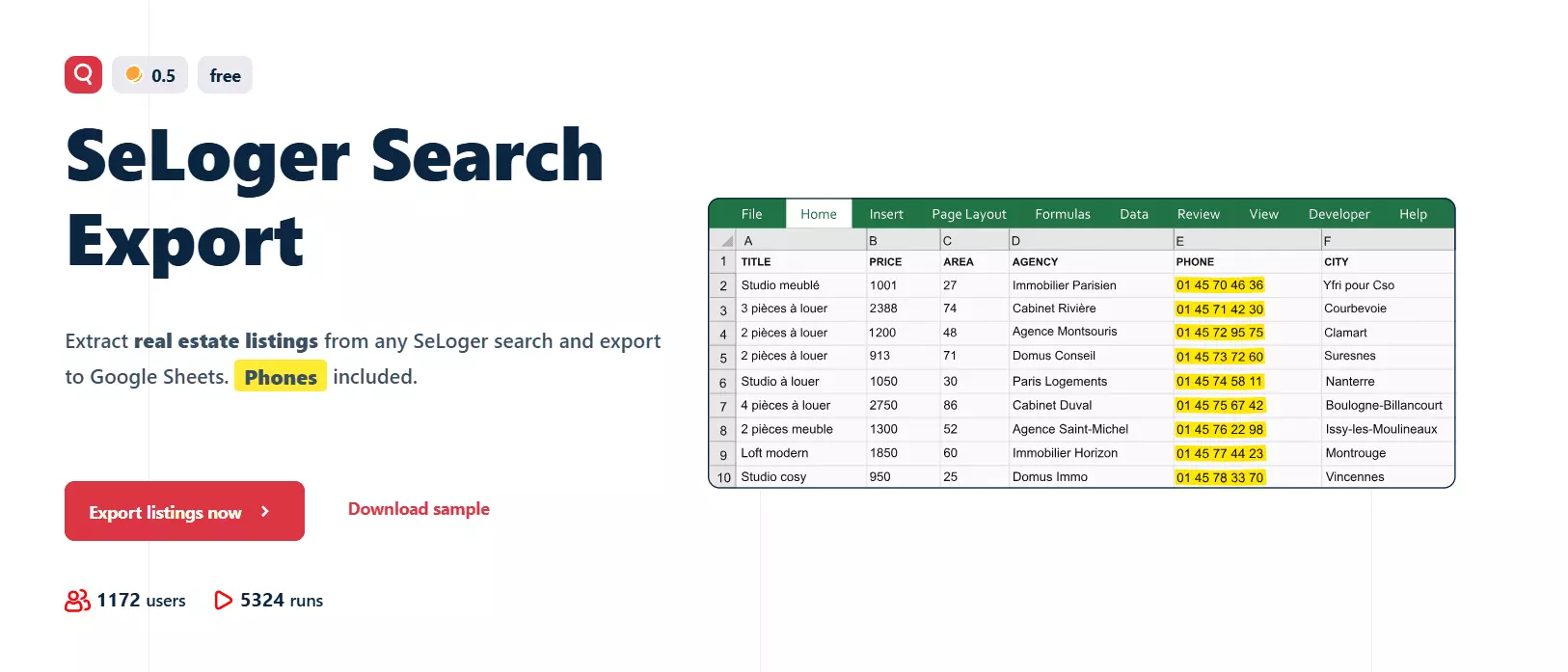
One of them is the SeLoger Search Export.
| Pros | Cons |
|---|---|
| Clean, flat, pre-parsed data (~70 meaningful fields) | Page details are slow... just 1 listing/min |
| Clean latitude/longitude point, ready for mapping | Page details cost 9x the base... $9/1k |
| Built-in scaling: 20 Slots/Squid, up to 100 account-wide | No market valuation or mortgage data |
| Bulk-upload thousands of search URLs at once | |
| No data loss... failed runs pause instead of dying | |
| Free tier, plus live chat + email support |
Data
lobstr.io returns 84 fields per listing, ~70 of them meaningful property data once you strip the ~14 crawler fields.
That's the highest signal ratio in the test, at ~83%.
The real edge isn't the count though. It's the shape.
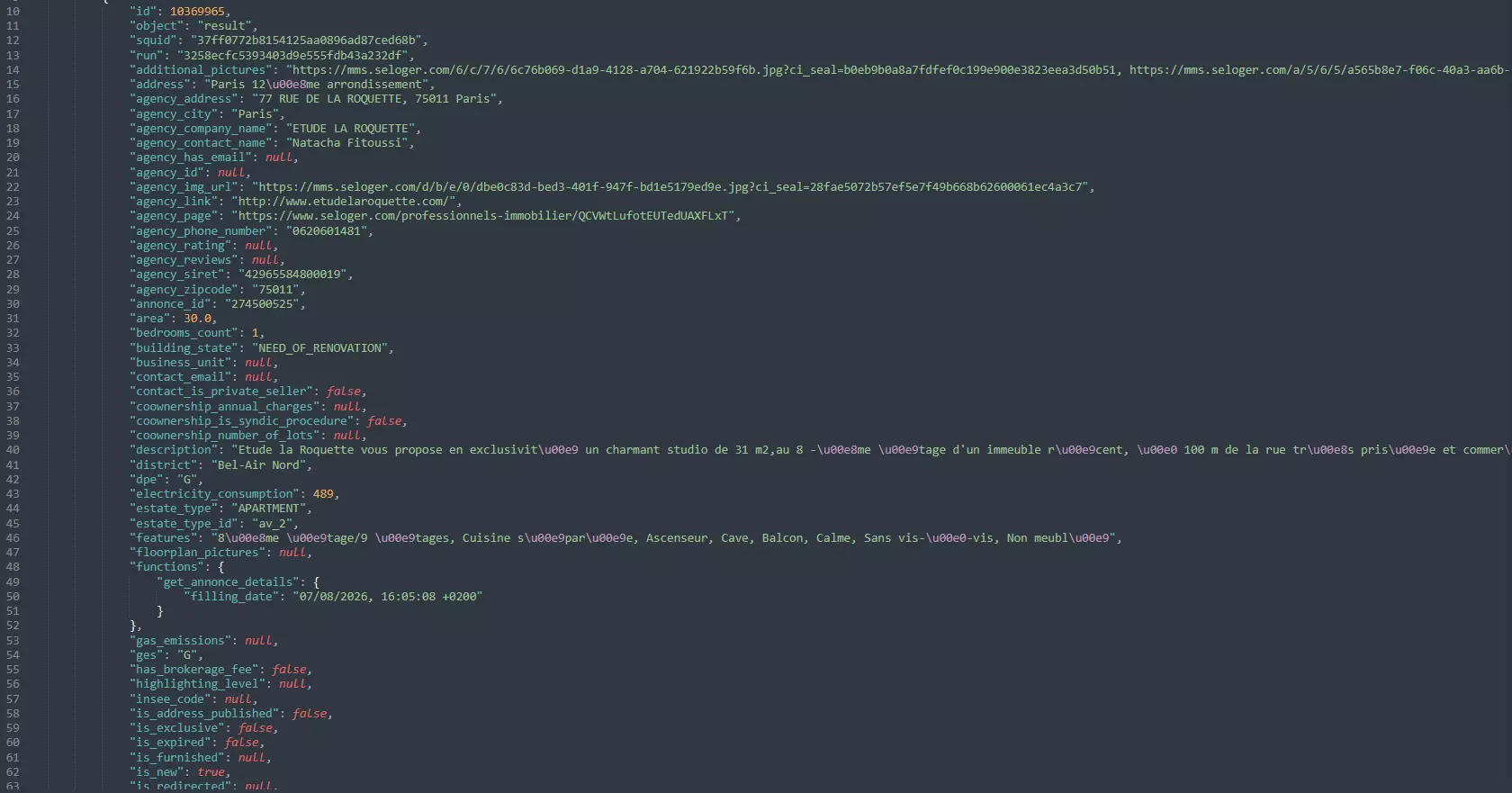
Every listing comes back as a flat, pre-parsed row, three levels deep at most.
Here's the field set.
| Category | Data points |
|---|---|
| 🏠 Property core | title, description, short_description, price, price_per_meter, monthly_price, previous_price, price_decrease_percent, area, plot_surface, rooms, bedrooms_count, estate_type, property_sub_type, transaction_type, year_of_construction, building_state, is_furnished, is_new, is_exclusive, tags, features |
| 📍 Location & geo | address, district, postal_code, insee_code, latitude 🎁, longitude 🎁, transport, is_address_published |
| ⚡ Energy | dpe, ges, electricity_consumption, gas_emissions |
| 🏢 Co-ownership | coownership_annual_charges, coownership_number_of_lots, coownership_is_syndic_procedure, has_brokerage_fee |
| 🖼️ Media | main_picture, pictures, additional_pictures, picture_count, picture_classifications, floorplan_pictures, virtual_visit_url, video_url |
| 🏪 Agency / seller | agency_company_name, agency_contact_name, agency_siret, agency_phone_number, contact_email, agency_rating, agency_reviews, agency_address, agency_zipcode, agency_city, agency_link, contact_is_private_seller |
| 🔗 Listing meta | url, annonce_id, ref, listing_creation_date, listing_update_date |
That's internal job IDs and run metadata, not property data.
About the page-details add-on.
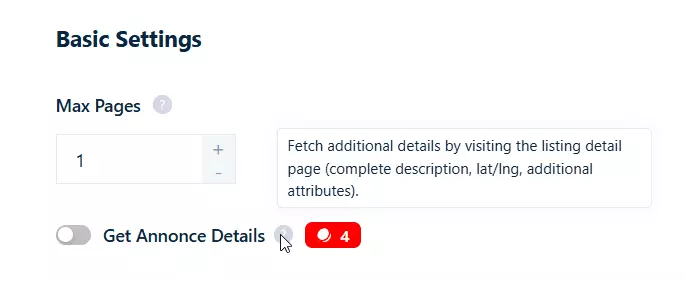
It unlocks 13 fields the search tier skips.
Everything else... core facts, the full photo set, floorplans, virtual tour, DPE letter, and all agency data... comes on the search tier already.
Skip it for lead-gen, price monitoring, or a market overview.
Turn it on only if you need coordinates, amenities, co-ownership, or granular energy figures.
Usability
lobstr.io was the easiest of the three to drive. The whole flow is a simple wizard... Create a Squid, add URLs, set filters, launch.
Ways to feed it a job:
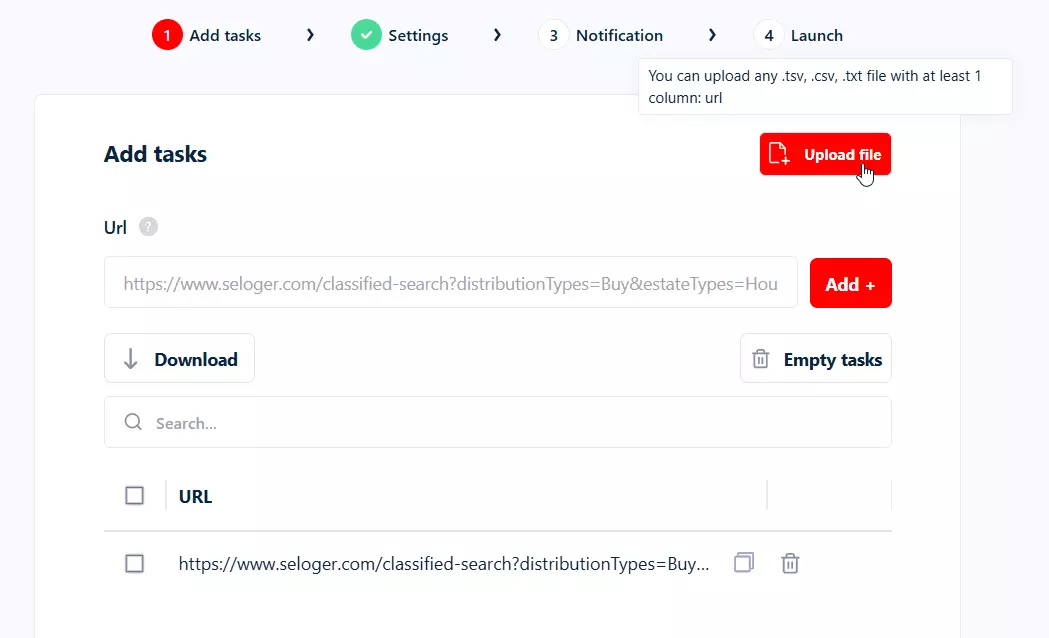
- A single SeLoger search URL
- Bulk-upload thousands of search URLs at once
That last one matters.
Apify takes one URL at a time. Piloterr only handles multiple URLs if you code the loop yourself.
lobstr.io is the only one where feeding it a thousand searches is a drag-and-drop.
Filters and add-ons:
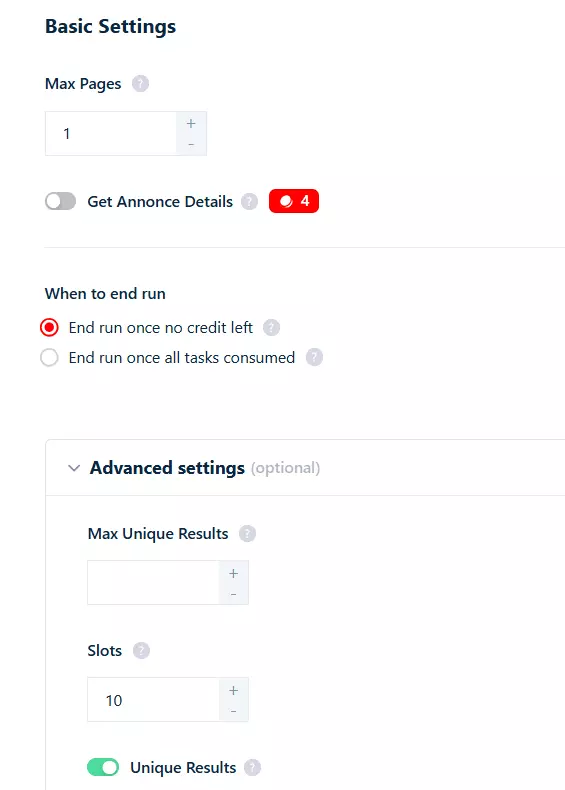
- Max Pages
- Max Unique Results
- Unique Results (dedupe)
- Get Annonce Details (paid page-details add-on)
- Slots (up to 20 parallel bots per Squid)
Where it pulls clear of the pack is everything around the scrape:
- Built-in scheduling (minutes, hours, daily, weekly, monthly)
- Native delivery to Google Sheets and Amazon S3, plus a Make.com integration
- Export to CSV, JSON, JSONL, and Excel, with field selection
- 28-day data storage on your dashboard
- No data loss... if a run fails, it pauses until you fix it or lets you download the partial data
That last point is a real one. On Piloterr, a failed run can wipe everything you collected.
Speed
lobstr.io pulls 260 listings per minute on the basic search tier... a touch behind Apify, comfortably ahead of Piloterr.
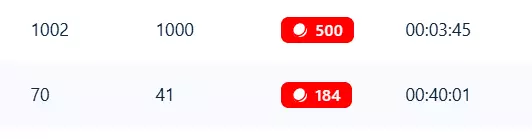
In real terms, 100,000 listings takes about 6.4 hours on a single Slot.
Open all 20 Slots on a Squid and that drops to roughly 19 minutes.
Turn on page details and it drops hard, to 1 listing/min per Slot.
That's the one real speed weakness.
But you can partly buy your way out with Slots... 20 of them turn a 7-day job into about 8 hours.
And you usually don't need page details anyway... see the page-details section.
Cost
lobstr.io runs on a credit-based subscription.
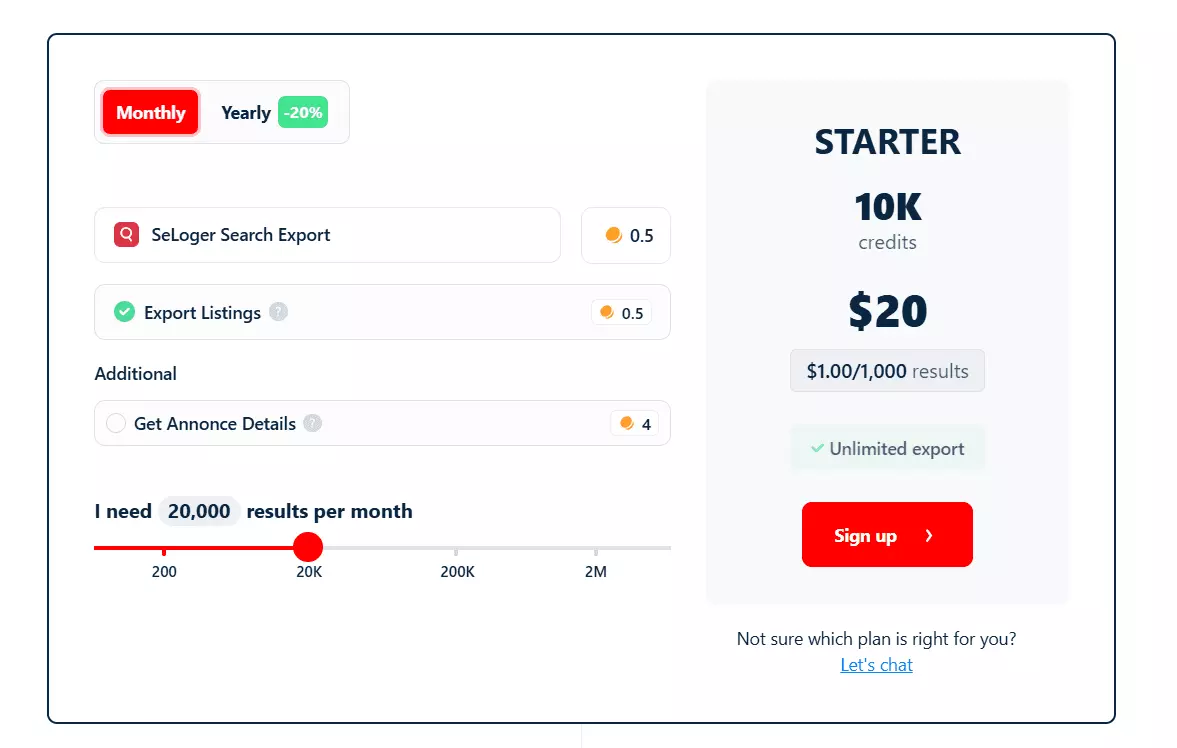
- Free tier: 200 listings/mo (20/mo with page details)
- Search, entry: $1 / 1k listings
- Search, at scale: $0.25 / 1k listings
- With page details: $9 / 1k, dropping to $2.25 / 1k at scale
It's not the cheapest... Piloterr's $0.13/1k is in a different league.
But lobstr.io beats Apify on search data at scale ($0.25 vs $0.90).
And it's the cheapest tool for page details at scale, at $2.25/1k vs Piloterr's $4.66.
For 100,000 search listings, that's about $25.
Scalability
This is lobstr.io's real moat.
At 260/min on a single Slot running 24/7, the paper ceiling is ~11.2M listings/month.
I kept that at one Slot on purpose, to give you the most modest estimate.
Then you scale it with Slots. Each Slot is another bot pulling in parallel.
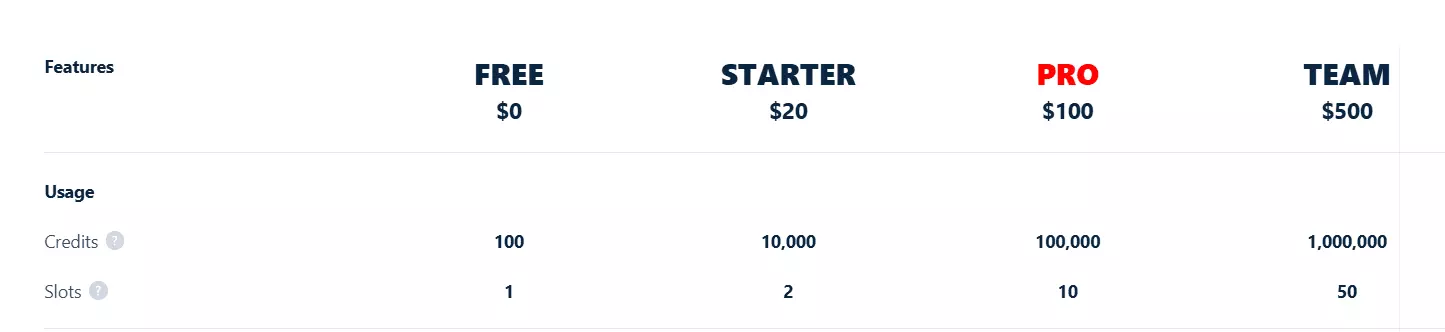
- 1 Slot: ~11.2M listings/month
- 20 Slots (one Squid): ~224.6M listings/month
- 100 Slots (top plan, spread across Squids): ~1.12B listings/month
On cost, that's $250 per million listings at scale.
Apify has no concurrency slider, and Piloterr's ceiling collapses under 500 errors when you push it.
lobstr.io is the only one where scaling is a switch, not an engineering project.
And where a big run won't lose your data halfway through.
Customer support
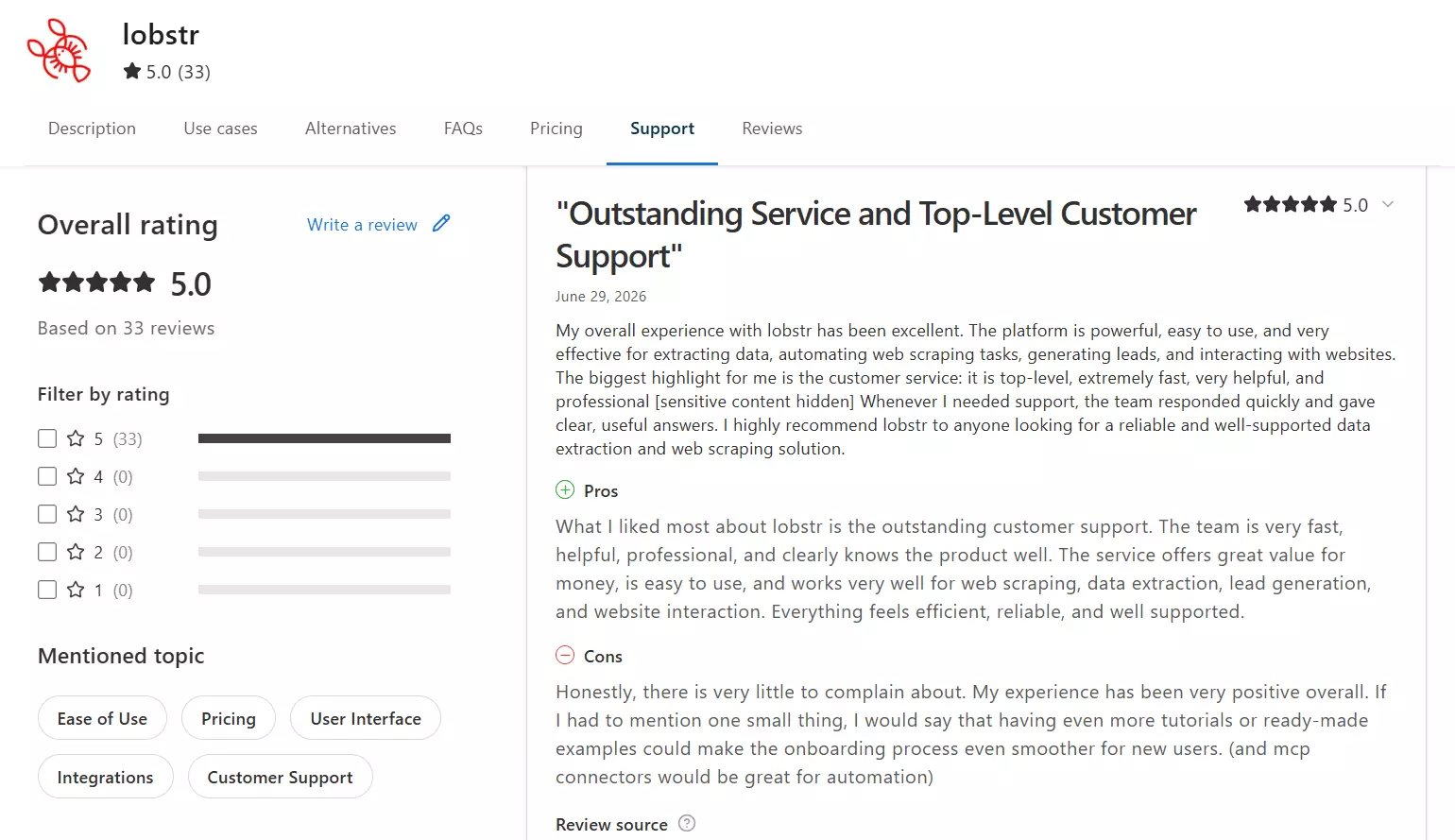
Support is via live chat and email, and it's the most-praised part of the product.
Users consistently call out the team's technical depth and speed.
It carries a 5.0 rating on Capterra across 33 reviews ... the strongest, most credible score in this comparison.
2. Piloterr
User rating: ⭐ Capterra 4.8 (33 reviews)
| Criteria | Score (/10) |
|---|---|
| Usability | 4 |
| Speed | 8 |
| Cost | 10 |
| Scalability | 7 |
| Data (richness / quality) | 10 / 4 |
| Support | 9 |
| Overall | 7.4 |
Best for: developers building a property-data pipeline who need valuation, mortgage, and market data at the lowest cost, and can handle the parsing.
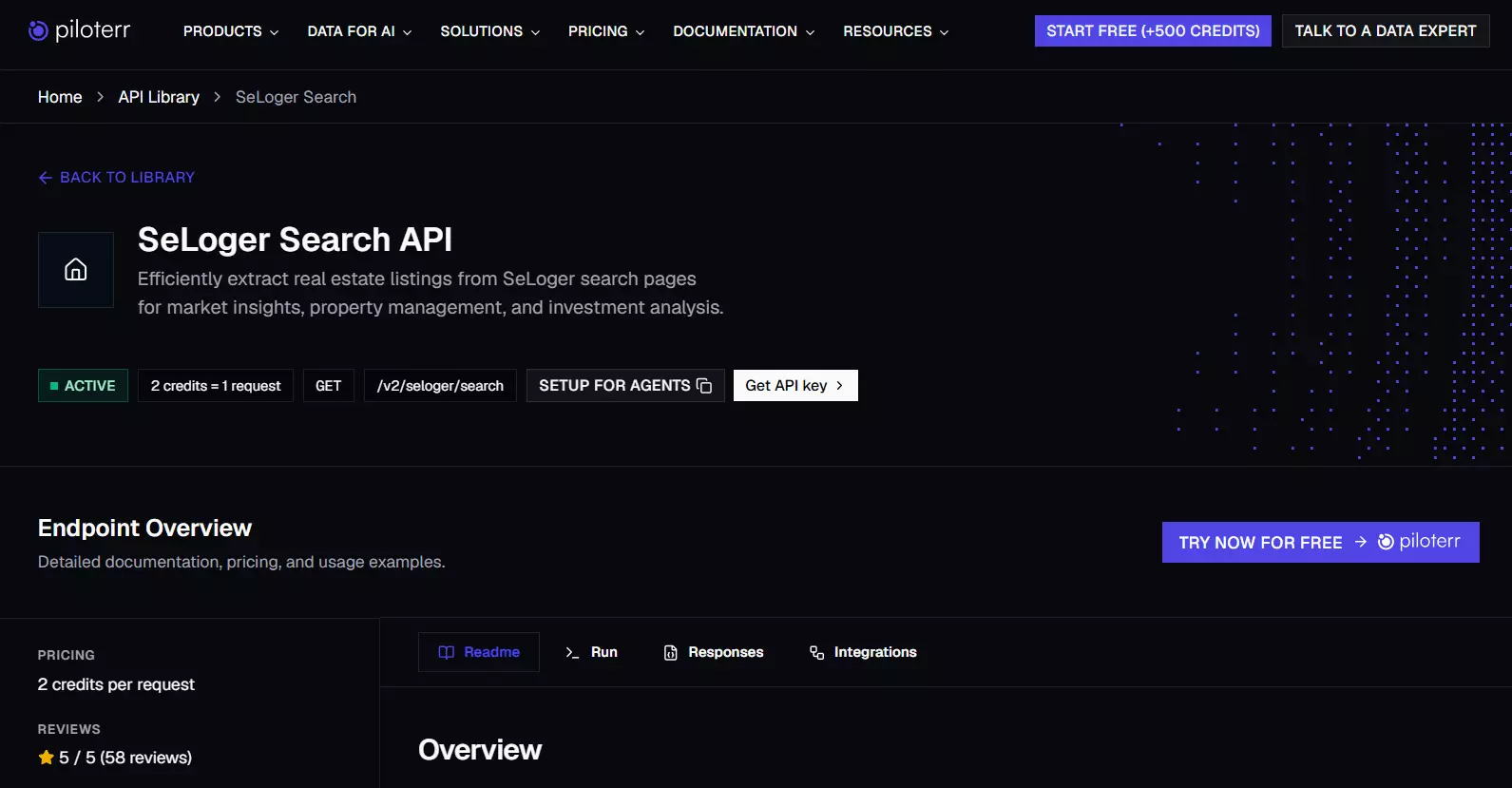
There's no no-code app... you call the API directly, or vibe-code a UI on top of it.
| Pros | Cons |
|---|---|
| Rock-bottom pricing... $0.13/1k at scale | API-only... no no-code app |
| Deep data... ~114 meaningful fields | No data retention... a failed run loses everything |
| Market valuation + mortgage estimates | Raw, deeply nested output you must parse (~35% meaningful) |
| Heating type + full DPE/GES scales | Geo is only an area polygon, not a point |
| Excellent docs, llms.txt, and an MCP | Throws 500 errors when you push concurrency |
| Live chat + email support |
Data
Piloterr returns the raw SeLoger page-hydration JSON, so on paper it's the richest by far... 326 fields. But raw is the operative word.
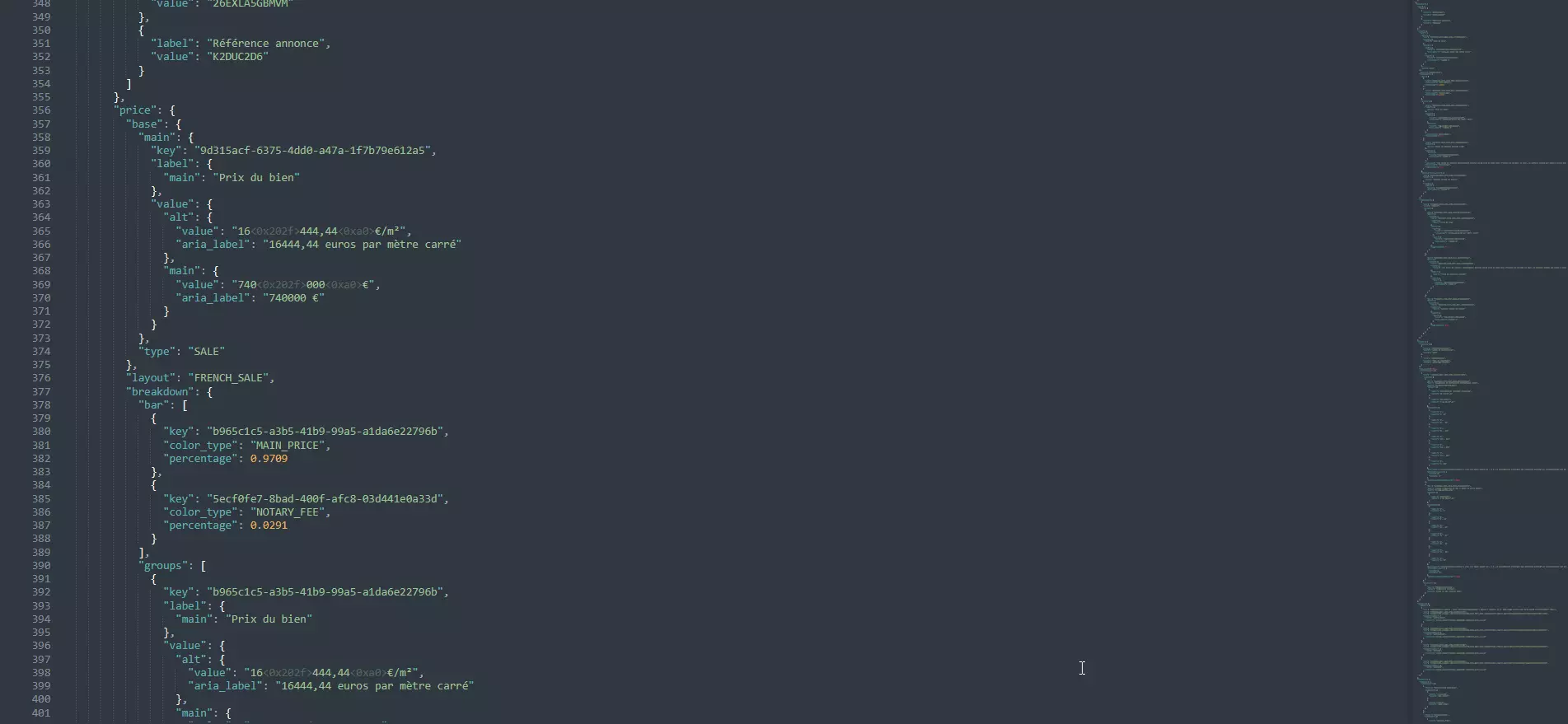
I measured it, and only ~114 of those 326 fields (about 35%) are meaningful property data.
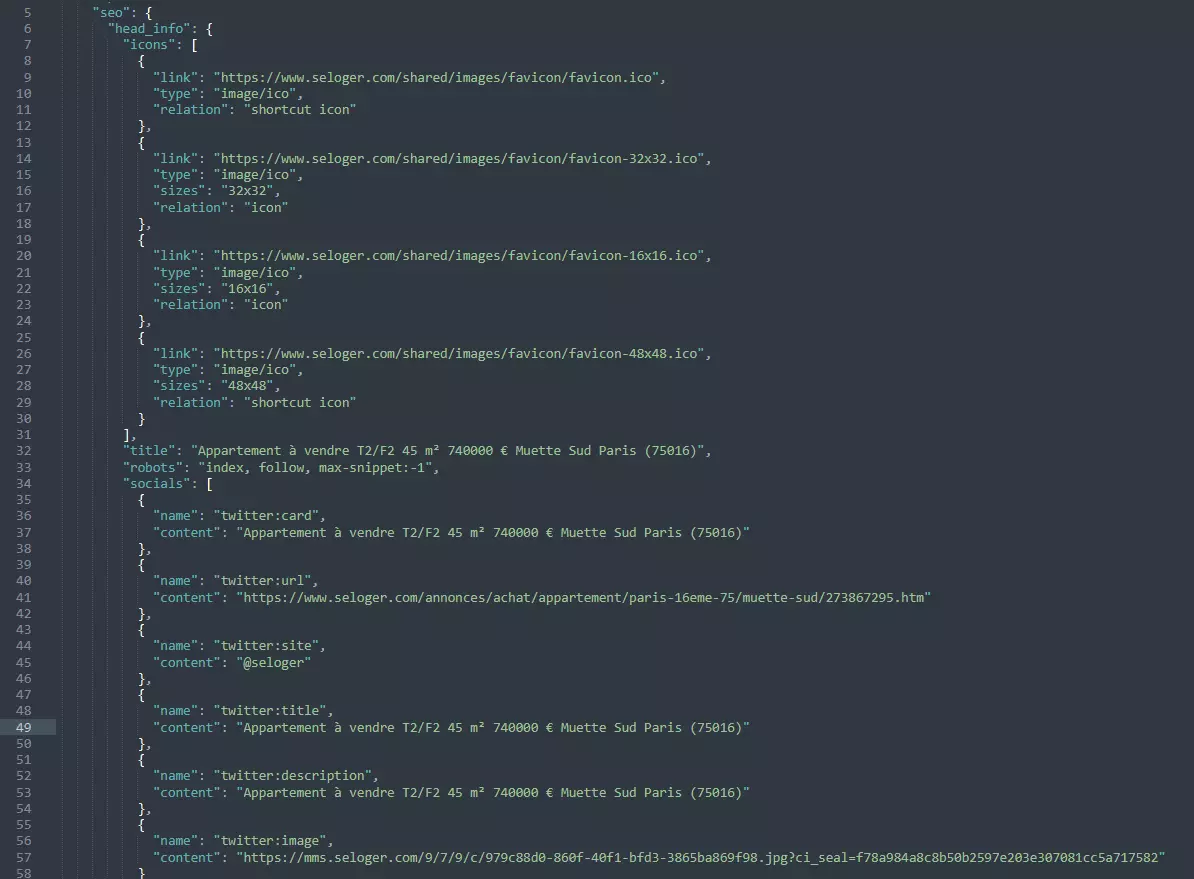
One agency's name and phone gets repeated across five UI card containers.
The price is rendered twice... once as data, once as a full UI tree.
But when you dig past the noise, Piloterr has genuinely exclusive data no one else captures.
| Category | Exclusive / notable data |
|---|---|
| 💶 Valuation 🎁 | price_comparison ... SeLoger's market estimate (€/m² for the area, plus a low-high range). Populated and real |
| 🏦 Mortgage 🎁 | mortgage ... a computed monthly payment estimate. Populated |
| 🔥 Heating 🎁 | heating type (e.g. "Chauffage central") |
| ⚡ Energy detail | full DPE + GES scales, thresholds, and diagnostic metadata |
| 🤖 AI + docs | ai_enrichments (partial... empty on several listings) and a documents field that was empty across every listing I pulled |
Just know its headline "326 fields" is mostly marketing. The valuation, mortgage, and heating are what actually set it apart.
But that exclusive data lives behind the paid details endpoint.
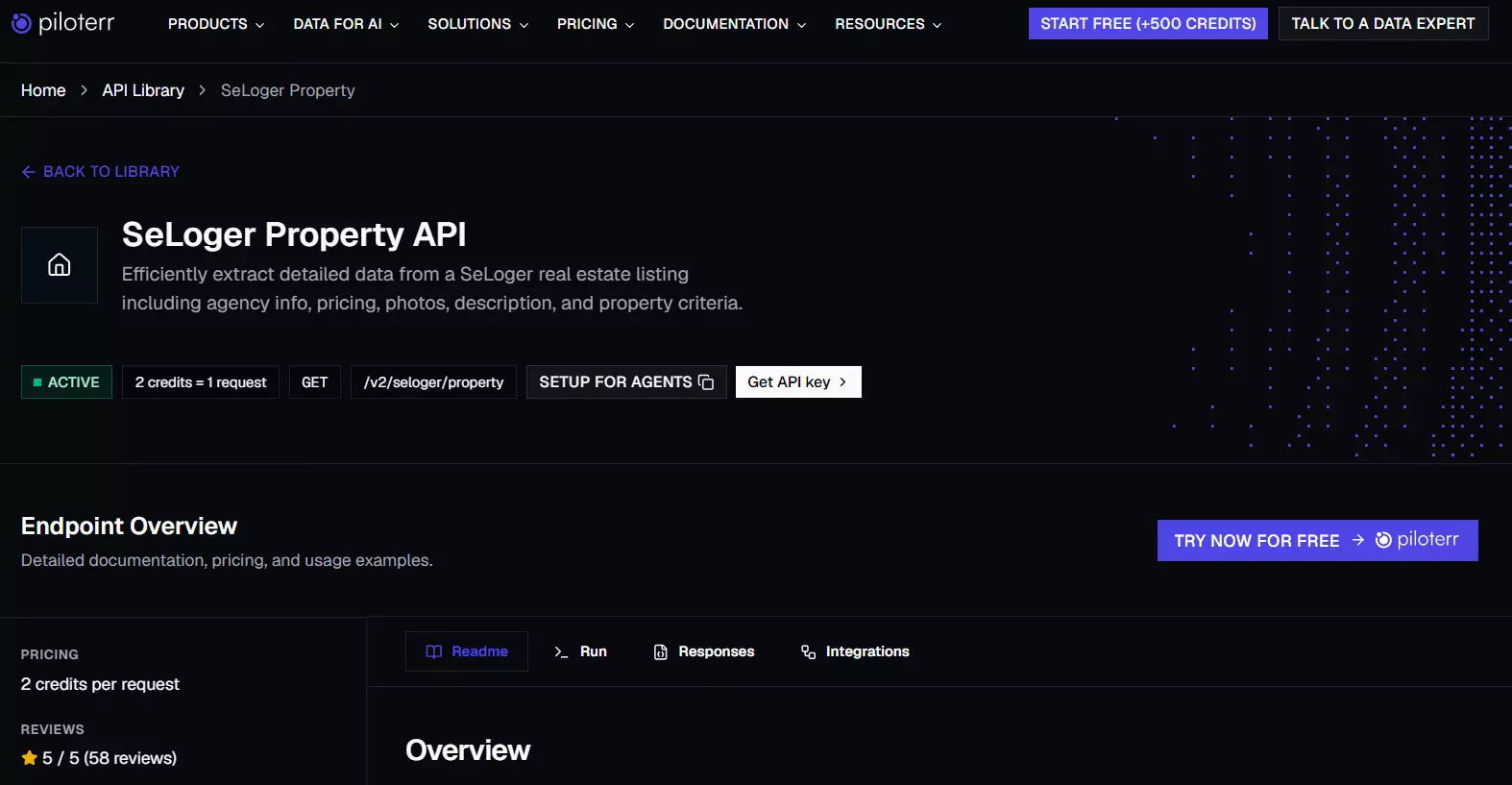
The search endpoint is dirt cheap and returns the core card... price, surface, rooms, address, agency, and the energy letter.
The details endpoint costs ~35x more ($5.60/1k) and crawls at ~1.5/min.
Turn it on only if you need the valuation, mortgage, heating, or granular energy numbers.
Skip it and stay on search if you just need core listing and agency data.
One flag: even with details, the geo is only an area polygon, not a usable point.
Usability
This is where Piloterr costs you. It's API-only... no no-code app, no dashboard, no wizard.
If you can't write code (or drive an AI that can), it's not for you.
Ways to feed it a job:
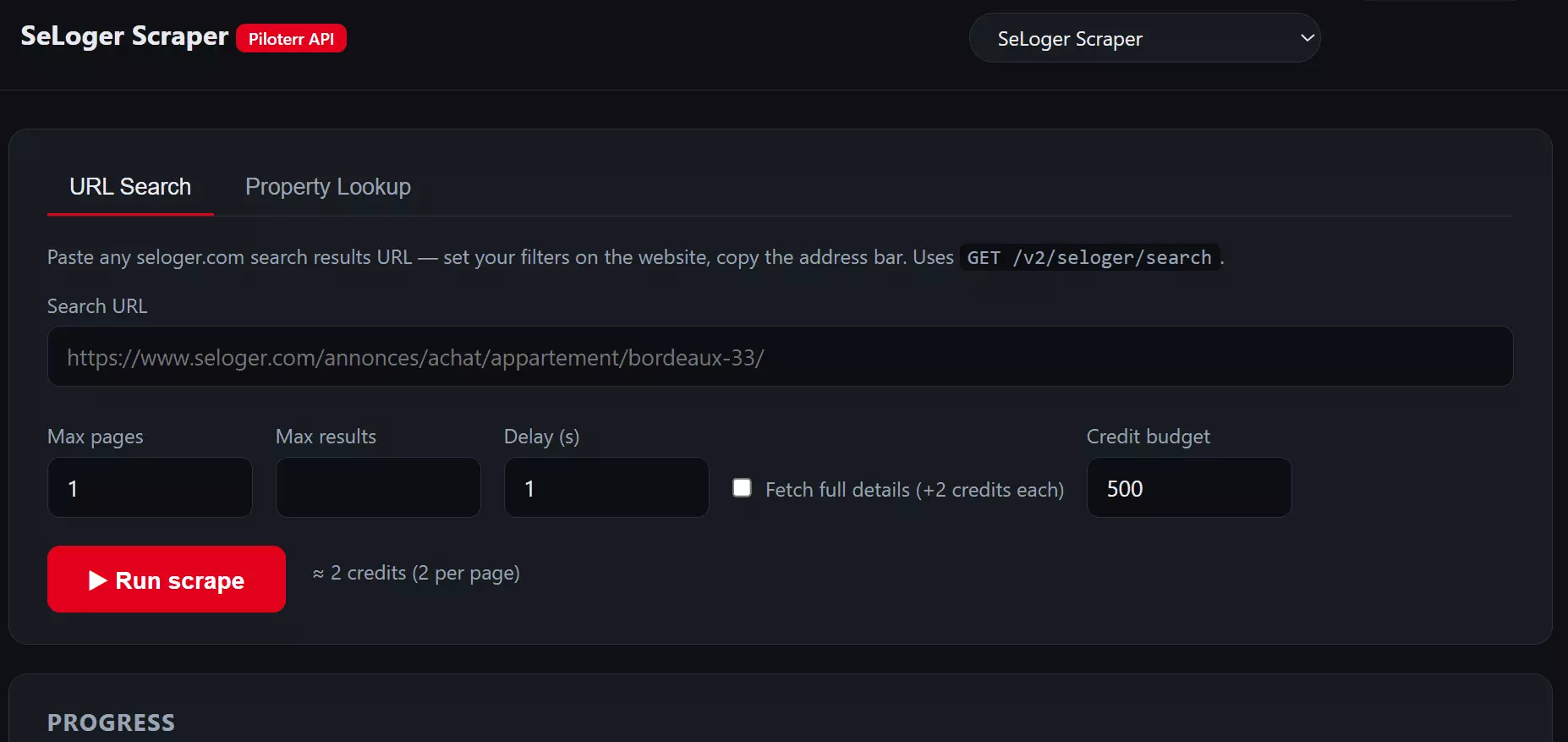
- A SeLoger search URL or a single listing URL
- Multiple URLs only if you write the loop yourself
Filters: Max pages, Max results, and a separate Get Page Details endpoint.
I handed the docs to Claude Code and had a working UI on top of the API in an afternoon.
But that's the point... you're building the convenience yourself.
The real risk is delivery. Piloterr stores nothing.
Data comes back in the response, and if a run fails before you've saved it, it's gone. That happened to me more than once.
You export to CSV or JSON, and any integration is code you write.
Speed
Each search call takes about 10 seconds and returns 35 listings... ~210 listings/min single-threaded.
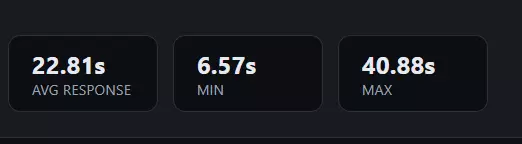
That's the slowest of the three on paper, but not by much.
100,000 search listings takes roughly 8 hours running straight through.
Page details are far slower, about 40 seconds per call... ~1.5 listings/min.
The API is capped at 5 requests/second, which sounds generous.
But responses can lag up to 60 seconds, and it starts throwing 500 errors when you push concurrency. So the high ceiling isn't real.
Cost
This is Piloterr's whole pitch, and it delivers.
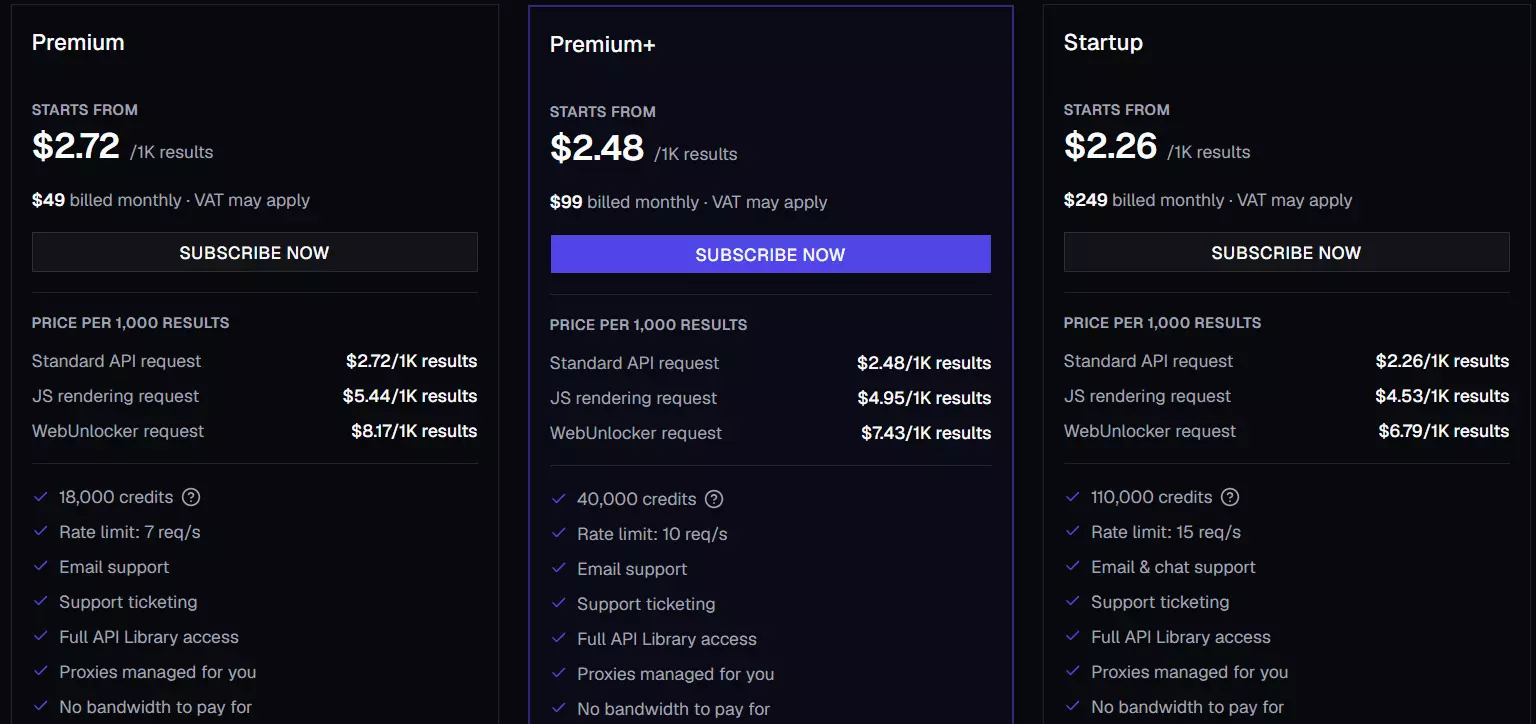
- Free tier: 550 credits once (~9k search listings, since it bills per search request of 35 listings, not per listing)
- Search, entry: $0.16 / 1k listings
- Search, at scale: $0.13 / 1k listings
- With details: $5.60 / 1k, dropping to $4.66 / 1k
That's 5 to 8 times cheaper than lobstr.io or Apify on search data. For 100,000 listings, about $13.
The one place it loses is page details at scale, where lobstr.io's $2.25/1k undercuts Piloterr's $4.66.
Scalability
At 210/min single-threaded, 24/7, the paper ceiling is ~9.1M listings/month.
On cost, it's the cheapest by far... $130 per million listings.
The 5 req/second limit would allow far more with concurrency... but in practice the API 500s under load, so that headroom isn't real.
Pair that with zero data retention, and scaling Piloterr means building your own concurrency, retries, and partial-save logic.
The alternative is watching an 8-hour run vanish on a single failure.
It's cheap to run big, expensive to run safely.
Customer support
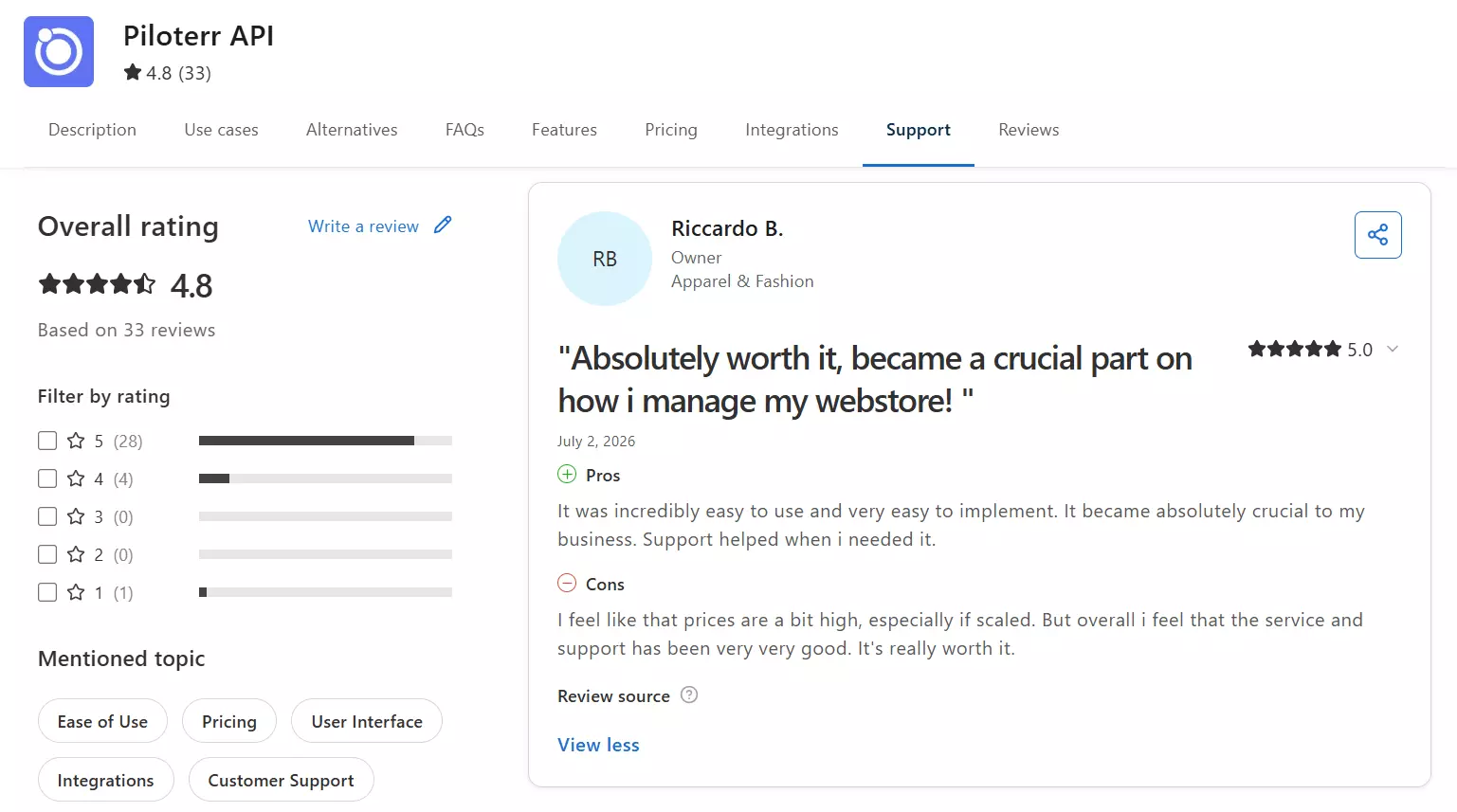
Piloterr offers live chat and email, and holds a 4.8 rating on Capterra across 33 reviews.
That's nearly neck-and-neck with lobstr.io, and well clear of Apify.
For an API-first product, that's a genuinely strong support story.
3. Apify
User rating: ⭐ Apify store 5.0 (just 1 review)
| Criteria | Score (/10) |
|---|---|
| Usability | 8 |
| Speed | 10 |
| Cost | 6 |
| Scalability | 6 |
| Data (richness / quality) | 6 / 7 |
| Support | 5 |
| Overall | 6.9 |
Best for: Apify-native teams grabbing a fast one-off SeLoger pull... a quick market snapshot or a small lead-gen job.
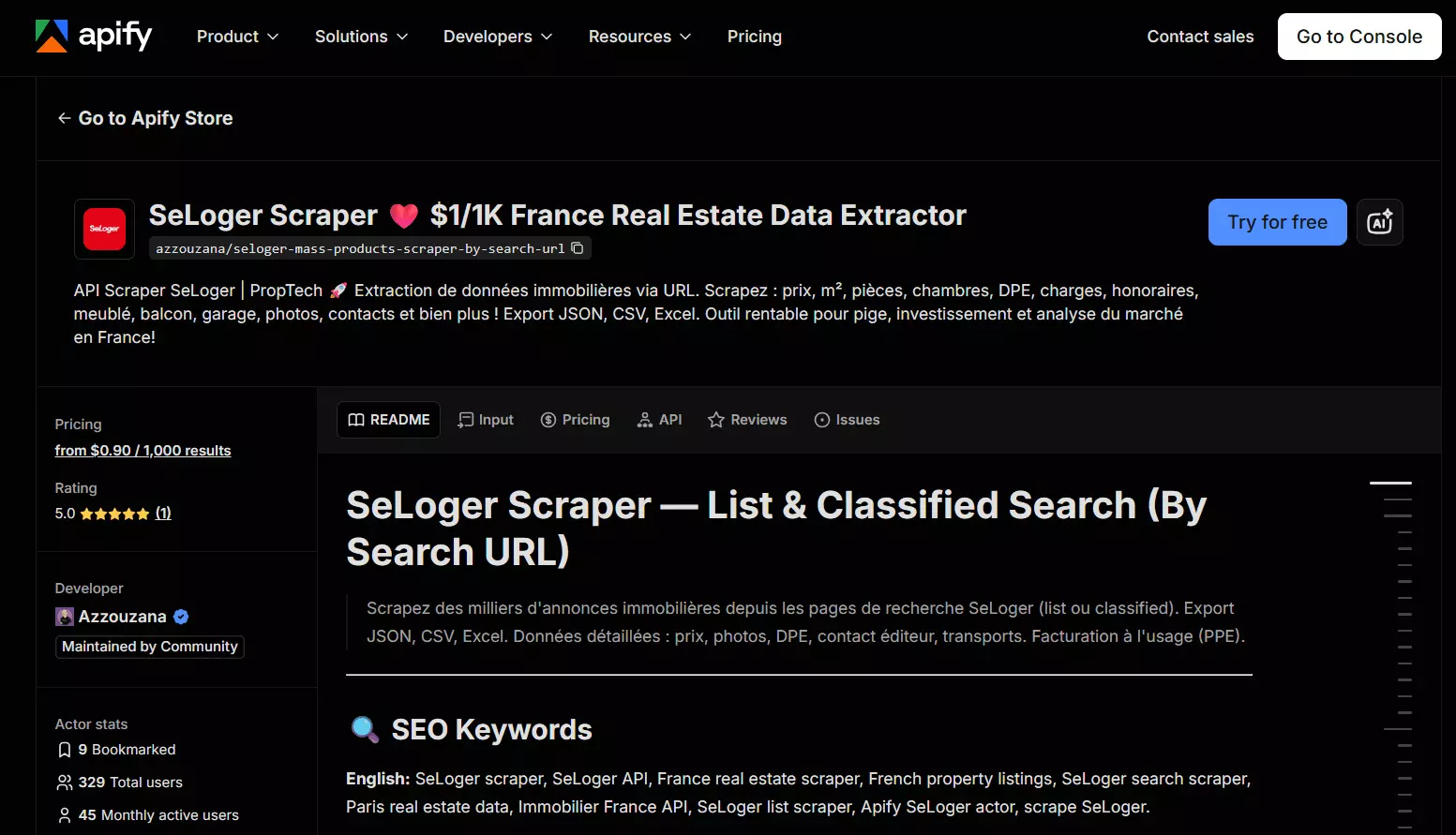
There's no first-party SeLoger scraper, so I tested the community-maintained SeLoger actor... the one people actually land on.
| Pros | Cons |
|---|---|
| Quick single run... 290 listings/min | Community-maintained... Apify's own support can't fix it |
| Clean, easy no-code app | Pricey at scale... $0.90/1k |
| Deep integration catalog (Make, n8n, Zapier) | Thin, generic data... no geo, energy, or valuation |
| Many export formats (CSV, JSON, Excel, XML, HTML) | One URL at a time, no bulk input |
| Recurring free tier... ~3k/mo | Only 1 store review... no track record |
| 30-day data retention |
Data
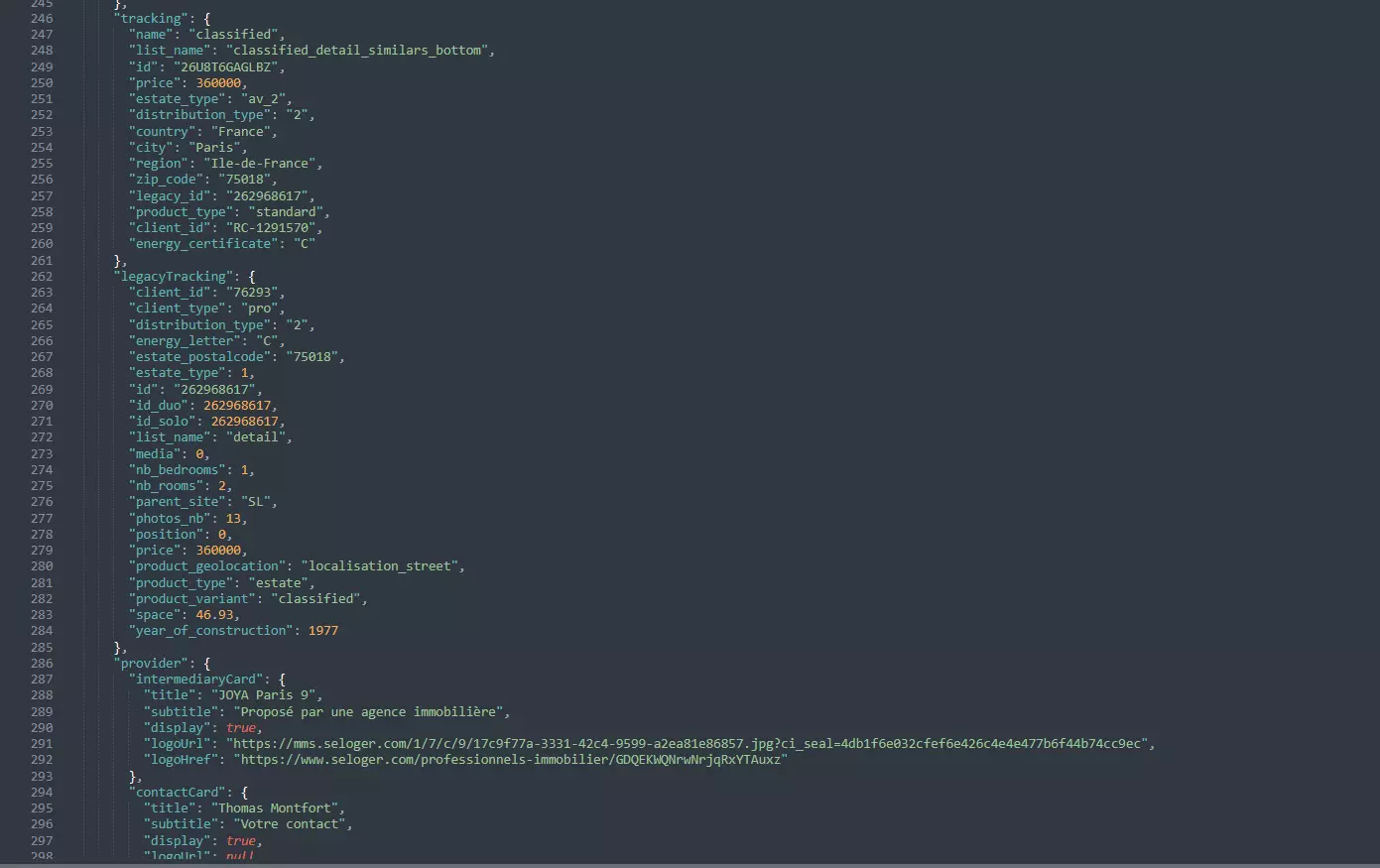
Apify returns 150 fields, but only ~62 (about 41%) are meaningful.
That's a shade cleaner than Piloterr's ratio, nested but manageable at seven levels deep.
The other ~88 fields are analytics and UI plumbing.
The bigger problem: it has no meaningful unique data.
Everything Apify captures, one of the other two also captures, usually better.
It's essentially a cleaned subset of the same SeLoger page Piloterr dumps raw.
But it has no coordinates, no granular energy, no co-ownership, no valuation, and no mortgage estimate.
| Category | Notes |
|---|---|
| 🏠 Property core | hardFacts.price, rawData.surface, nbroom, nbbedroom, property type... all present, but price is a string ("360 000 €") |
| 🏪 Agency | full agency card, but SIRET is buried inside an agencyLegalInformations text blob, not parsed out |
| 📷 Media | full-resolution image gallery with room classification... genuinely good here |
| ❌ Missing | latitude/longitude, GES + consumption numbers, co-ownership, valuation, mortgage |
| 🪤 Dead fields | gallery.images[].title and description populate on only ~3% of images |
It's fine if all you need is the core listing plus photos.
Anything more analytical and you'll feel the gaps... parsing string prices and text-blob SIRETs by hand.
Usability
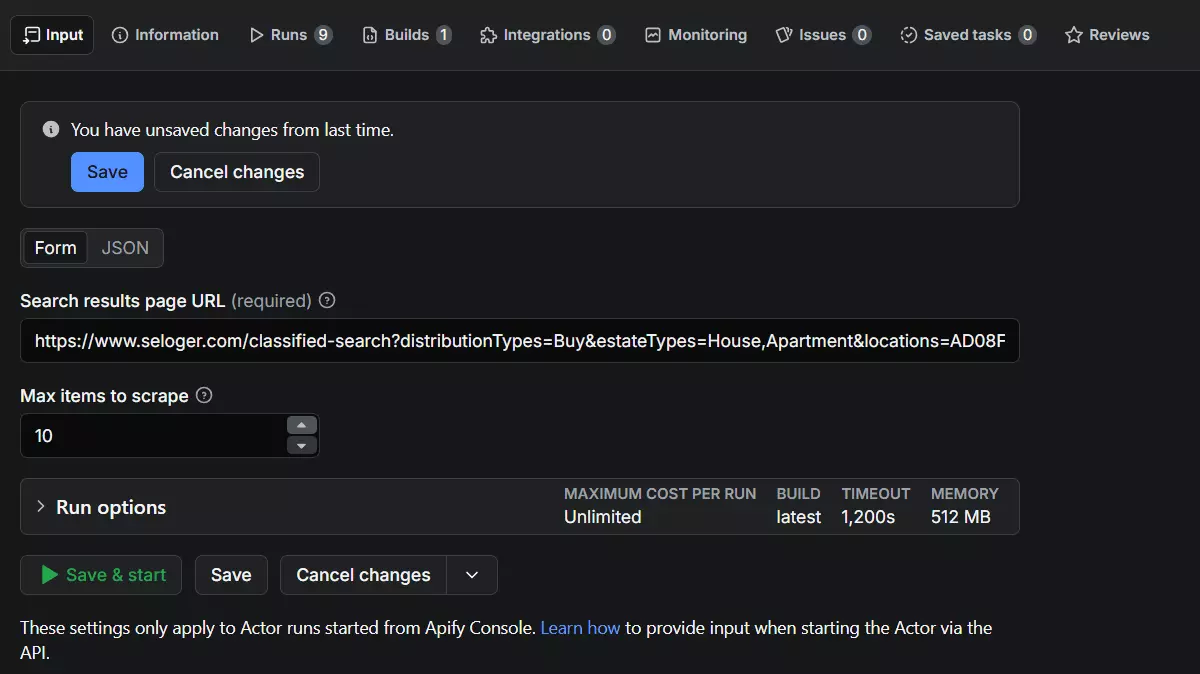
The actor itself is a clean, single-page setup... paste a URL, set a cap, run.
As a no-code experience it's close to lobstr.io's.
Ways to feed it a job:
- One SeLoger search URL at a time (no multi-URL, no bulk)
Filters: just Max items to scrape. That's it... the thinnest filter set of the three.
Where it recovers is the platform around it.
Apify has built-in scheduling and the deepest integration catalog here... Make, n8n, Zapier, and every major AI/agent tool.
Exports cover CSV, JSON, Excel, XML, and HTML, and data sits on their servers for 30 days.
A failed run leaves your partial data downloadable... you resurrect the run to continue, rather than pausing it.
Speed
Apify was the fastest tool I tested... 290 listings/min, edging lobstr.io's 260 and Piloterr's 210.
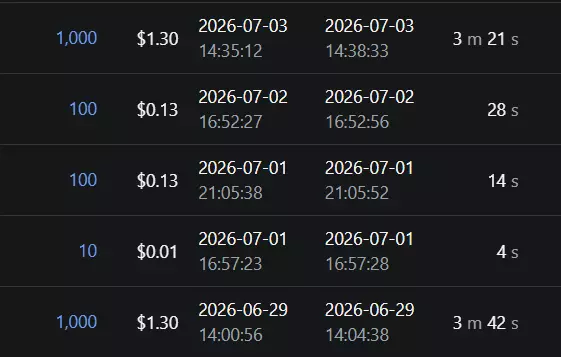
There's no page-details add-on, so that's the number for everything it collects.
100,000 listings takes about 5.75 hours.
Cost
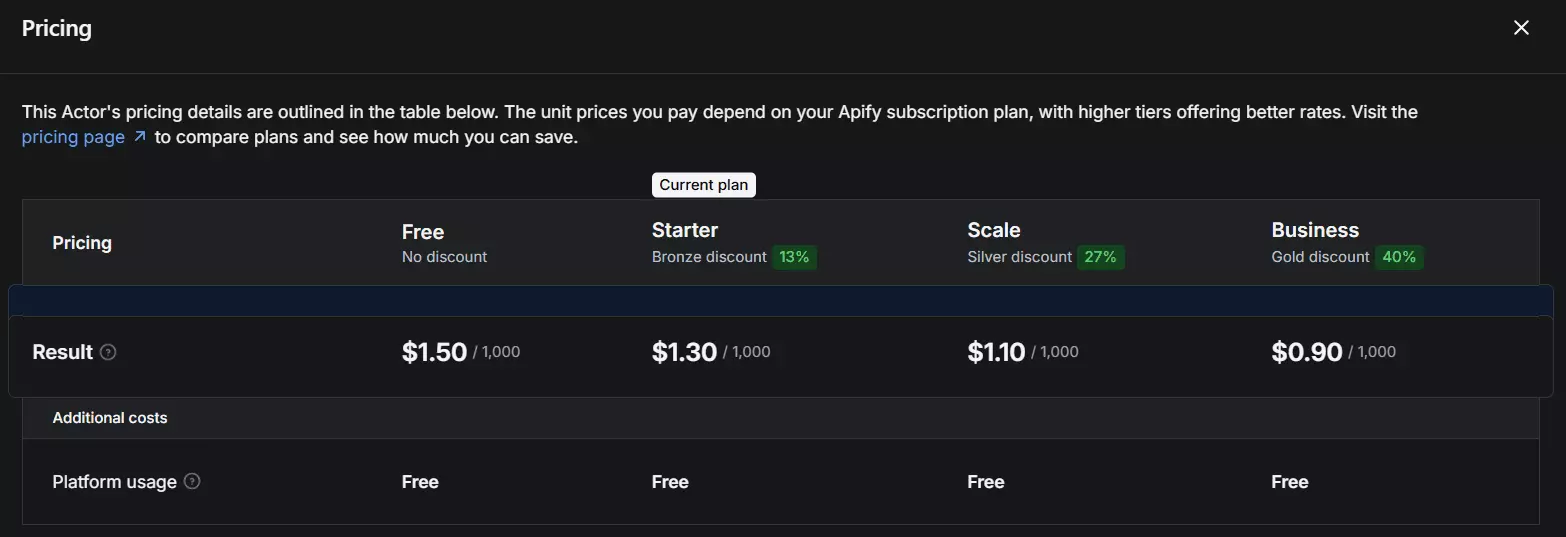
- Free tier: ~$5 in credits monthly (~3k+ listings)... the most generous recurring free tier here
- Entry: $1.50 / 1k listings
- At scale: $0.90 / 1k listings
The recurring free credit is genuinely nice for small, ongoing jobs.
But at scale Apify is the priciest of the three... $0.90/1k is triple lobstr.io's $0.25 and roughly 7x Piloterr's $0.13.
For 100,000 listings, that's about $90, versus $25 on lobstr.io and $13 on Piloterr.
Scalability
At 290/min running 24/7, the single-run ceiling is ~12.5M listings/month ... the highest single-unit number here, since Apify is the fastest per run.
On cost, it's the priciest to run... $900 per million listings.
But there's no concurrency slider.
Parallelism is tied to the memory you allocate, so you scale by paying for more compute, not by flipping a switch.
There's no built-in way to fan out the way lobstr.io does with Slots.
Past a single run, lobstr.io's 20-Slot Squid (~224.6M/month) leaves it far behind.
Customer support
This is where Apify drops.
The platform has tickets, Discord, and email... but the SeLoger actor is community-maintained.
So Apify's own support can't help with actor-specific problems.

When SeLoger changes something and the actor breaks, you're waiting on whoever maintains it.
And there's no track record to lean on... the actor carries a single review, so there's no real signal on reliability over time.
The scrapers that didn't make the list
These aren't bad tools. They're just not dedicated SeLoger scrapers, which is what this list is about.
| Tool / type | Why it's cut |
|---|---|
| General-purpose platforms (Bright Data, Octoparse, Zyte) | No pre-built SeLoger scraper... you build and maintain the parser yourself |
| DIY scripts | Break on every SeLoger UI or anti-bot change |
| Browser extensions | Choke past a few hundred listings |
General-purpose scraping platforms
- They can hit SeLoger, but they don't understand it ... there's no dedicated SeLoger actor or template, so you're writing selectors and handling the page structure yourself
- That's a different job ... the three tools above hand you SeLoger fields out of the box, these hand you a blank canvas and a proxy pool
Who they're right for: teams already on Bright Data or Zyte for many sites, who'd rather run one general stack than adopt a dedicated tool.
DIY scripts and browser extensions
- DIY Python or Node scripts die the moment SeLoger ships a class-name change or a new anti-bot check, and you're back to maintenance
- Browser extensions are handy for grabbing a handful of listings by hand, but they fall over past a few hundred rows and can't be scheduled or scaled
Who they're right for: a one-time, tiny pull where you just need 50 listings and don't care if it breaks next week.
FAQ
Which SeLoger scraper has the most data?
Piloterr, at ~114 meaningful fields (326 raw).
It's the only one with market valuation, a mortgage estimate, and heating type.
Just know only about 35% of its raw output is meaningful... the rest is SEO, ad, and tracking noise.
What's the cheapest SeLoger scraper?
Piloterr, and it's not close... $0.16/1k at entry, dropping to $0.13/1k at scale.
That's roughly 5 to 8 times cheaper than lobstr.io or Apify on search data.
The one exception is page details at scale, where lobstr.io's $2.25/1k beats Piloterr's $4.66.
Which SeLoger scraper is best overall?
lobstr.io, at 8.9/10.
It's not the cheapest or the richest, but it's the cleanest... a flat, pre-parsed row where ~83% of the fields are meaningful.
It's also the most scalable (20 Slots/Squid, up to 100 account-wide) and the only one with a usable geo point.
And it won't lose your data on a failed run.
Does SeLoger have an official API?
No. SeLoger and its parent company AVIV don't offer a public API for any of their portals.
There are undocumented internal endpoints, but they're unofficial and change without notice.
So a scraper is the practical route.
Is it worth turning on page details?
Usually not.
On lobstr.io, page details drop speed from 260 to 1 listing/min and cost from $1 to $9 per 1k.
All you gain is geo coordinates, granular energy numbers, amenities, and co-ownership.
For lead-gen, price monitoring, or market overviews, the search tier already has the core listing, photos, agency data, and DPE letter.
Only turn it on if you specifically need those extra fields.
Which SeLoger scraper is best for a developer pipeline?
The trade-offs are real though... no data retention, so build your own save-and-retry logic, and expect to parse a deeply nested response.
Can I scrape SeLoger legally?
Generally yes, for public factual data (prices, surfaces, locations), under EU and French law.
The real limits are two: GDPR and French database rights.
GDPR means listings carry personal data (agent names, phones), so you need a lawful basis.
Database rights mean you can't lift whole categories and republish them in competition.
Conclusion
That's a wrap on the best SeLoger scrapers for 2026.
Quick recap of who owns what:
- lobstr.io owns clean, ready-to-use data, effortless scale, usable geo coordinates, and the best support in the category. The default pick for almost everyone, and the one I'd reach for first
- Piloterr owns price and data depth... the cheapest data by far, plus exclusive valuation, mortgage, and heating fields. The developer's pick, if you'll do the parsing and the plumbing
- Apify owns raw single-run speed and the integration ecosystem. A fine no-code pick for a fast one-off, as long as you don't need deep data or dependable support
This list will keep evolving as these tools ship updates, so I'll keep it current.