How LVMH Tracked Brand Visibility Across 14,000 Pages
LVMH Digital runs e-commerce intelligence for the group's beauty brands. Their Indirect E-commerce team tracks how LVMH brands — Dior, Guerlain, Givenchy — are displayed and performing on third-party e-retailers like Sephora.
To do that, they rely on SimilarWeb traffic exports. But there's a gap in the data.
The problem with raw traffic data
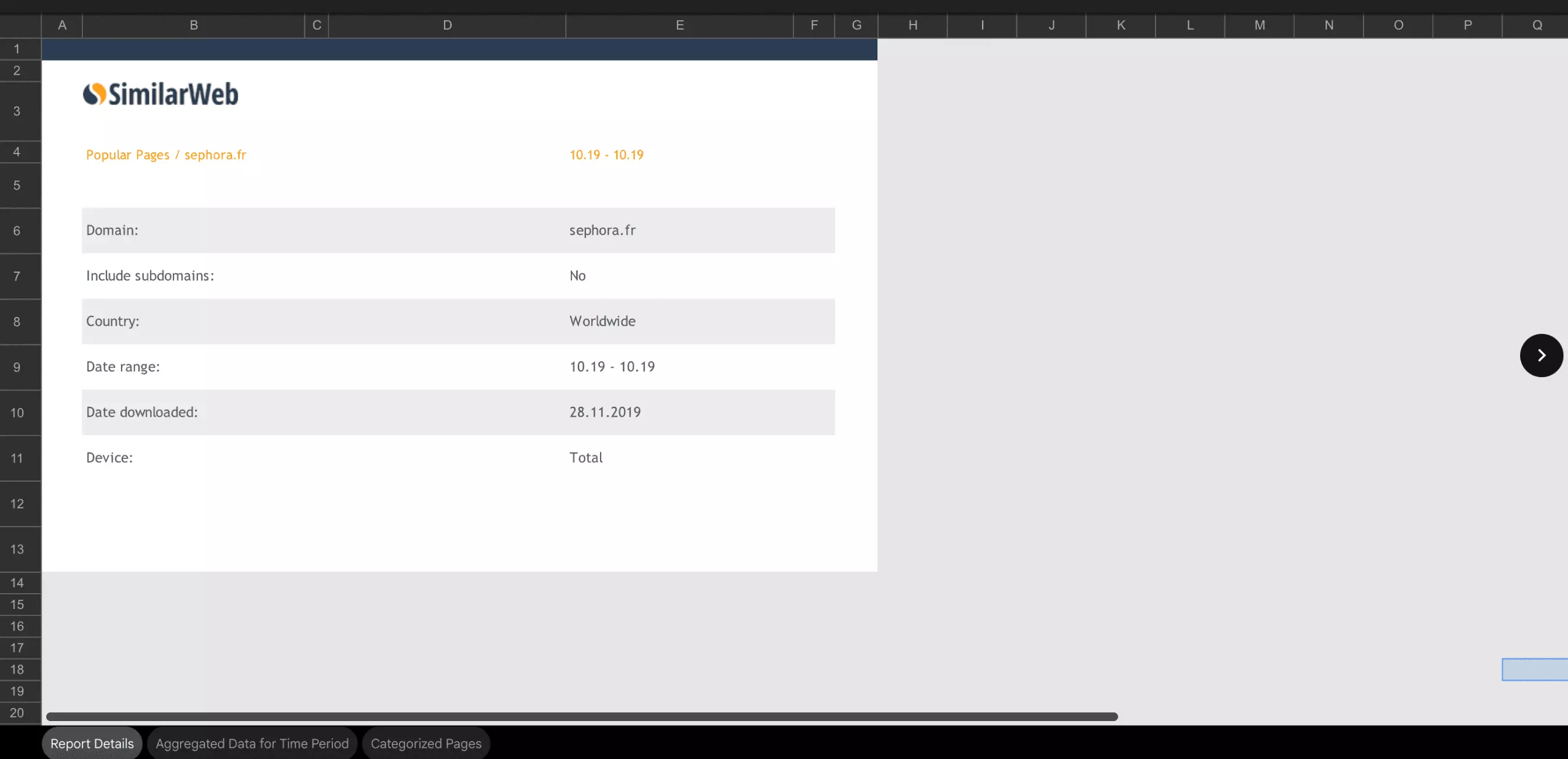
SimilarWeb delivers URLs with traffic share percentages. Nothing else. A typical export looks like this:
sephora.fr/dior/DIOR-HubPage.html — 0.11%
sephora.fr/guerlain/GUERL-HubPage.html — 0.06%
sephora.fr/shop/maquillage-c302 — 0.33%f
Without page categorization, meaningful analysis is impossible. Which URLs are brand pages? Which are product listings? The raw data doesn't tell you.
The scale of the challenge
The team needed to categorize thousands of URLs across 5 major e-retailers:
- Sephora US
- Sephora FR
- Ulta
- Nocibé
- Marionnaud
Each URL required manual inspection: page type identification, metadata extraction, and proper classification. For a team focused on strategic insights, spending weeks on data preparation was simply not viable.
Automated page categorization with lobstr.io
LVMH Digital partnered with lobstr.io to automate the entire workflow. The process was straightforward.
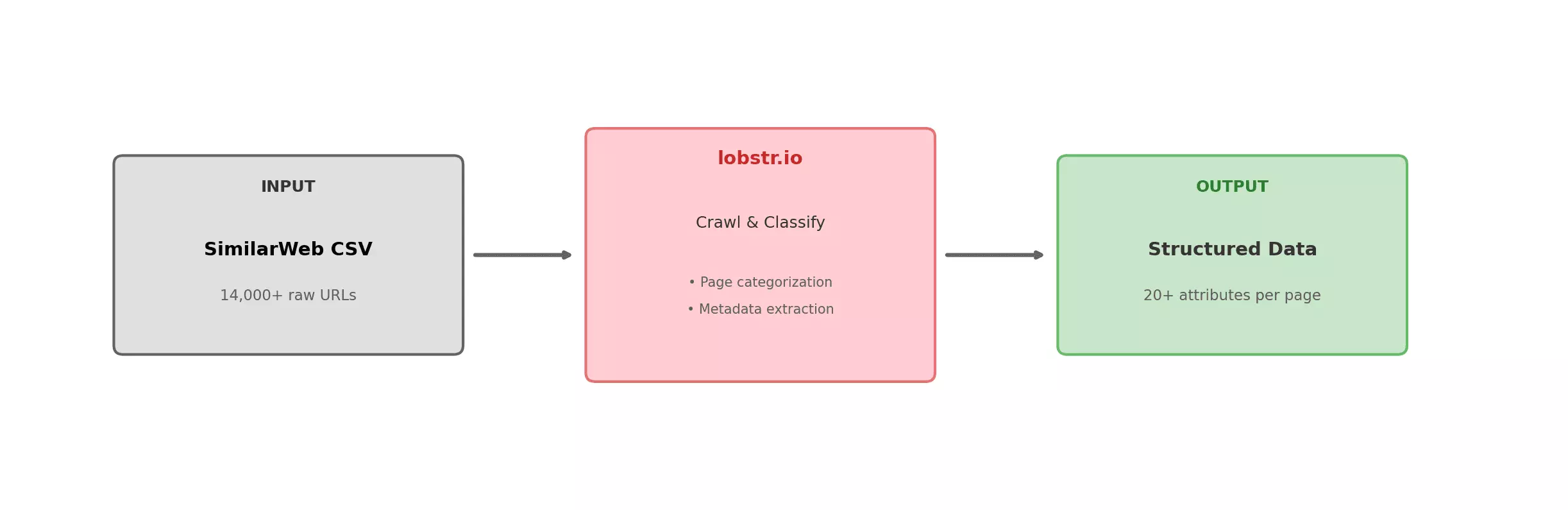
Step 1: Upload the raw SimilarWeb CSV containing all URLs to analyze.
Step 2: lobstr.io crawls each URL and classifies it into categories: ProductPage, BrandLandingPage, CategoryListPage, SearchPage, or BrandListPage.
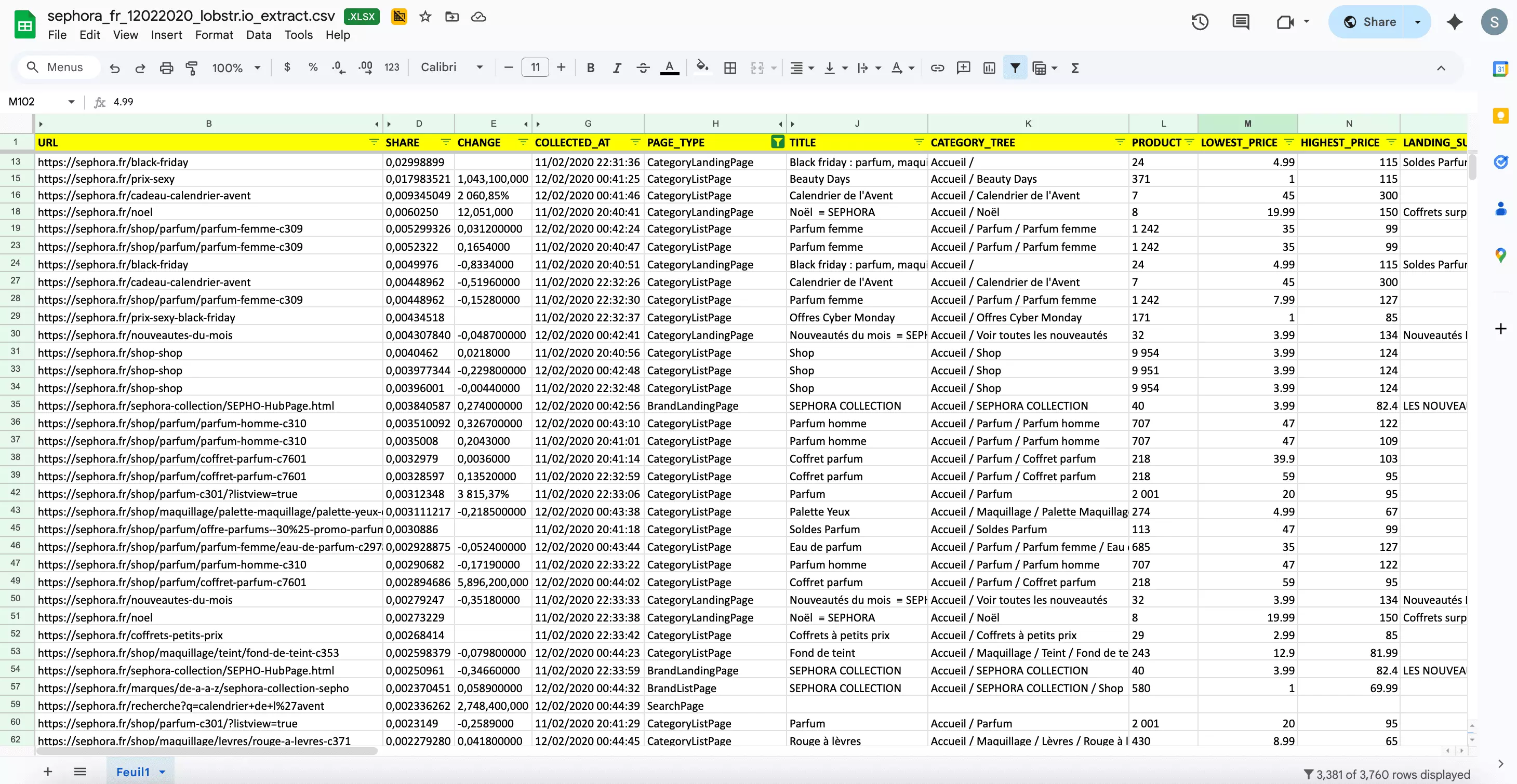
Step 3: Extract 20+ attributes per page type, including traffic share, product counts, price ranges, and brands featured.
Structured output, ready for analysis
Beyond classification, lobstr.io extracted rich metadata for each page:
{
  "url": "https://www.sephora.fr/dior/DIOR-HubPage.html",
  "share": 0.11,
  "change": 0.02,
  "page_type": "BrandLandingPage",
  "title": "DIOR",
  "breadcrumb": "Accueil / DIOR",
  "total_products": 38,
  "lowest_price": 27,
  "highest_price": 329,
  "landing_subcategories": "Les nouveautés / Les incontournables"
}f
All delivered in structured spreadsheets, ready for pivot tables and dashboards.
14,000+ pages processed
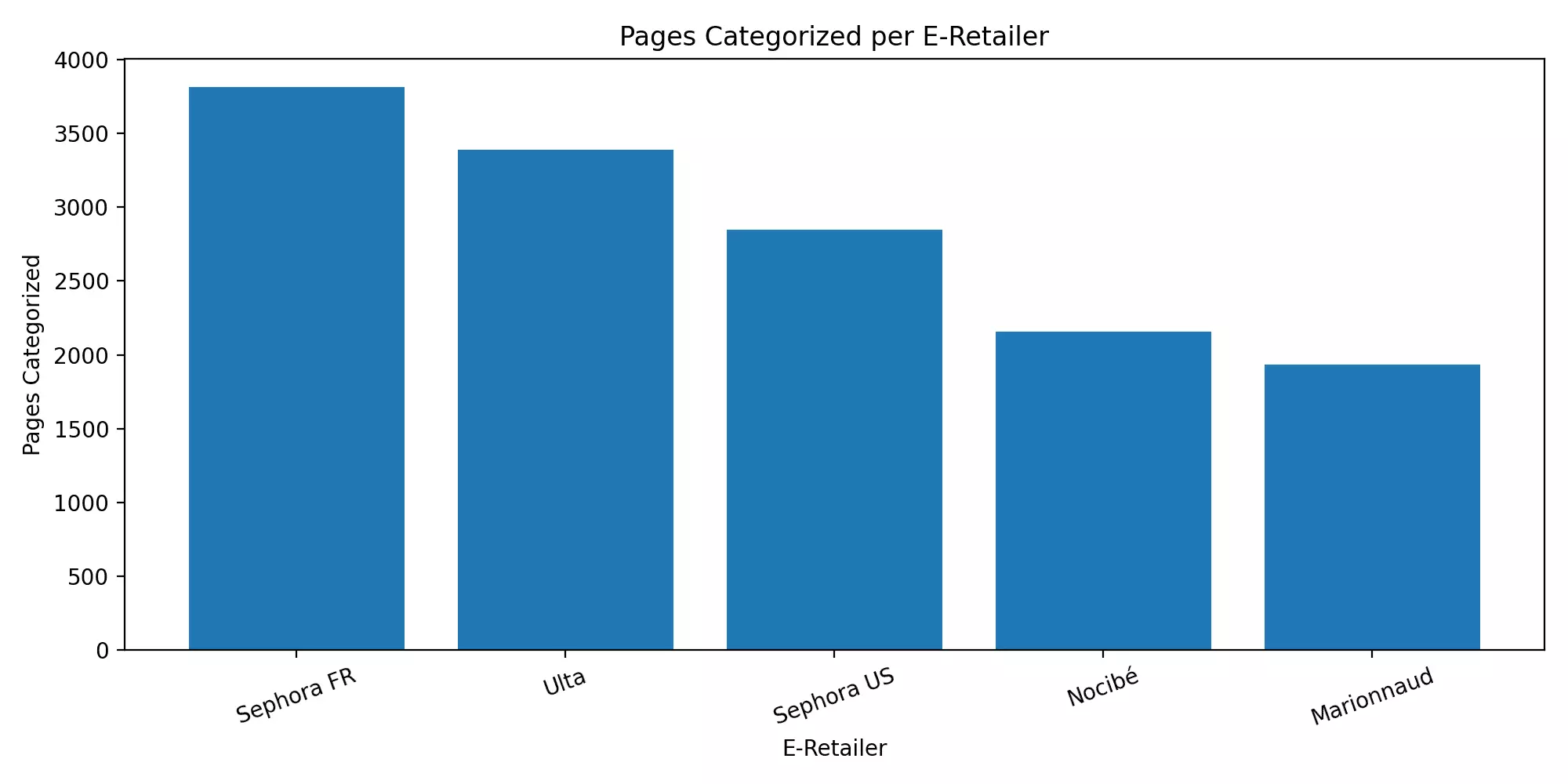
The final output covered 5 e-retailers:
| E-Retailer | Pages Categorized |
|---|---|
| Sephora FR | 3,818 |
| Ulta | 3,392 |
| Sephora US | 2,847 |
| Nocibé | 2,156 |
| Marionnaud | 1,934 |
| Total | 14,147 |
Manual categorization would require approximately 2.5 minutes per page. That's 570+ hours of work, or 70 business days saved.
With lobstr.io, data was delivered in days, not months.
From raw data to brand visibility insights
With categorized data, the Indirect E-commerce team could finally report on what matters to LVMH's Maisons:
- Which brand pages are gaining or losing traffic on Sephora (+52% for Anastasia Beverly Hills, -21% for Guerlain)
- How many products each brand has featured on their landing pages
- How LVMH brands compare to competitors in terms of e-retailer visibility
The structured output enabled brand visibility tracking at scale — exactly what the team needed to brief internal stakeholders.


Key takeaways
- 14,000+ pages categorized across 5 e-retailers
- 20+ data points extracted per page
- 70 days of manual work saved
- Structured output ready for brand visibility reporting