Best TripAdvisor Reviews Scrapers of 2026 [No-Code Edition]
⚡ 30-Second Summary
- I tested and compared the best TripAdvisor reviews scrapers that actually work at scale in 2026, focusing on data depth, pricing, speed, filtering, and AI-readiness.
- Lobstr.io is the best overall pick. 50+ data points per review, 650+ reviews per minute, $0.5 per 1k at scale, and the richest filtering options (language, rating, recency).
- The only trade-off with Lobstr.io is no native integrations. You'll need Make.com or the API.
- Apify is a strong second choice with good data, native integrations, and MCP compatibility for AI agent workflows.
- Apify's trade-offs are inconsistent speed and fewer review context fields than Lobstr.io.
- Outscraper is the budget option with pay-as-you-go pricing and no monthly commitment.
- But it only gives you ~15 data points, is 6x slower than Lobstr.io, auto-translates reviews (poorly), and has a confusing interface.
- This guide breaks down which tool makes sense based on what you care about most.
I've already shown you how to scrape TripAdvisor reviews step by step using Lobstr.io.
But that guide missed one thing... choice.
And finding a dedicated TripAdvisor reviews scraper that works at scale, gives you rich data, and doesn't cost a fortune is honestly a headache (I experienced it 😭).
The internet is full of broken GitHub scripts, Chrome extensions that choke after 50 reviews and give you review text and a star rating... and nothing else.
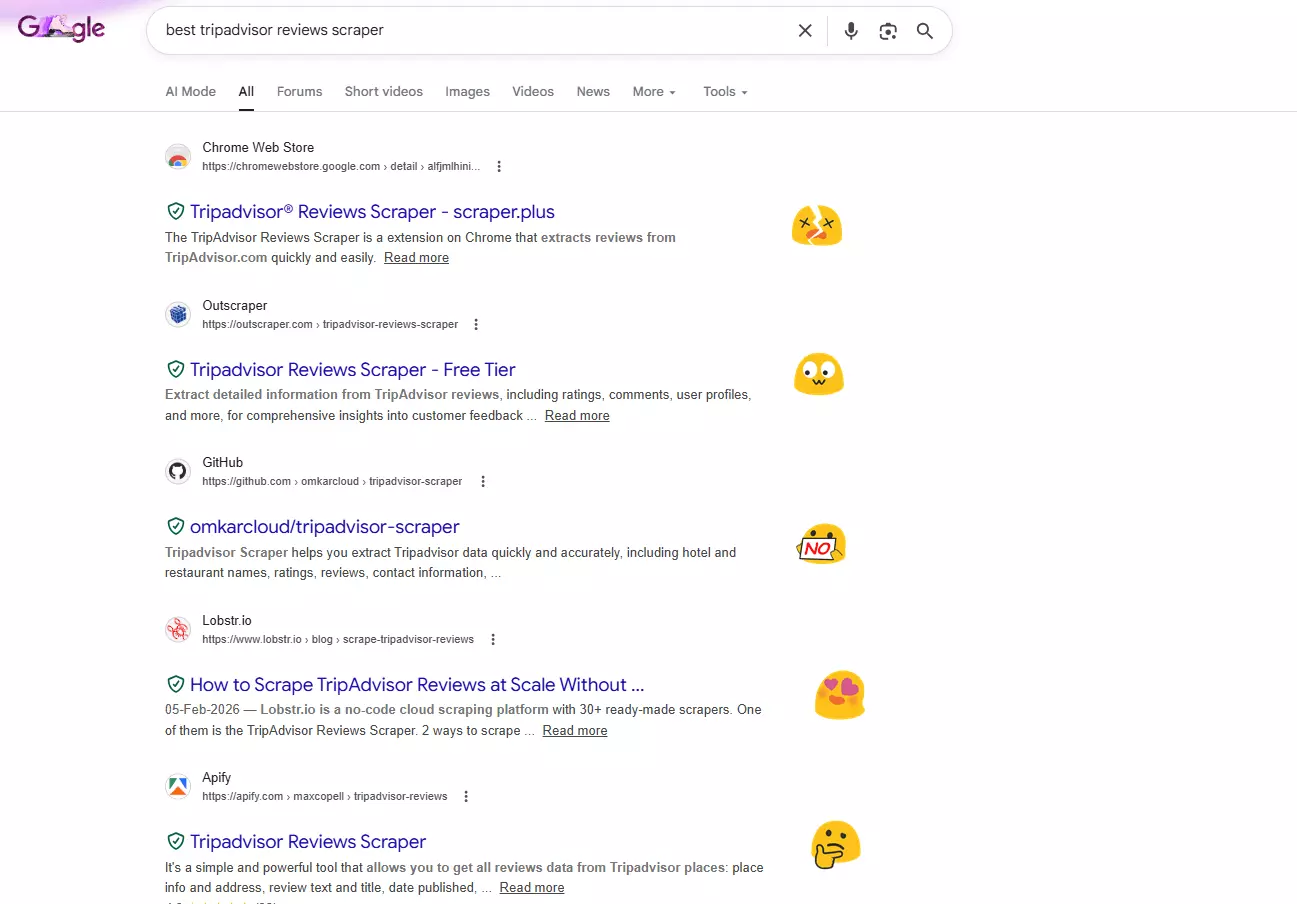
Even the ones that work are just good for hobby projects, not for scalable and rich review data that you can actually feed to an AI agent for proper analysis.
So I went and tested tools that are actually built for scraping TripAdvisor reviews at scale with the data depth your analysis workflows actually need.
Here are my top 3 picks.
| Criteria | Lobstr.io | Apify | Outscraper |
|---|---|---|---|
| User rating | 5 | 4.7 | 4.7 |
| Cost per 1k reviews | $2 (drops to $0.5) | $2 (drops to $0.9) | $4 (drops to $2) |
| Data points | 50+ | 30+ | ~15 |
| Review filtering | ✅ Language, rating, recency | ✅ Language, rating, date | ⚠️ Recency, language only |
| Subratings | ✅ | ✅ | ❌ |
| Owner responses | ✅ | ✅ | ⚠️ Basic |
| Reviewer metadata | ✅ | ✅ | ❌ |
| Place metadata | ✅ | ✅ | ❌ |
| Speed | 650+ reviews/min | 500+ reviews/min | ~100 reviews/min |
| TripAdvisor search scrapers | ✅ Restaurants (with emails & phones) | ✅ Hotels, restaurants, attractions | ✅ Hotels, restaurants, attractions |
| Integrations | Make.com (3000+ apps) | Many native | Zapier, HubSpot |
| API access | ✅ | ✅ | ✅ |
| Ease of use | 💯 | 👍 | 👎 |
| Customer support | 💯 | 👍 | 👍 |
But before we get into the detailed breakdown, let's address two important questions first.
Why not just use TripAdvisor's official API?
Sounds promising until you see the limit. You get 5 recent reviews per listing.
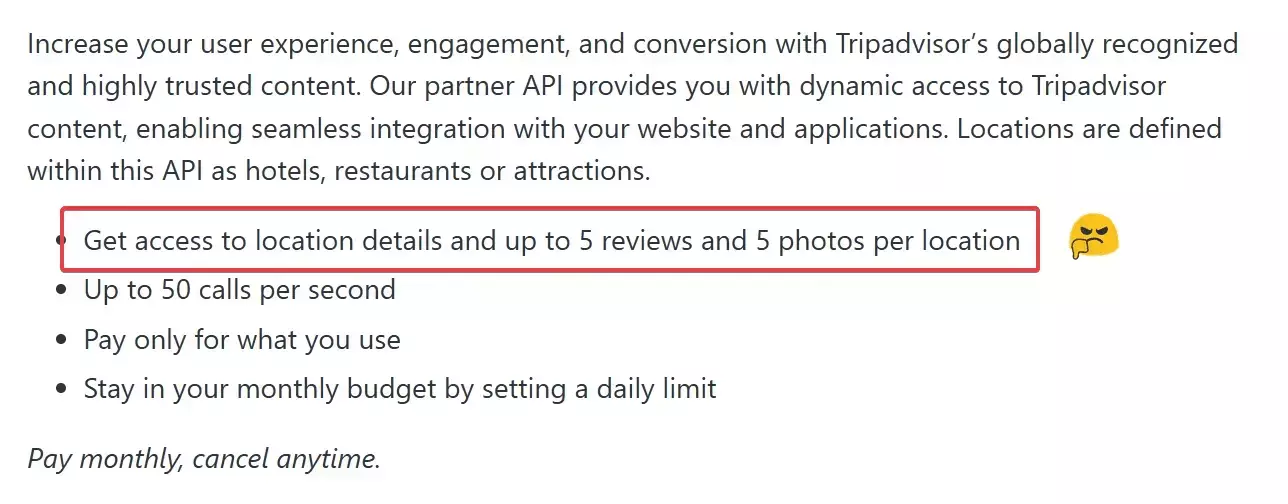
Which means if the hotel has 3,000 reviews, the official API gives you access to 0.16% of the data. Good luck running sentiment analysis on that.
That's exactly why you need a scraper.
But… Is it even legal to scrape TripAdvisor reviews?
Is it legal to scrape TripAdvisor reviews?
Disclaimer: This content is for informational purposes only and reflects publicly available information and the author's interpretation. It does not constitute legal advice. Laws and regulations vary by jurisdiction. Consult a qualified legal professional before scraping TripAdvisor data or using scraped data for commercial purposes.
Short answer... Yes, if you do it responsibly.
Let me break this into two parts:
- Does TripAdvisor allow scraping?
- Is it actually legal?
Does TripAdvisor allow scraping?
No. TripAdvisor really doesn't want you scraping their data.
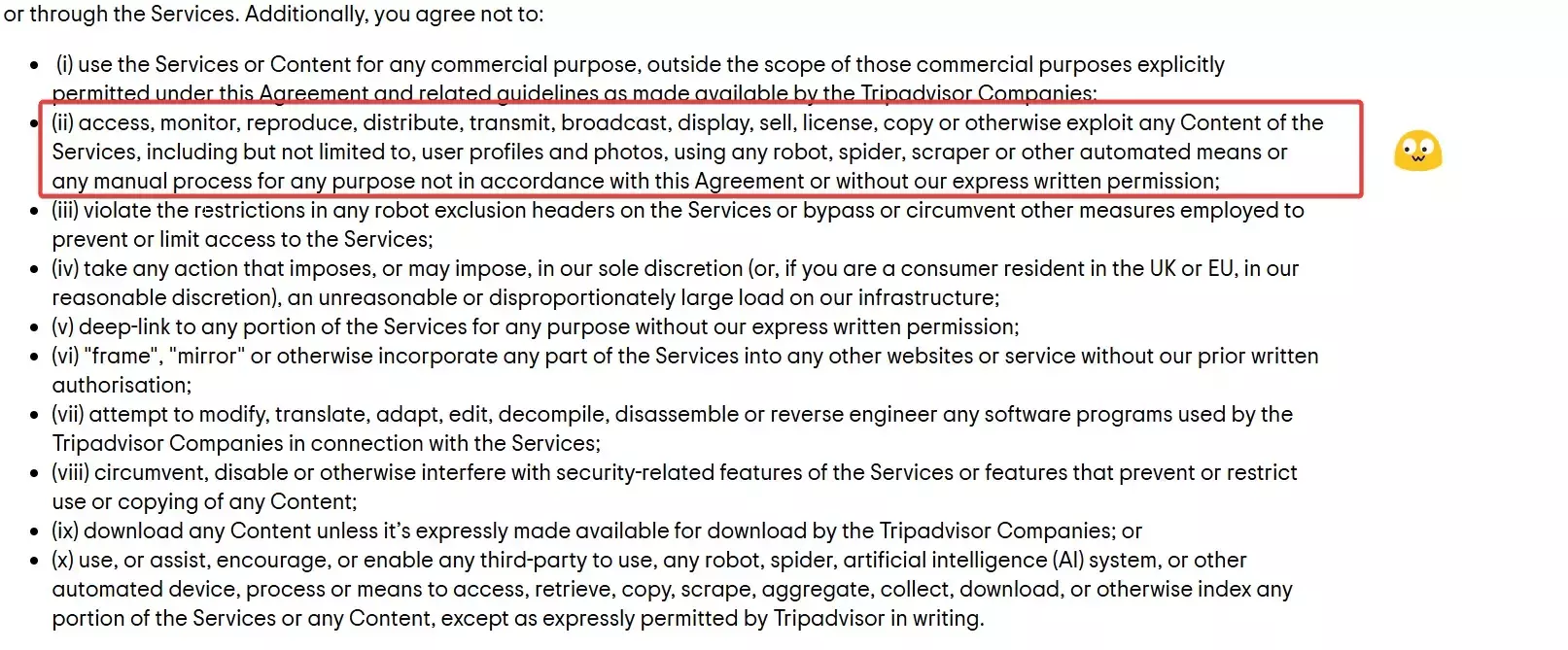
They ban the use of any robot, spider, AI system, or automated means to access, scrape, or collect any content from the platform.
But does that make it illegal?
Is it actually legal?
Yes. It's generally legal.
TripAdvisor reviews are publicly accessible. You don't need an account to read them. Anyone can view them in a browser.
Courts have consistently ruled that scraping publicly available data is legal. Violating a Terms of Service is a civil matter (breach of contract), not a criminal offense.
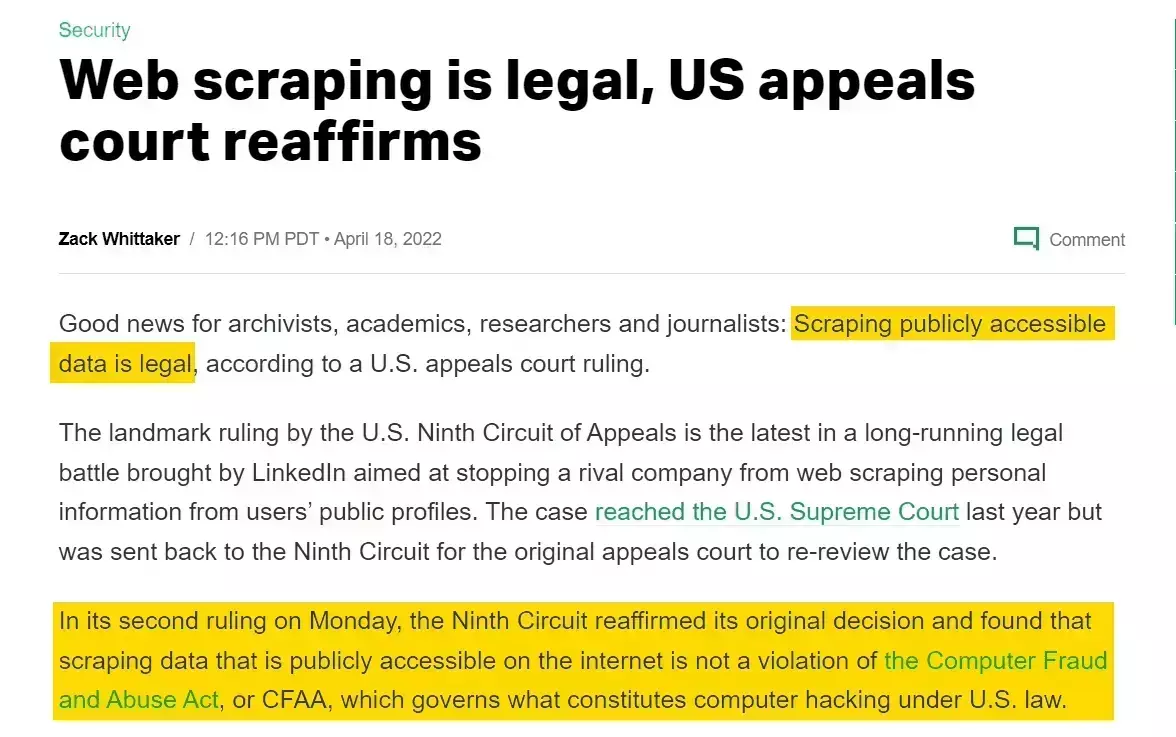
I've covered the legal landscape of web scraping in detail, including key court cases and regulations, in our legal series.
In practical terms, you're on safe ground as long as:
- You respect rate limits and don't overload TripAdvisor's servers ✅
- You comply with GDPR if scraping data involving EU citizens ✅
- You don't republish reviews as your own content (that's copyright infringement) ❌
- You use the data responsibly, no harassment, impersonation, or shady stuff ❌
Scraping for internal analysis, sentiment tracking, market research, or feeding your AI agent? You're most likely fine.
But how do you choose a good TripAdvisor reviews scraper?
How did I choose the best TripAdvisor reviews scrapers?
Before comparing tools, I first needed to understand what people actually struggle with when scraping TripAdvisor reviews.
So I went through Reddit threads, community discussions, and user reviews to find real pain points.
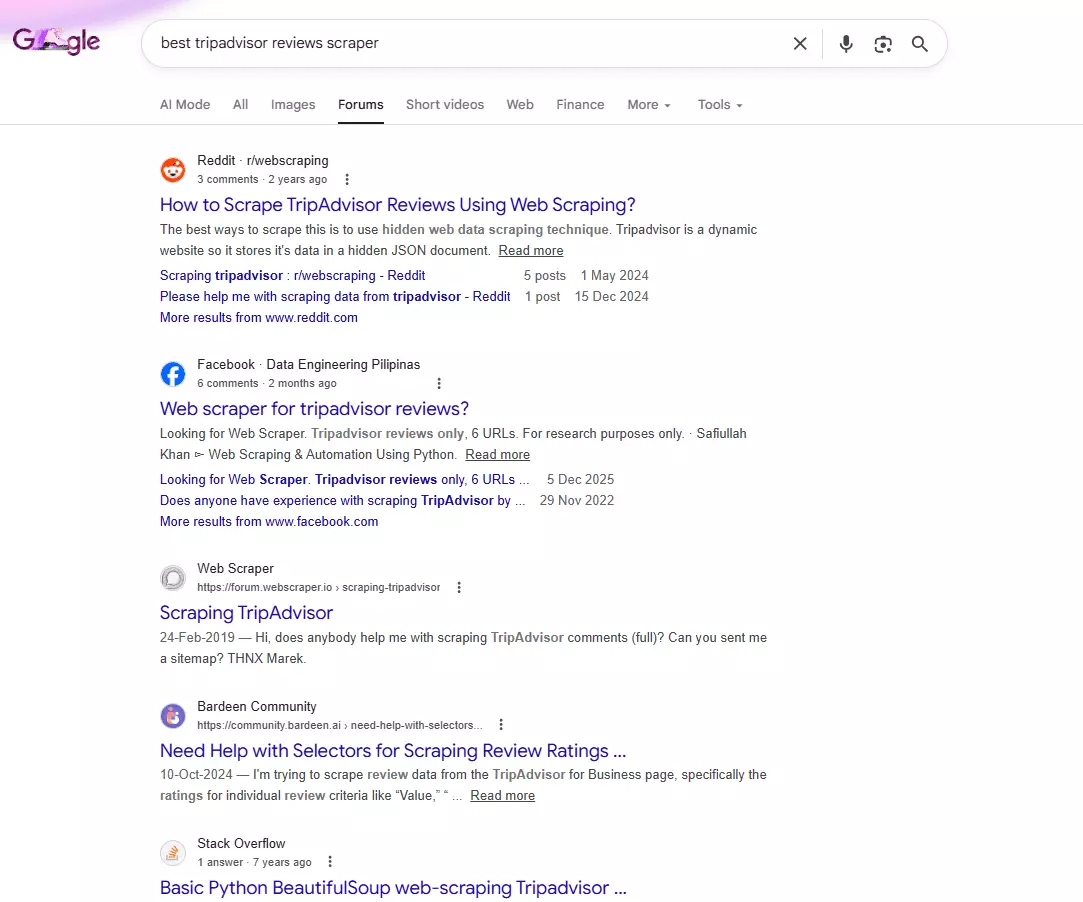
And shortlisted the most common pain points:
- Data quality
- Pricing
- Speed
- Filtering
- Integrations and export
- API access
- Ease of use
- Monitoring
Data quality
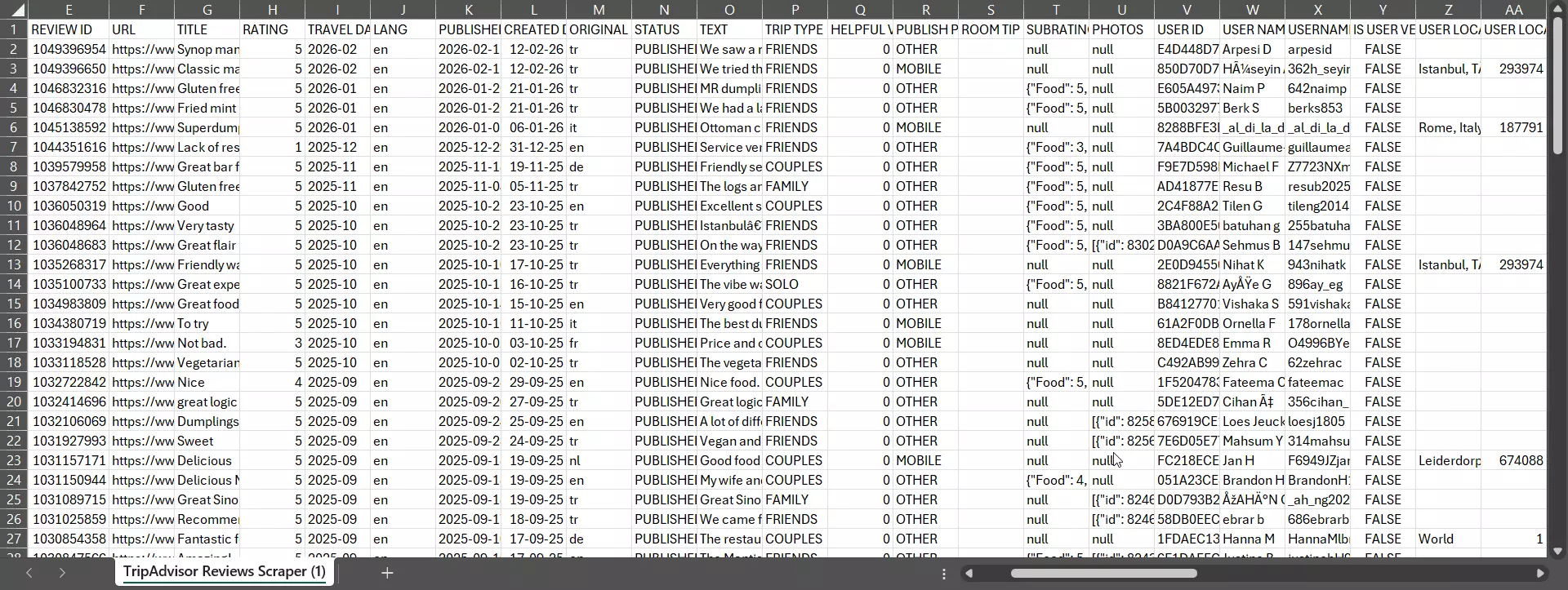
I simply removed the scrapers that give you just review text, a star rating, and a date.
That’s because if you're doing anything serious with this data, especially feeding it to an AI agent, you need way more context.
Pricing
Of course, I’m not Elon Musk. I need a scraper that fits my budget and stays affordable at scale. So I compared the actual cost per 1k reviews for each scraper.
Speed
Flash ⚡ is my favorite superhero and honestly I’m too impatient. Jokes apart, speed matters, you can’t collect reviews at scale if it takes you 2 hours to collect 1k reviews.
Filtering
Not all reviews are equally useful. If you're analyzing negative sentiment, you don't want to wade through 5,000 five-star reviews to find the 200 one-star ones.
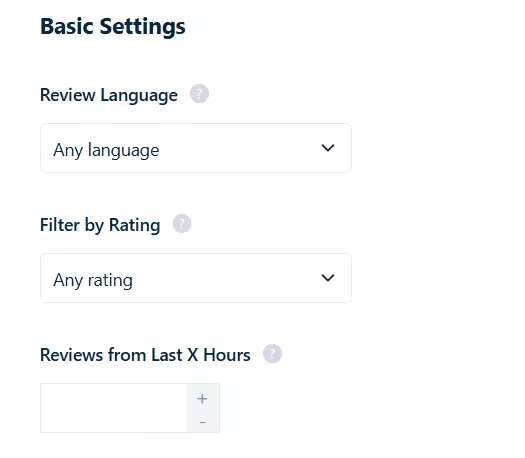
Language, rating, and date filters save time, reduce noise, and cut costs by letting you scrape only what you need.
This also directly impacts your AI workflow. Feeding irrelevant reviews to your agent is just wasting tokens.
Integrations and export
As much as I love JSON and CSV formats, I’m too lazy to export datasets manually to my workflows.
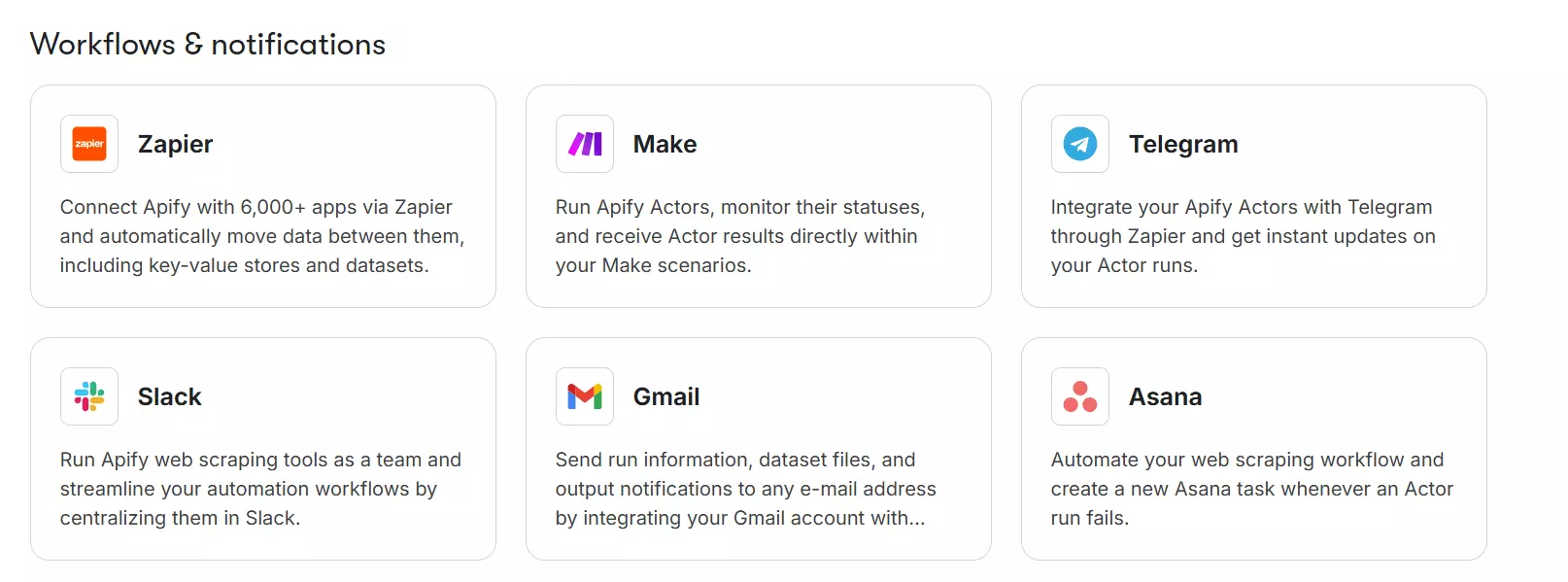
So I checked if the tools actually help you automate export to Google Sheets and 3rd party platforms and do they offer native integration with workflow automation apps.
API access
Since our ultimate goal is to scrape reviews at scale and feed them to AI, what if I want to build an application on top of that scraper in future?
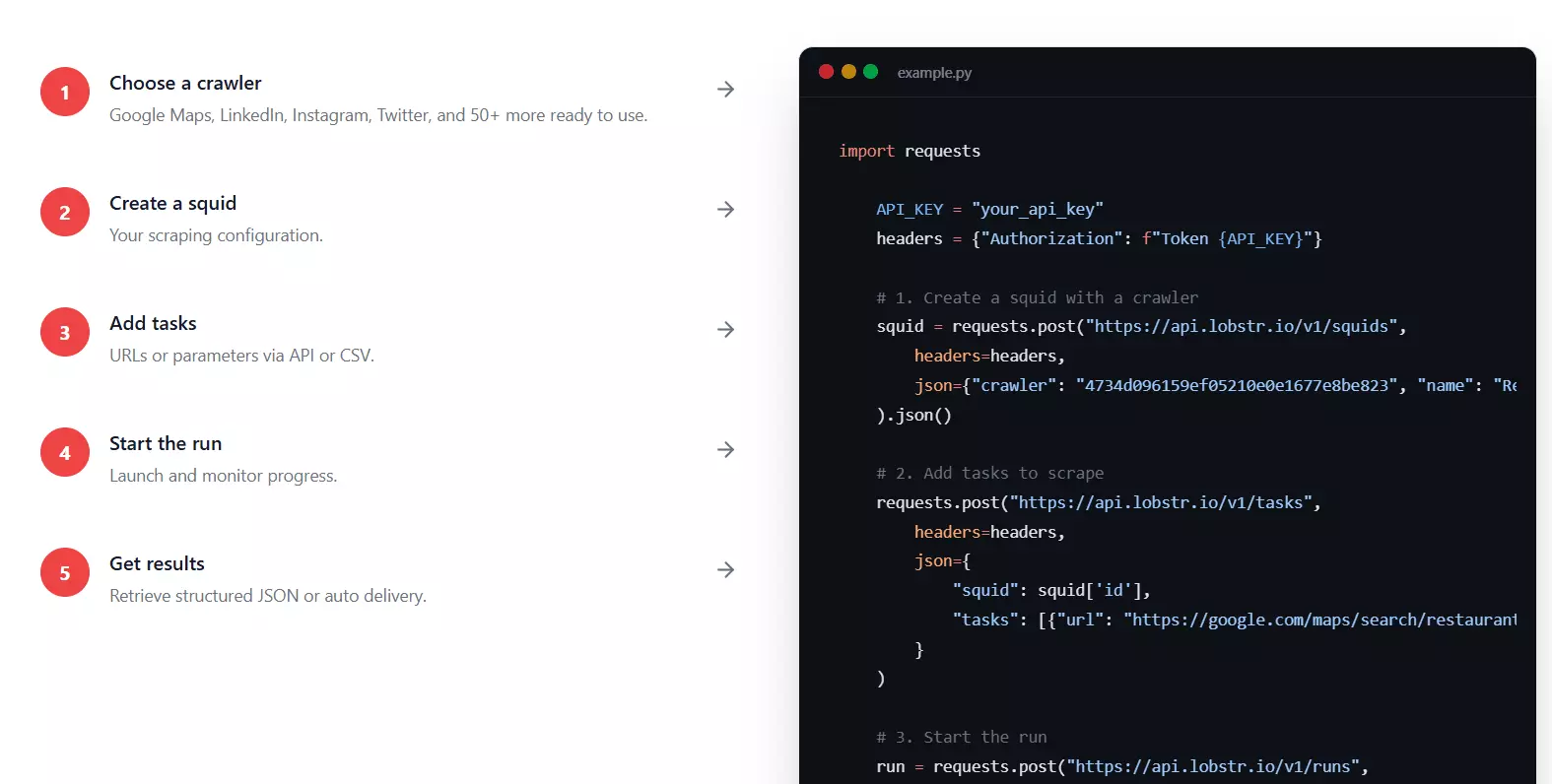
That’s why we need API access, so I made sure every tool I cover in this list must have API access and a clear documentation.
Ease of use
Since we're talking about no-code tools, the interface has to be simple enough that you don't need to be a nerd to use it.
Monitoring
Since we’re scraping reviews, an important factor is review monitoring. For that,I looked for scheduling capabilities in all scrapers I tested.
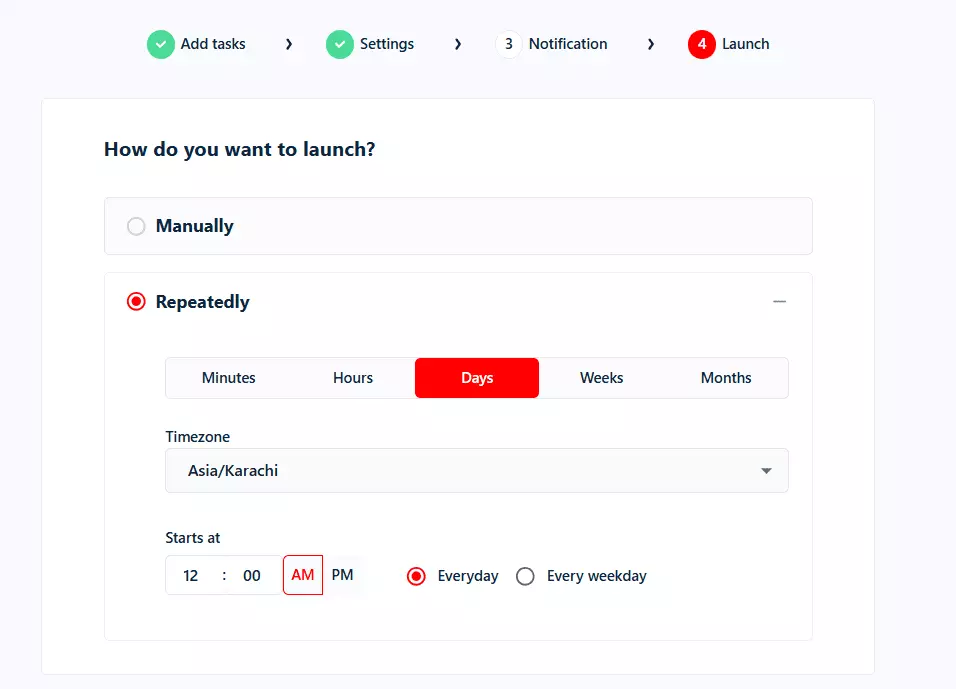
I also looked at documentation quality, customer support responsiveness, and how quickly you can go from sign-up to first scrape.
P.S. I did remove hobby projects on Github, Chrome extensions, API-only scrapers, as we’re focusing on no-code and scalable TripAdvisor review scrapers.
Best TripAdvisor Reviews Scrapers of 2026
| Criteria | Lobstr.io | Apify | Outscraper |
|---|---|---|---|
| User rating | 5 | 4.7 | 4.7 |
| Cost per 1k reviews | $2 (drops to $0.5) | $2 (drops to $0.9) | $4 (drops to $2) |
| Data points | 50+ | 30+ | ~15 |
| Review filtering | ✅ Language, rating, recency | ✅ Language, rating, date | ⚠️ Recency, language only |
| Subratings | ✅ | ✅ | ❌ |
| Owner responses | ✅ | ✅ | ⚠️ Basic |
| Reviewer metadata | ✅ | ✅ | ❌ |
| Place metadata | ✅ | ✅ | ❌ |
| Speed | 650+ reviews/min | 500+ reviews/min | ~100 reviews/min |
| TripAdvisor search scrapers | ✅ Restaurants (with emails & phones) | ✅ Hotels, restaurants, attractions | ✅ Hotels, restaurants, attractions |
| Integrations | Make.com (3000+ apps) | Many native | Zapier, HubSpot |
| API access | ✅ | ✅ | ✅ |
| Ease of use | 💯 | 👍 | 👎 |
| Customer support | 💯 | 👍 | 👍 |
1. Lobstr.io
User rating: 5/5 ⭐⭐⭐⭐⭐
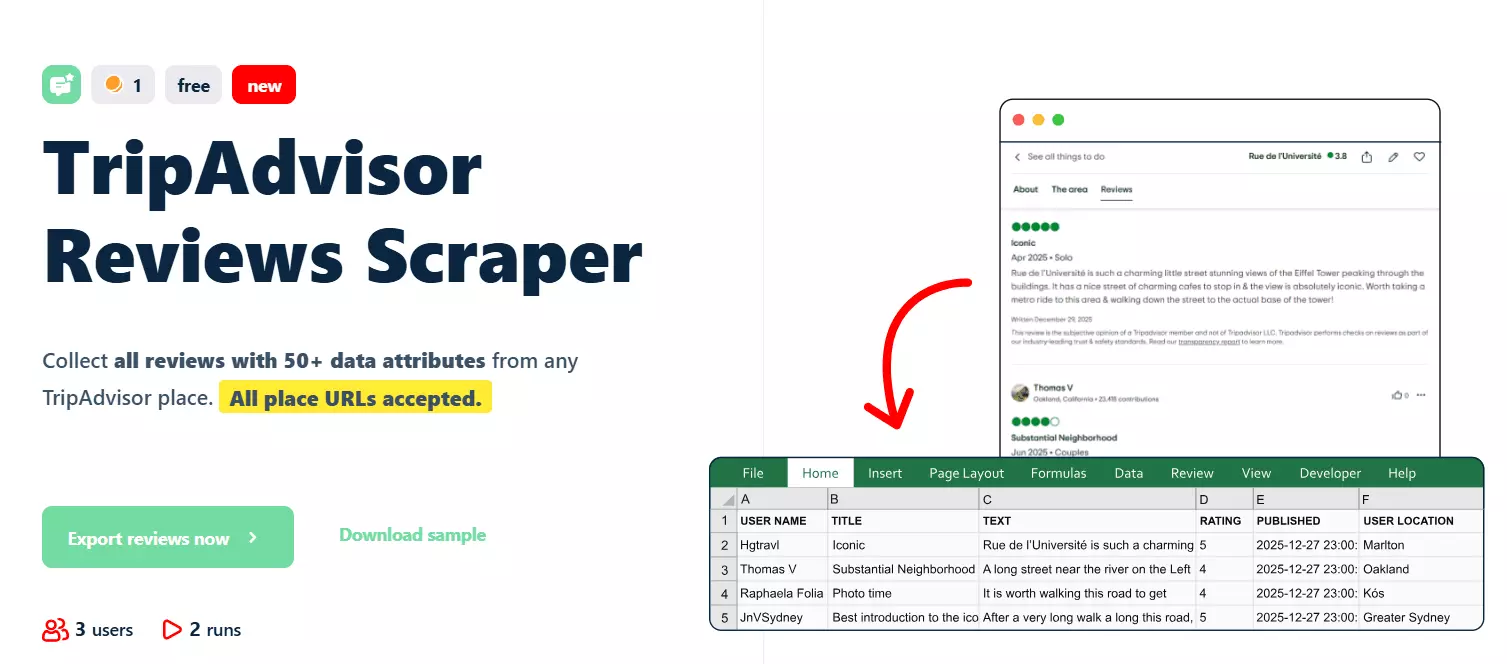
Lobstr.io is a no-code cloud scraping platform with 30+ ready-made scrapers across different domains, including a dedicated TripAdvisor Reviews Scraper.
| Pros | Cons |
|---|---|
| 50+ data points per review | No native integrations (Make.com or API required) |
| Filter by language, rating, and recency | |
| 650+ reviews per minute | |
| Affordable and transparent pricing | |
| TripAdvisor Restaurants Search Export with contact info | |
| Scheduling for review monitoring | |
| 3000+ integrations via Make.com |
Features
- 50+ data points per review including subratings, owner responses, and reviewer metadata
- Filter reviews by language, rating, and recency
- Schedule recurring runs for automated review monitoring
- Export to CSV, Google Sheets, Amazon S3, SFTP, or email
- Cloud-based, no installation required
- 3000+ integrations via Make.com
- Developer-friendly API
- TripAdvisor Restaurants Search Export for collecting listing URLs with emails and phone numbers
Data
You get 50+ data points per review. Not just the review text and a star rating, but the full context around it.
| review_id | title | text | rating | | subratings (Food, Value, Service, Atmosphere) | published_date | travel_date | trip_type | | helpful_votes | likes_count | status | lang | | original_language | url | photos | room_tip | | owner_response_id | owner_response_text | owner_response_lang | owner_response_published_date | | user_id | user_name | username | user_profile_link | | user_avatar_photo_sizes | user_location | user_location_name | user_total_contributions | | user_total_likes | user_helpful_votes | user_is_following | is_user_verified | | place_id | place_name | place_category | place_type | | place_city | place_state | place_web_url | place_rating | | place_total_reviews | place_rating_count_1 | place_rating_count_2 | place_rating_count_3 | | place_rating_count_4 | place_rating_count_5 | review_counts_by_language | place_parent_geo_id | | publish_platform | owner_connection_to_subject | is_local_provider | is_tools_provider | | scraping_time | functions | | |f
That's review data, reviewer data, place data, and owner response data all in one export.
If you're feeding this to an AI agent, this is the difference between your agent knowing "3-star review, food was bad" and knowing "3-star review from a verified user with 200+ contributions who visited in December for a family trip, rated food 2/5 and service 1/5, and the owner responded 3 days later apologizing for the wait times."
Pricing
Lobstr.io runs on a monthly subscription model, ranging from $20 to $500 per month, with a fixed number of credits included in each plan.
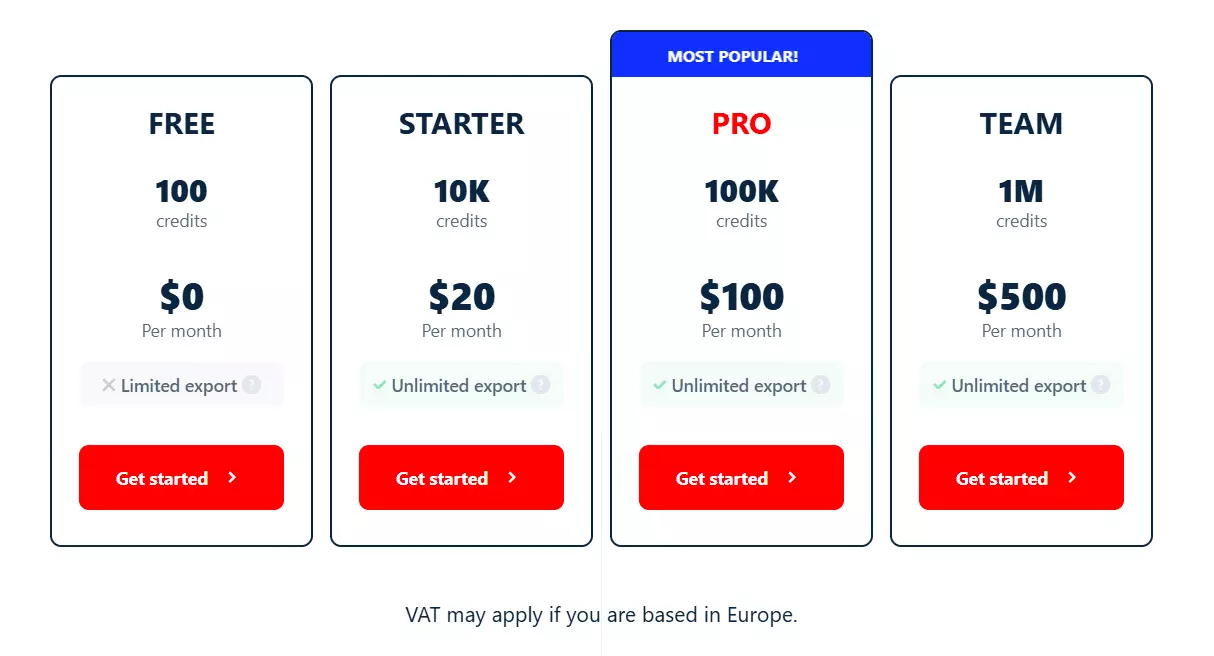
- Free plan allows you to scrape 100 reviews per month
- Starts at $2 per 1,000 reviews on paid plans
- Drops to $0.5 per 1,000 reviews at scale
No hidden costs. No proxy fees. You pay for the data you collect.
Speed and scalability
650+ reviews per minute. That too with default concurrency of 1. You can increase the speed up to 50x by increasing the number of slots.
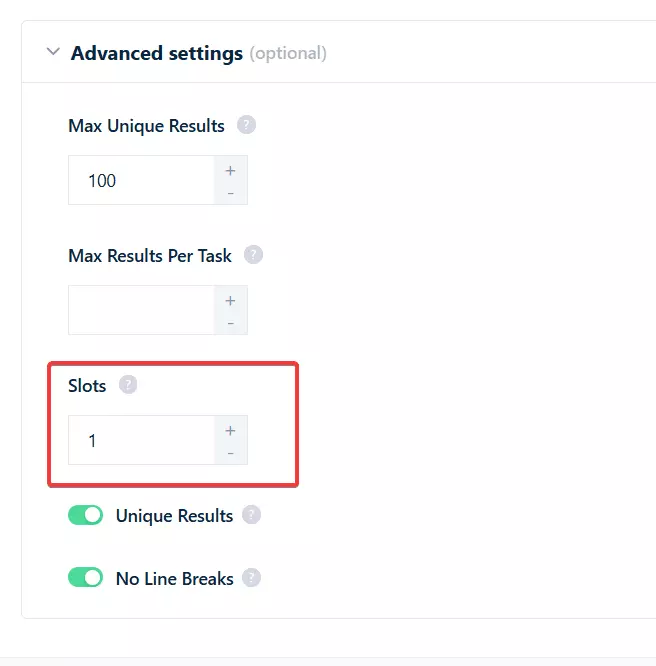
P.S. There’s no limit on the number of reviews you can scrape or number of businesses you can scrape per run.
Data export and integrations
You can export results as CSV or JSON directly from the dashboard.
For automated delivery, set up exports to Google Sheets, Amazon S3, SFTP, or email. Every time a run finishes, the data lands where you need it without you touching anything.
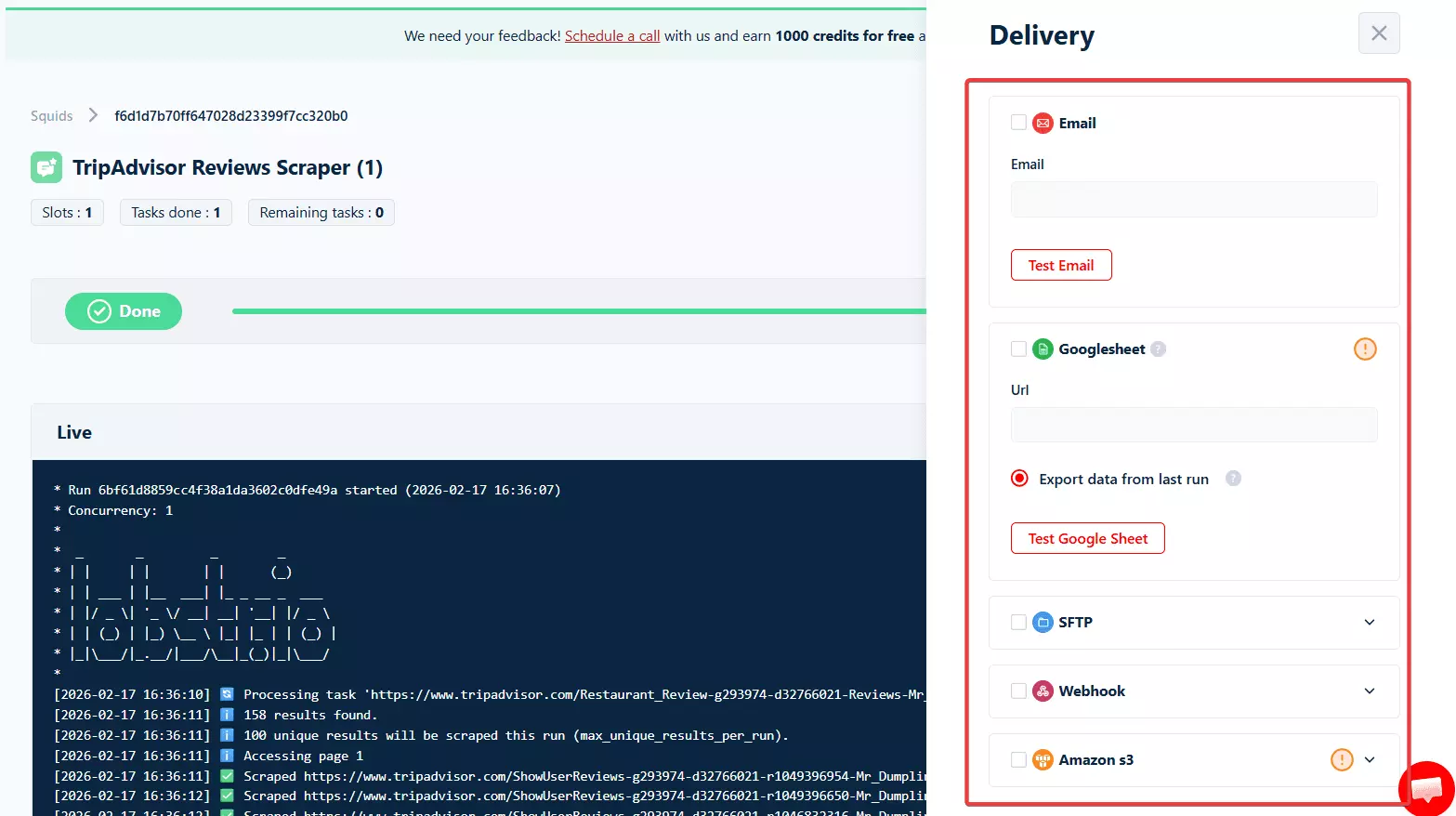
Lobstr.io doesn't offer native integrations with CRMs or other tools directly (yet 😉).
But the Make.com integration opens up 3,000+ apps, which covers pretty much anything you'd want to connect to.
And if you need something custom, there's a developer-friendly API with clean documentation that lets you trigger runs, pull data, and build your own pipelines.
Ease of use
You can go from sign-up to first scrape in under 2 minutes.
Create a Squid (that's what Lobstr.io calls a scraper instance), paste your TripAdvisor URLs, adjust your filters, and hit launch. That's it.
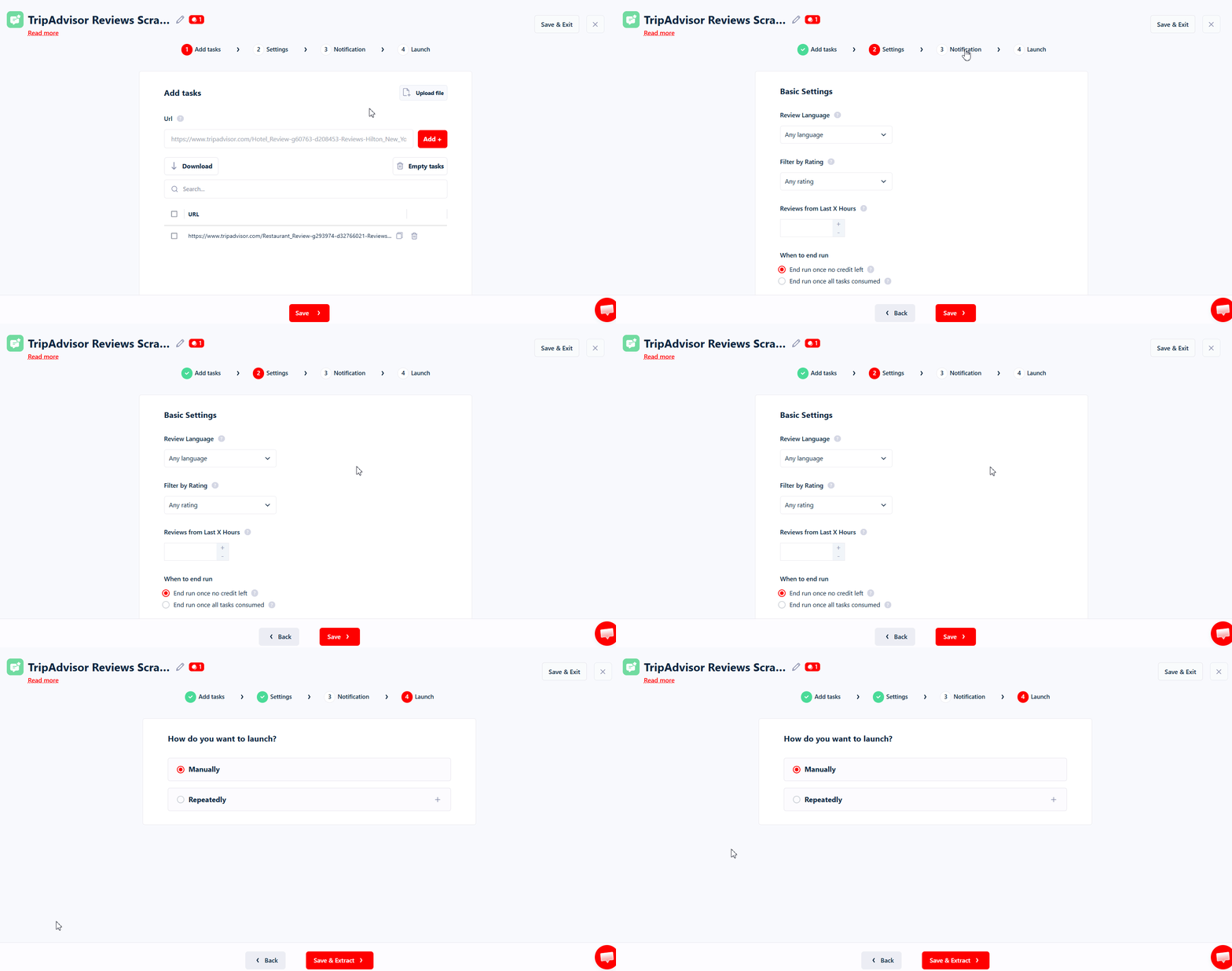
If you're confused, there's a proper knowledge base and an in-depth blog guide that walks you through every step.
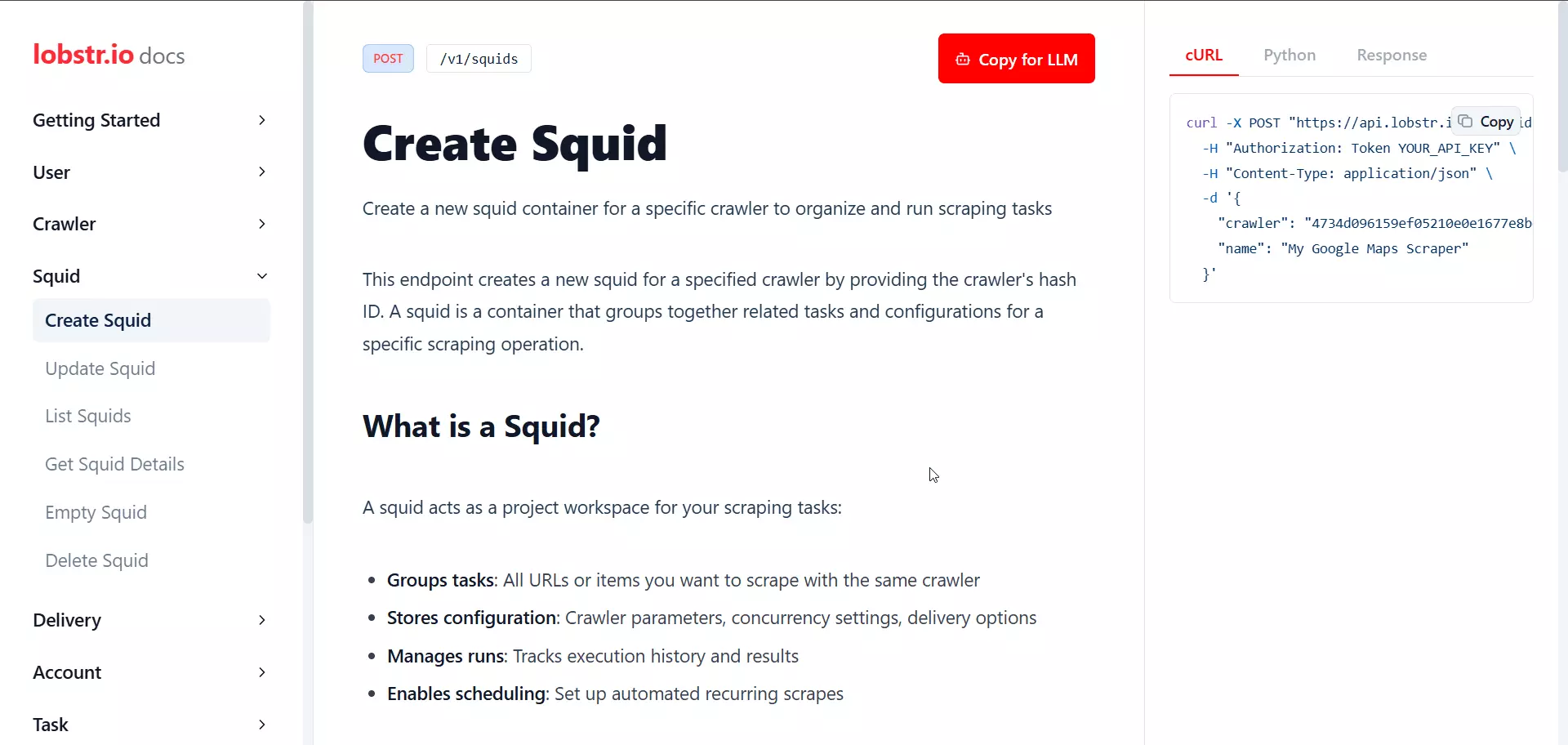
For API users, the documentation is developer-friendly and vibe-coder friendly, with clear examples.
Customer support
I won't say much here. The reviews say it better than I can.
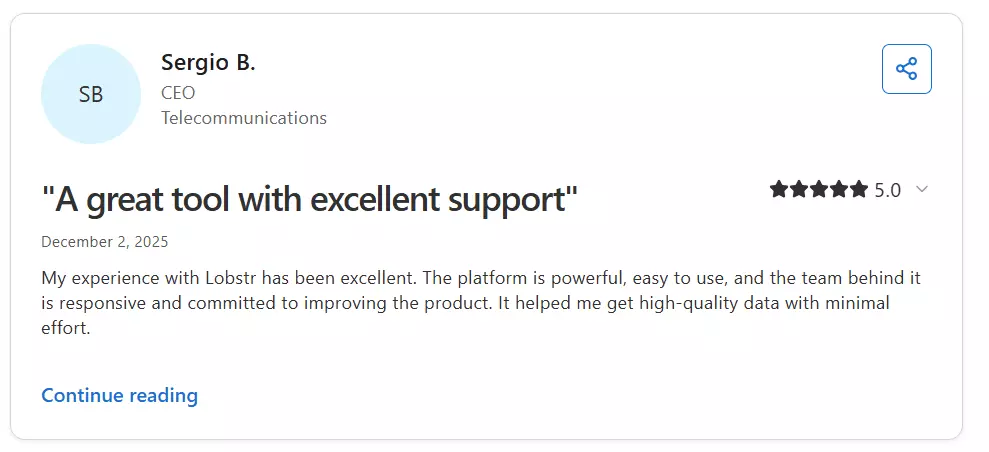
Support is handled by technical people who actually understand the product. Not a chatbot reading from a script.
Best for
Lobstr.io is for people who need TripAdvisor reviews at scale with rich, structured data. It's the best fit if you care about data depth, filtering precision, and affordable pricing.
2. Apify
User rating: 4.7/5 ⭐⭐⭐⭐
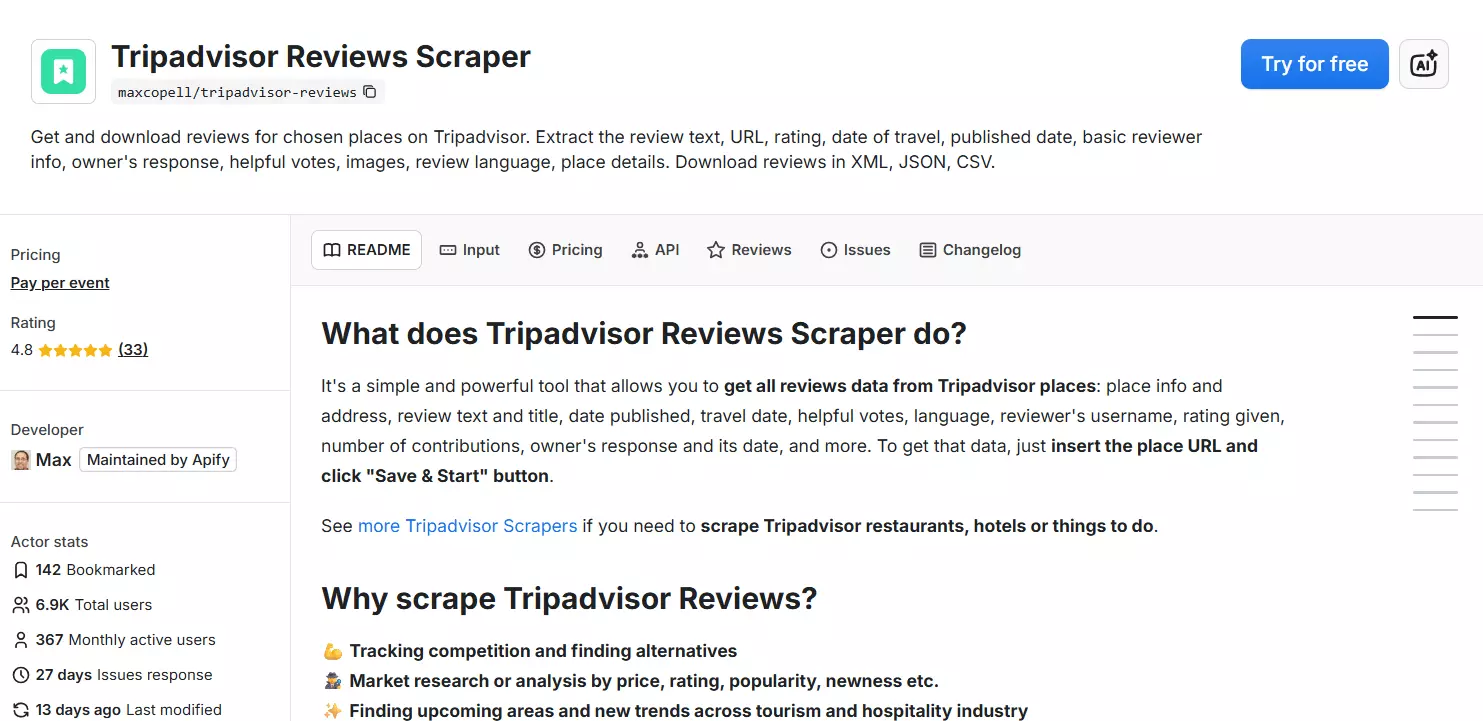
The TripAdvisor Reviews Scraper is one of the Apify-maintained ones.
| Pros | Cons |
|---|---|
| Good data coverage with place metadata | Inconsistent speed |
| Affordable pricing | Missing some reviewer and place data points |
| Language, date, and rating filters | Scheduling is confusing |
| Lots of native integrations | Technical support requires raising an Issue |
| Maintained by Apify, not community |
Features
- 30+ data points per review including subratings, owner responses, and reviewer info
- Filter by language, rating, and recency
- Export to JSON, CSV, Excel, XML, HTML
- Scheduling (outside of run settings)
- Native integrations with AI platforms, workflow tools, and third-party apps
- MCP compatibility
- Developer-friendly API and SDK
- Separate TripAdvisor scrapers for hotels, restaurants, and attractions search
Data
| id | url | title | lang | | locationId | publishedDate | publishedPlatform | rating | | helpfulVotes | text | roomTip | travelDate | | tripType | user.userId | user.name | user.username | | user.contributions.totalContributions | user.contributions.helpfulVotes | user.userLocation | user.avatar | | user.link | ownerResponse | subratings | photos | | placeInfo.id | placeInfo.name | placeInfo.rating | placeInfo.numberOfReviews | | placeInfo.locationString | placeInfo.latitude | placeInfo.longitude | placeInfo.webUrl | | placeInfo.website | placeInfo.address | placeInfo.addressObj | placeInfo.ratingHistogram |f
The data is solid. You get review content, reviewer profile, owner responses, subratings, and place-level metadata with rating distribution.
But it misses some key review context data.
review counts by language, owner response dates and language, user verification status, or fields like is_local_provider and owner_connection_to_subject.These are the kind of data points that tell your AI agent whether a reviewer is credible, whether the owner actually responded quickly, and whether the review came from a local or a tourist.
On the flip side, Apify gives you place latitude/longitude and full address which Lobstr.io doesn't.
But honestly, if you're scraping reviews, you care more about review depth than business location data. You can always get geo-data from a listings scraper.
Pricing
Apify's pricing for this scraper depends on which platform plan you're on.
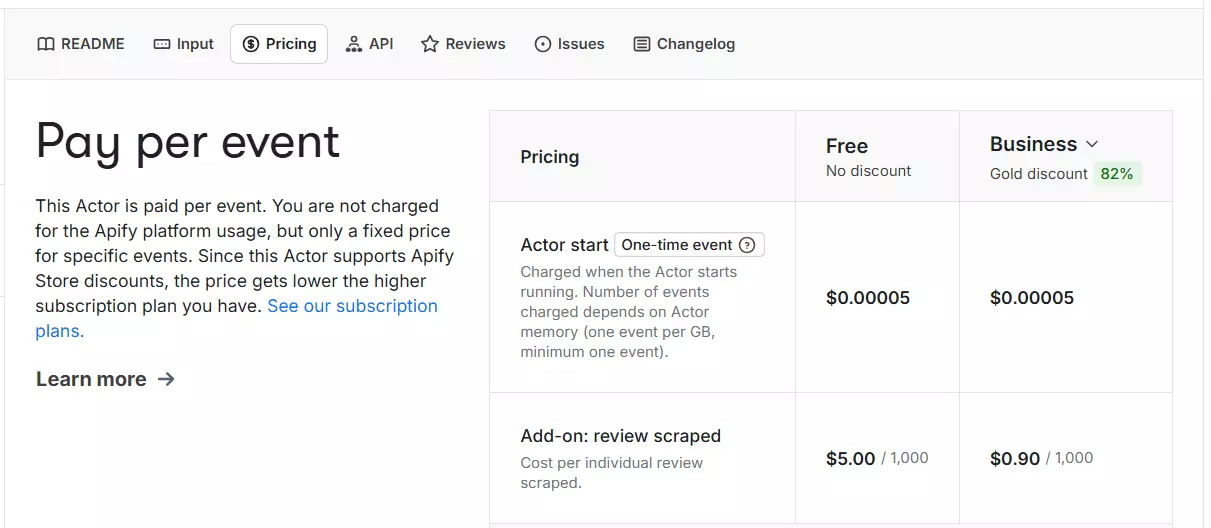
- 1000 free reviews per month
- Starts at $2 per 1,000 reviews
- Drops to $0.9 per 1,000 reviews at scale
Speed and scalability
On average, Apify pulls 400 to 500 reviews per minute.
But I noticed that it often slows down significantly for no obvious reason.
Same listing, same settings, different speed. You can't reliably predict how long a large scraping job will take.
Data export and integrations
Integrations are one of Apify's biggest strengths.
You can export to JSON, CSV, Excel, XML, and HTML. And thanks to Apify's ecosystem, the scraper plugs into a wide range of tools natively.
AI agentic platforms, workflow automation tools, CRMs, data warehouses... Apify has native connectors for most of them. Plus MCP compatibility for AI agent workflows.
There's also a well-documented API and SDK for building custom pipelines.
If native integrations matter to you and you don't want to go through Make.com, Apify has more out-of-the-box options.
Ease of use
For a first run, it's straightforward. Paste your URLs, set the max reviews, hit start.
But the interface is a little nerdy. It's functional, not pretty.
Scheduling is where it gets confusing.
The schedule feature lives outside the run settings, so setting up automated recurring scrapes takes extra effort compared to Lobstr.io where it's right there in the launch tab.
Not a deal breaker, but if you're not technical, expect a small learning curve.
Customer support
Since this scraper is maintained by Apify (not a community developer), support is better than what you'd get with community-built actors.
But for technical issues, you'll need to raise an Issue on the actor page. The chat support is helpful for general platform questions but won't dive deep into scraper-specific problems.
Best for
Apify is a good fit if you want fast TripAdvisor review scraping with strong native integrations, especially if you're already in the Apify ecosystem or need direct connections to AI platforms.
The trade-offs are speed consistency and review data depth. But for most standard use cases, it gets the job done well at a fair price.
3. Outscraper
User rating: 4.7/5 ⭐⭐⭐⭐
| Pros | Cons |
|---|---|
| Pay-as-you-go, no monthly commitment | Very limited data (15 fields) |
| 500 free reviews to start | Slow (100 reviews/min or less) |
| Good customer support | Confusing interface and UX |
| CRM and workflow integrations | Expensive |
Features
- ~15 data points per review
- Filter by recency and language
- Export to CSV, Excel
- Scheduling (hidden, not easily accessible)
- Integrations with CRMs and workflow automation tools
- API access
- Pay-as-you-go pricing, no monthly subscription
- Separate TripAdvisor scrapers for hotels, restaurants, and attractions search
Data
| query | reviews | rating | review_link | | review_date | review_timestamp | author_title | author_image | | review_rating | review_title | review_text | review_media | | owner_title | owner_response | |f
That's it. ~15 data points.
No food, service, value, or atmosphere scores. No travel date. No trip type. No helpful votes.
No reviewer location, contribution count, or verification status. No place category, rating distribution, or review counts by language.
Pricing
Outscraper uses a pay-as-you-go model. No monthly subscription, no recurring fees. Tiers reset every 30 days.
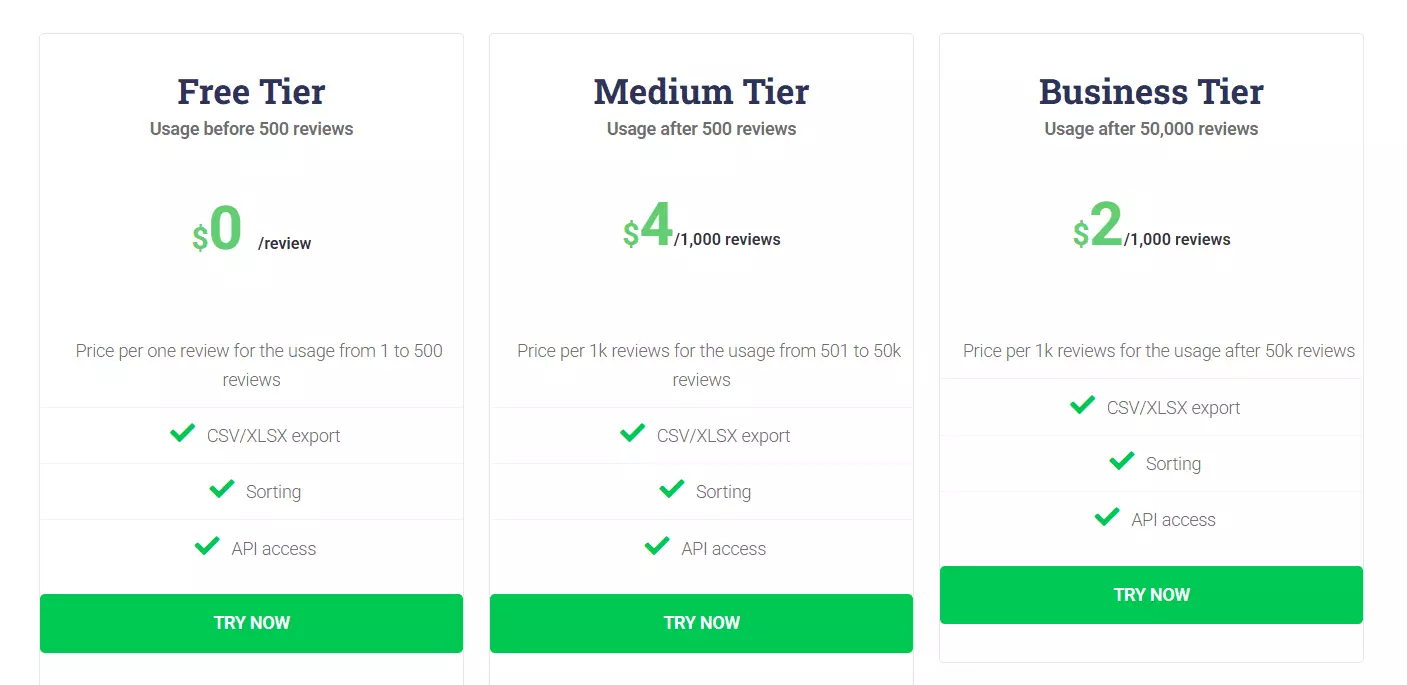
- First 500 reviews for free
- Starts at $4 per 1,000 reviews
- Drops to $2 per 1,000 reviews at scale
Speed
Slow. Around 100 reviews per minute or less.
To put that in perspective, Lobstr.io does 650+ per minute and Apify does 400 to 500. Outscraper is roughly 6x slower than Lobstr.io.
Data export and integrations
You can export results as CSV or Excel.
Outscraper integrates natively with CRMs and workflow automation tools like HubSpot and Zapier. There's also API access for custom pipelines.
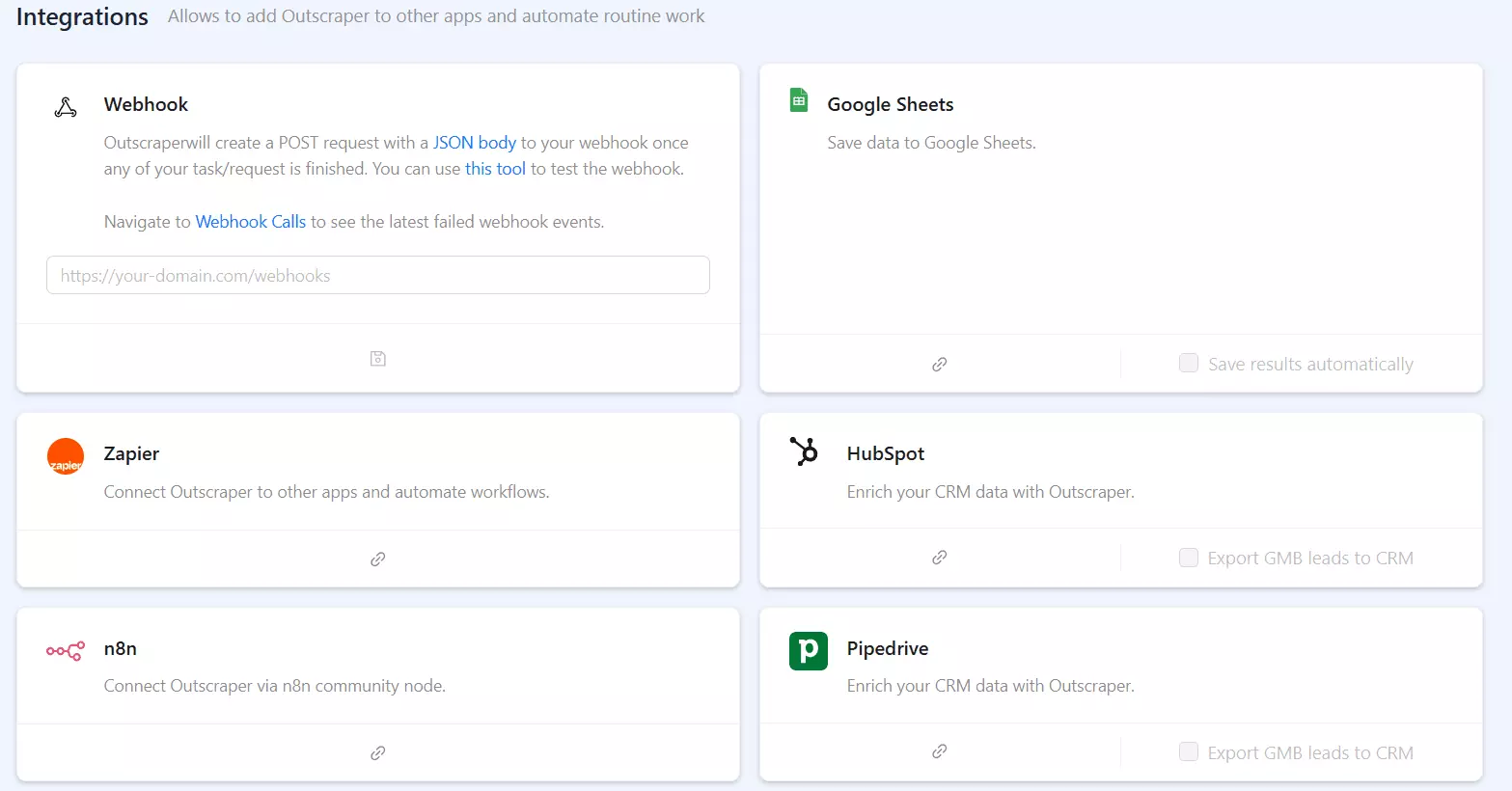
Not as extensive as Apify's integration ecosystem, but covers the basics.
Ease of use
This is where Outscraper frustrated me.
The interface is confusing.
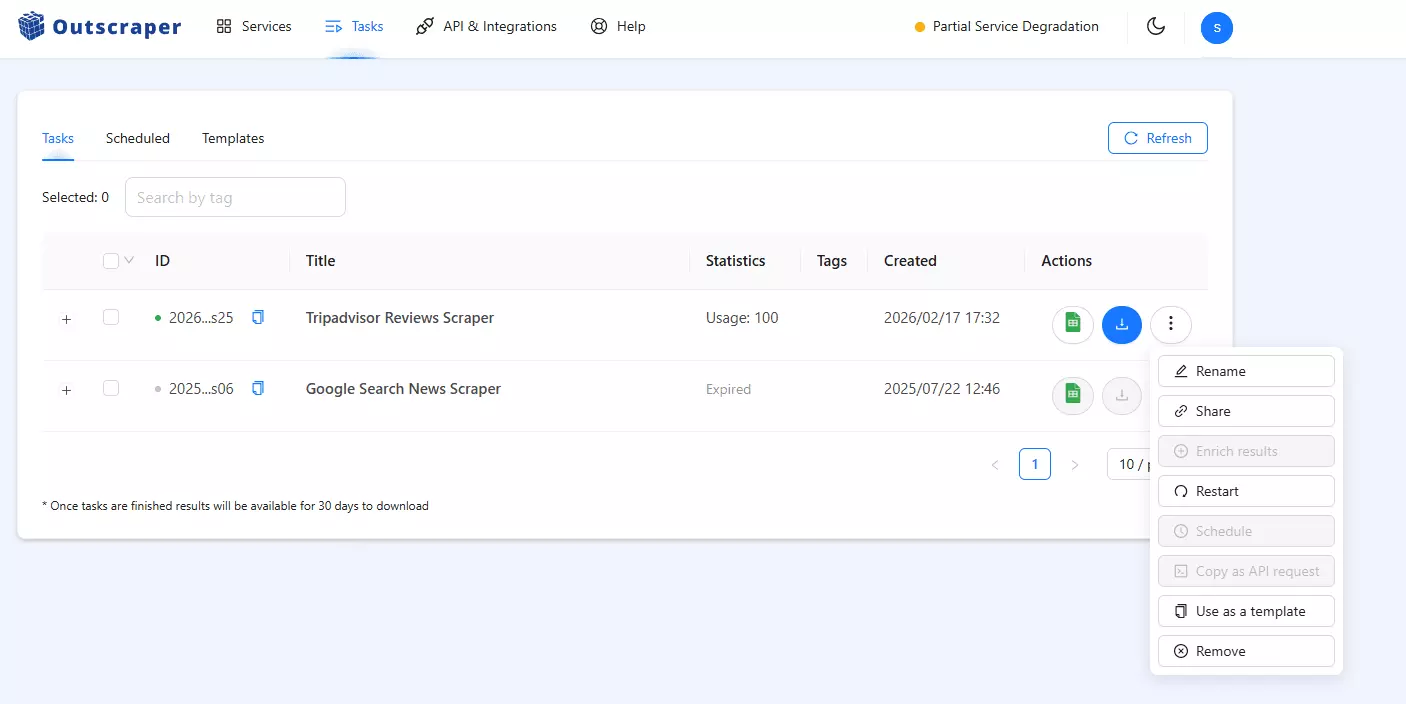
You add your input on one screen, then have to manually navigate to a separate tasks screen to check if the run actually started and is collecting data.
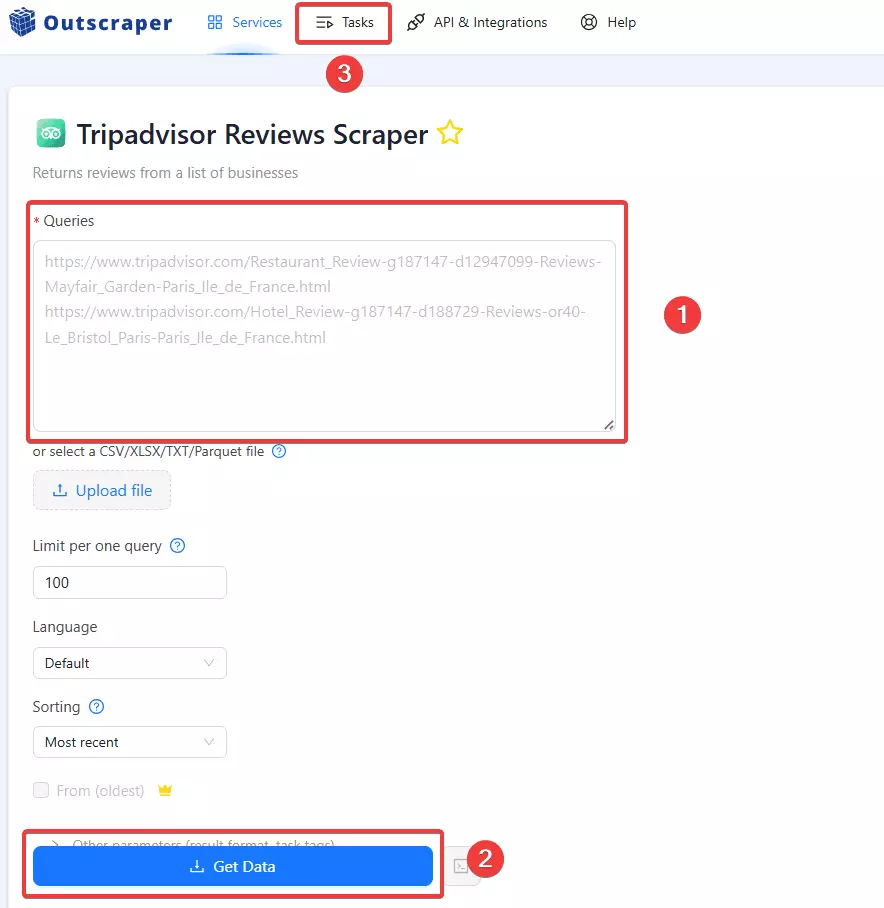
There's no live console, no logs, no progress indicator. The scraper is just... running. Somewhere. And you have no idea when it's going to finish.
The scheduling feature exists but it's not visible upfront. You have to navigate around and find it, which defeats the purpose of having a no-code tool that's supposed to be simple.
Customer support
Customer support is good and responsive. I'll give them that.
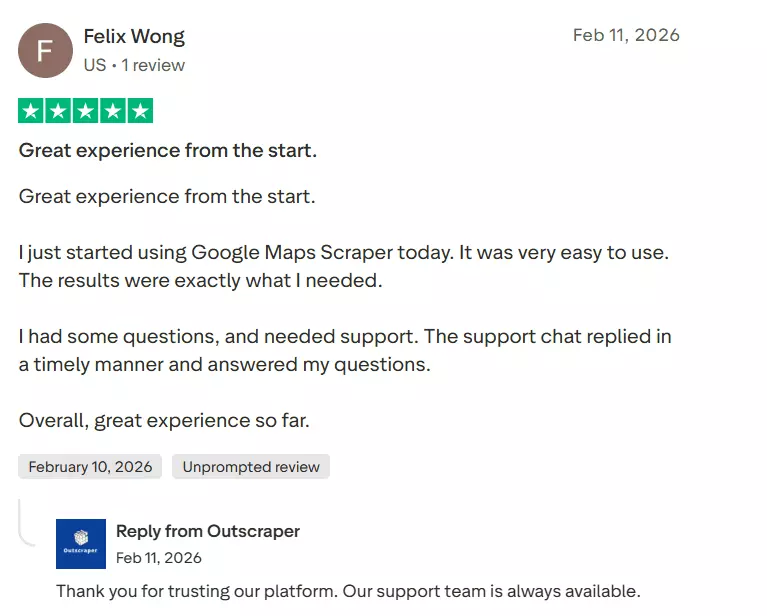
If you run into issues, you'll get help via live chat. I did experience lack of technical support in the past but this time, their support was really helpful.
Best for
Outscraper works if you need a no-commitment, pay-as-you-go option for small to medium TripAdvisor review collection and don't need deep data.
It's not the right tool if you need speed, rich data for AI analysis, or a smooth user experience.
And that’s it. These were my top 3 choices. You can choose the tool that fits your needs, budget, and use case.
FAQs
Can I scrape reviews from hotels, restaurants, AND attractions?
Yes. All three tools on this list support scraping reviews from any TripAdvisor listing, whether it's a hotel, restaurant, attraction, or anything else with reviews on the platform.
How do I get TripAdvisor listing URLs in bulk?
Can I connect scraped reviews directly to an AI agent?
Yes. All three tools offer API access, so you can pipe review data directly into your AI workflows.
Conclusion
Those were my top 3 TripAdvisor reviews scrapers for 2026.