
Best Immoweb Scrapers 2026 [No-Code + API Edition]
Apify's ivanvs actor is the best Immoweb scraper in 2026 at 7.45/10. It has the widest coverage at 120 meaningful data points and the fastest measured speed at ~296 listings/min. Apify's azzouzana actor ranks second at 6.99/10, with the highest data score and $1.00/1K pricing, but slower runs, one search URL per run, and a hard memory ceiling that limits scalability.
⚡ 30-Second Summary
- I tested six Immoweb scrapers on the same 1,000-listing job, scoring data, cost, usability, speed, scalability, and support.
- Apify's ivanvs actor ranks #1 at 7.45/10. It has the widest coverage at 120 meaningful data points and the fastest measured speed at ~296 listings/min. Best for: buyers who want broad data fast. Trade-off: nested output, $3.01/1K at scale, and a weak support record.
- Apify's azzouzana actor ranks #2 at 6.99/10. It has the highest data score at 9.91/10, with 117 meaningful data points, 99.80% consistency, and $1.00/1K pricing. Best for: deep data at lower cost. Trade-off: ~64 listings/min, a hard 512MB memory ceiling, and one search URL per run.
- lobstr.io's Immoweb Listings & Phones Scraper ranks #3 at 6.91/10. Basic mode costs $0.50/1K and leads on usability and support. Best for: low-cost, clean collection. Get Listing Details expands coverage up to 42 meaningful data points, but costs 5× more and runs 8.03× slower.
- Three other tools were tested but not ranked. One returned zero results twice, another capped runs near 27 listings, and the open-source option failed as published.
- The patched GitHub scraper later reached 458.33 listings/min, but only after code changes, so it stayed outside the ranked comparison. I break down all three below.
A scraper that misses listings, or skips key listing details, doesn't just give you less data... it gives you a worse view of the market.
And getting complete Immoweb listing data at scale is harder than it looks.
Some tools miss listings. Others return shallow records. A few do both, which is efficient in the wrong direction.
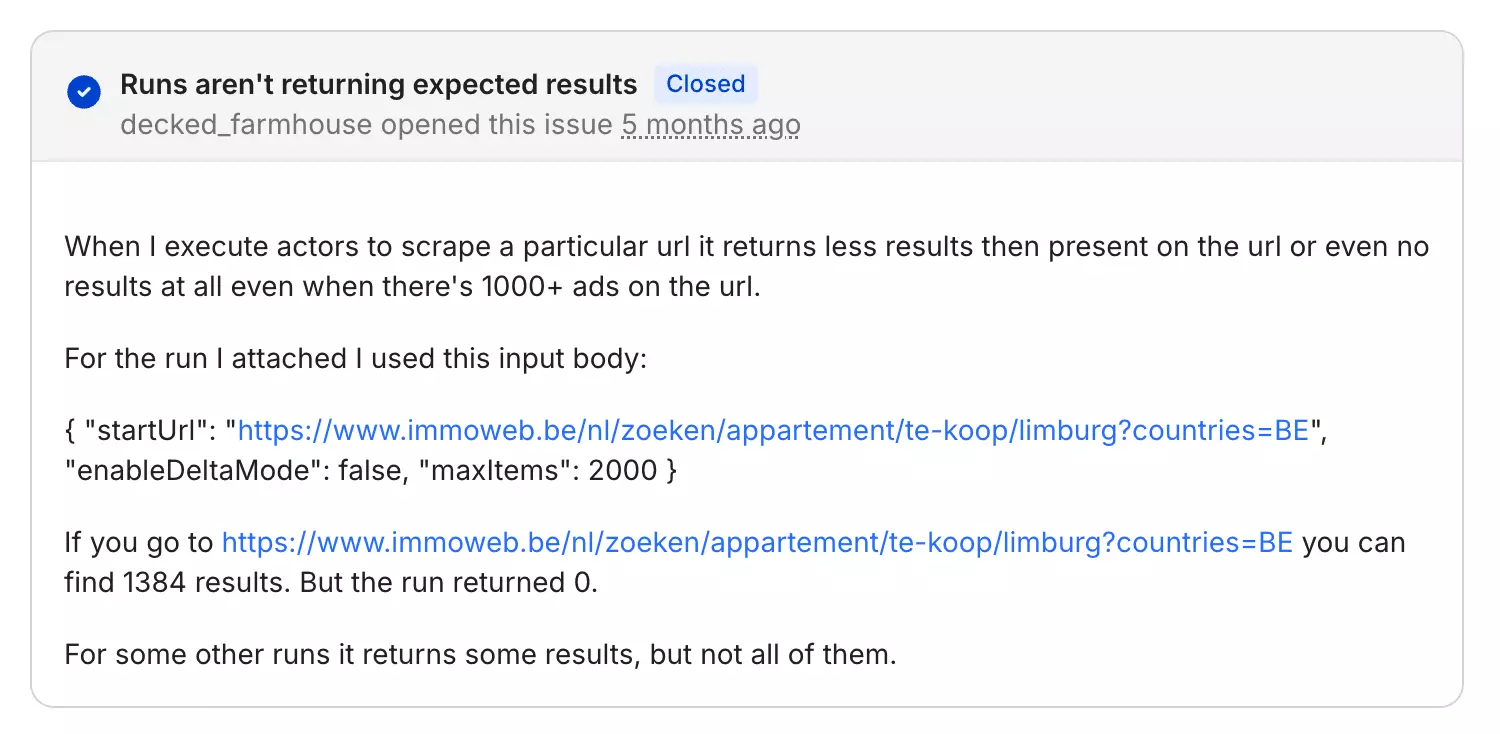
So I tested six Immoweb scrapers on the same 1,000-listing job and compared what actually came back.
The goal: find which scraper gives you the most usable data for the money, without sacrificing reliability.
Quick Comparison
| Apify — ivanvs/immoweb-scraper | Apify — azzouzana/immoweb-be-mass-scraper-by-search-url | lobstr.io - Immoweb Listings & Phones Scraper | |
|---|---|---|---|
| User rating | No rating yet (0 reviews) | 5.0/5 (4 reviews) | 5.0/5 (33 reviews) |
| Meaningful data points | 120 | 117 | 23 basic → 42 detailed |
| Data consistency | 91.44% | 99.80% | 99.75% basic |
| Avg. photos/listing | 17.46 | 17.46 | 1 basic → 3.99 detailed |
| Multi-unit sub-units | 4,601 (270 projects) | 4,601 (270 projects) | 0 |
| Legal / permit data | ✅ | ✅ | ❌ |
| Phone coverage | 96.7% built-in | 96.7% built-in | 0% basic → 96.6% detailed |
| Search URLs per run | Multiple | 1 | Multiple + CSV/TXT |
| Price /1K (entry → scale) | $4.00 → $3.01 | $1.00 flat | $2.00 → $0.50 |
| Free tier | ✅ | ✅ | ✅ |
| Measured speed /1K | 3m 23s | 15m 37s | 25m 46s |
| Base monthly ceiling | ~12.77M | ~2.77M | ~1.68M |
| Failure behavior | Stops; no auto-resume | Stops; no auto-resume | Partial data kept; resumable |
| Result retention | 31 days | 31 days | 28 days |
| Export formats | CSV, JSON, XLSX, XML, JSONL | CSV, JSON, XLSX, XML, JSONL | CSV, JSON, XLSX, JSONL |
| Programmatic access | API + SDK + MCP + CLI | API + SDK + MCP + CLI | API + SDK + CLI + MCP |
| Support | Email + Issues (Apify) | Email + Discord + Issues (Apify) | Live chat + email |
| Overall score | 7.45/10 | 6.99/10 | 6.91/10 |
Just tell me which Immoweb scraper to use
| If you want... | Go with | Why |
|---|---|---|
| Best overall | Apify's ivanvs actor | Widest coverage and fastest measured speed |
| Widest data coverage | Apify's ivanvs actor | 120 meaningful data points, the broadest tested |
| Best value for deep data | Apify's azzouzana actor | 9.91 data score at $1.00/1K |
| Lowest cost at scale | lobstr.io | $0.50/1K |
| Fastest collection | Apify's ivanvs actor | ~296 listings/min |
| Cleanest output | lobstr.io | Flat basic-mode schema, minimal cleanup |
| Biggest base monthly ceiling | Apify's ivanvs actor | ~12.77M listings/month at the measured configuration |
| Strongest support | lobstr.io | Live chat + 5.0/5 Customer Service on Capterra |
⚠️ Disclaimer
The information in this section is for general informational purposes only. It reflects publicly available sources and my own interpretation of them.
It does not constitute legal advice and should not be treated as such. Laws vary by jurisdiction and can change.
If you need guidance on compliance, data use, contracts, or platform-specific risks, consult a qualified legal professional who can evaluate your situation in detail.
Is it legal to scrape Immoweb?
Yes, under the right conditions.
But there are two separate questions here that we need to answer.
Does Immoweb allow scraping?
Short answer... no.
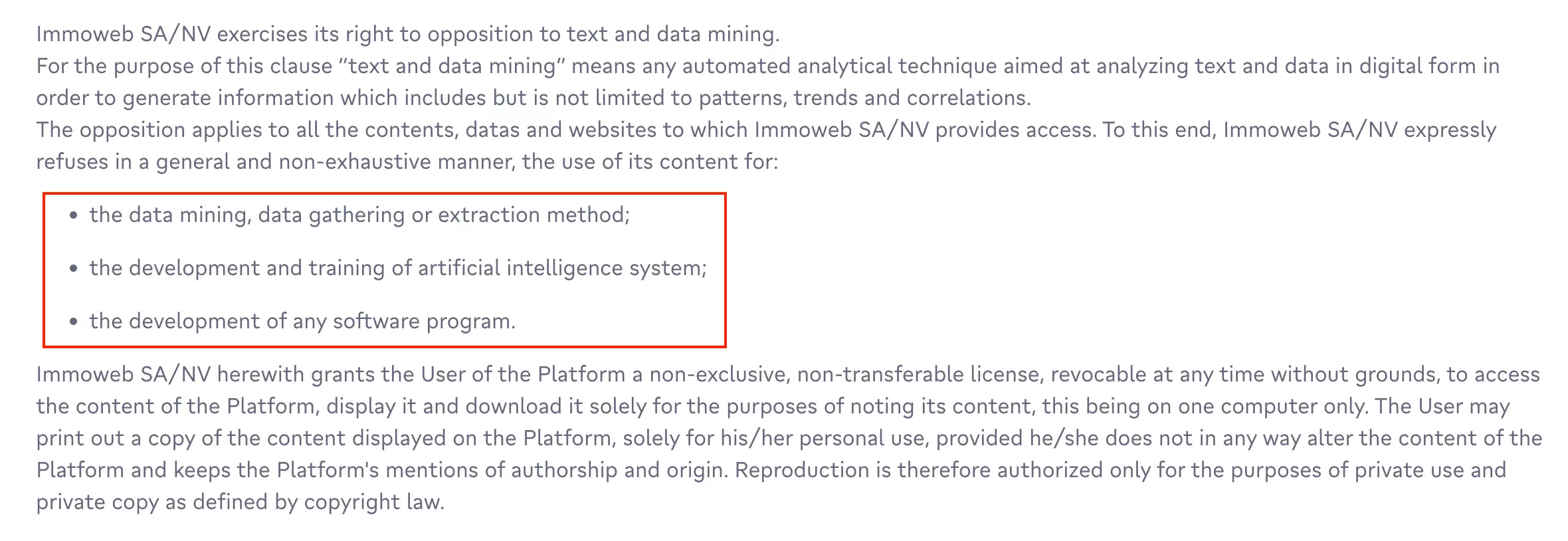
So, is it illegal?
Not necessarily.
Volume, purpose, and competitive effect decide it.
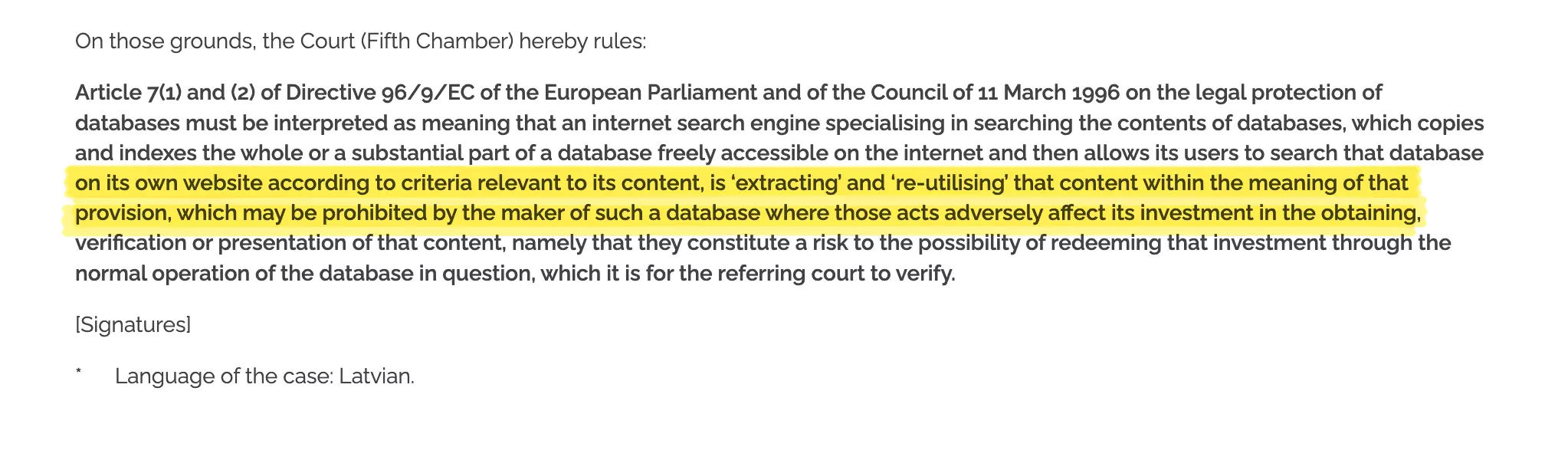
So a small research pull and a full mirror of the listing database are not the same thing.
To stay on the safer side:
- Scrape only public listing pages, never login-gated or account data
- Keep volumes proportionate and avoid mirroring the full listing database
- Use the data internally for market research, price analysis, or valuation models
- Do not rebuild Immoweb as a competing listings site or search front-end
- Do not combine profile data with other personal information without an appropriate legal basis
- Do not republish listing photos or descriptions, which carry their own copyright
- Respect rate limits, and stop immediately on a block or takedown notice
Here's how I evaluated the scrapers.
How I chose the best Immoweb scrapers
I started with Reddit threads, developer discussions, review sites, Google, GitHub, AI recommendations, and dedicated Immoweb scraping tools.
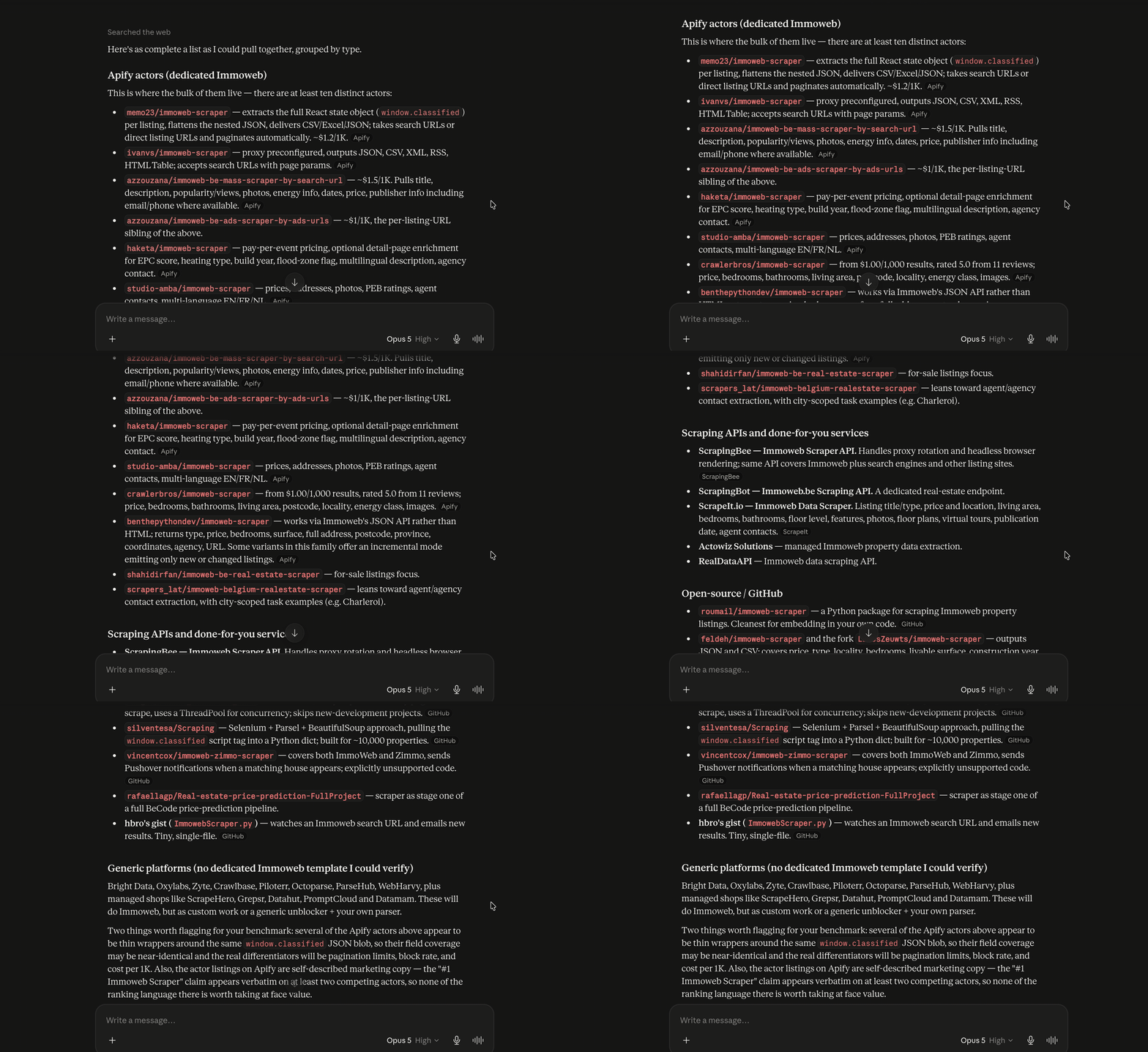
From that longlist, I tested six tools on the same job: collect up to 1,000 listings from one Immoweb search.
Three were strong enough to rank. Three hit dealbreakers that I cover later.
Each ranked tool was scored from 0-10 across six weighted criteria: Data 2.2 · Cost 2.2 · Usability 1.8 · Speed 1.8 · Scalability 1.0 · Support 1.0.
I judged them on six things:
- Data... How much useful data comes back, how consistently, and with how much depth?
- Cost... What does the same workload actually cost?
- Usability... How much work sits between input and usable output?
- Speed... How quickly does the same baseline job finish?
- Scalability... Can it handle larger, recurring workloads without becoming operationally painful?
- Customer support... When something breaks, can you reach useful help and does the problem actually get fixed?
Data
I compared the data returned from the same Immoweb search.
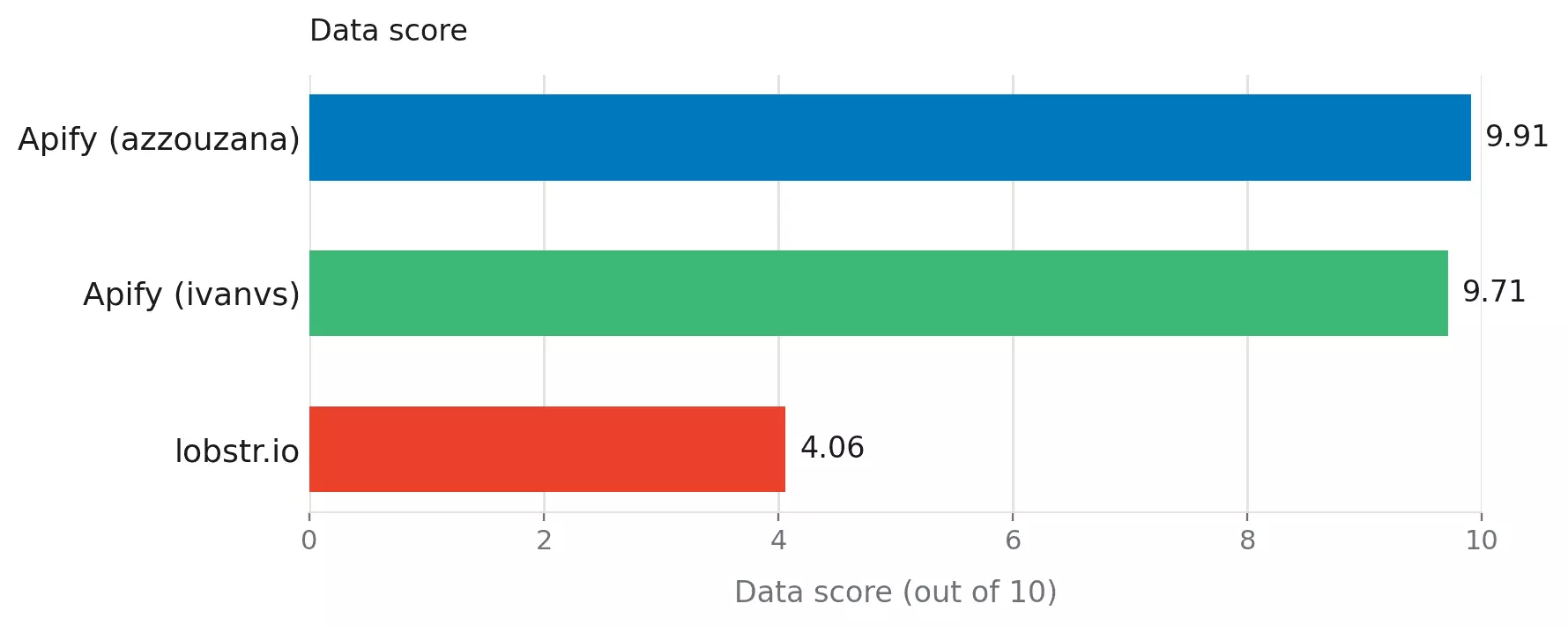
Rather than counting raw JSON keys, I measured coverage, consistency, and depth.
Coverage counts distinct, meaningful listing data. Duplicate aliases, formatting metadata, and repeated representations count once.
Consistency measures how reliably comparable data points are populated across the same matched listings.
Depth measures quantity where more genuinely matters here: photo galleries and individual units inside multi-unit developments.
Cost
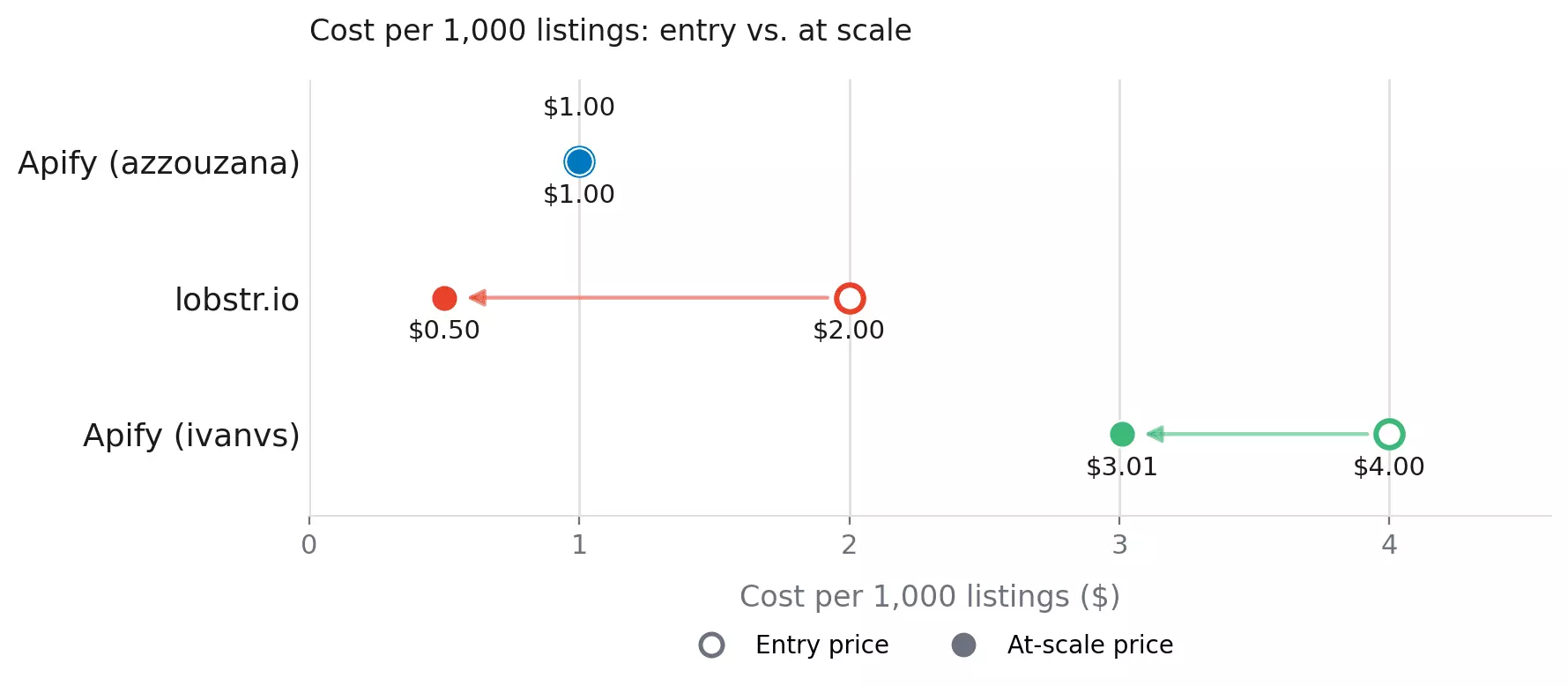
I normalized pricing to cost per 1,000 listings at scale.
That puts subscription credits, pay-per-result pricing, and other billing models on the same baseline.
Optional enrichment or detailed modes are priced separately rather than folded into the ranked baseline.
Usability
I followed the workflow from entering an Immoweb target to getting usable data out.
That included input flexibility, scrape controls, batch handling, exports, delivery, scheduling, automation, developer access, and any cleanup left to the buyer.
Speed
I timed the same 1,000-listing baseline job for every ranked tool.
Only full benchmark runs feed the Speed score.
Short validation runs, higher-memory checks, and computed concurrency ceilings are reported separately as context.
Scalability
I kept Scalability separate from raw Speed.
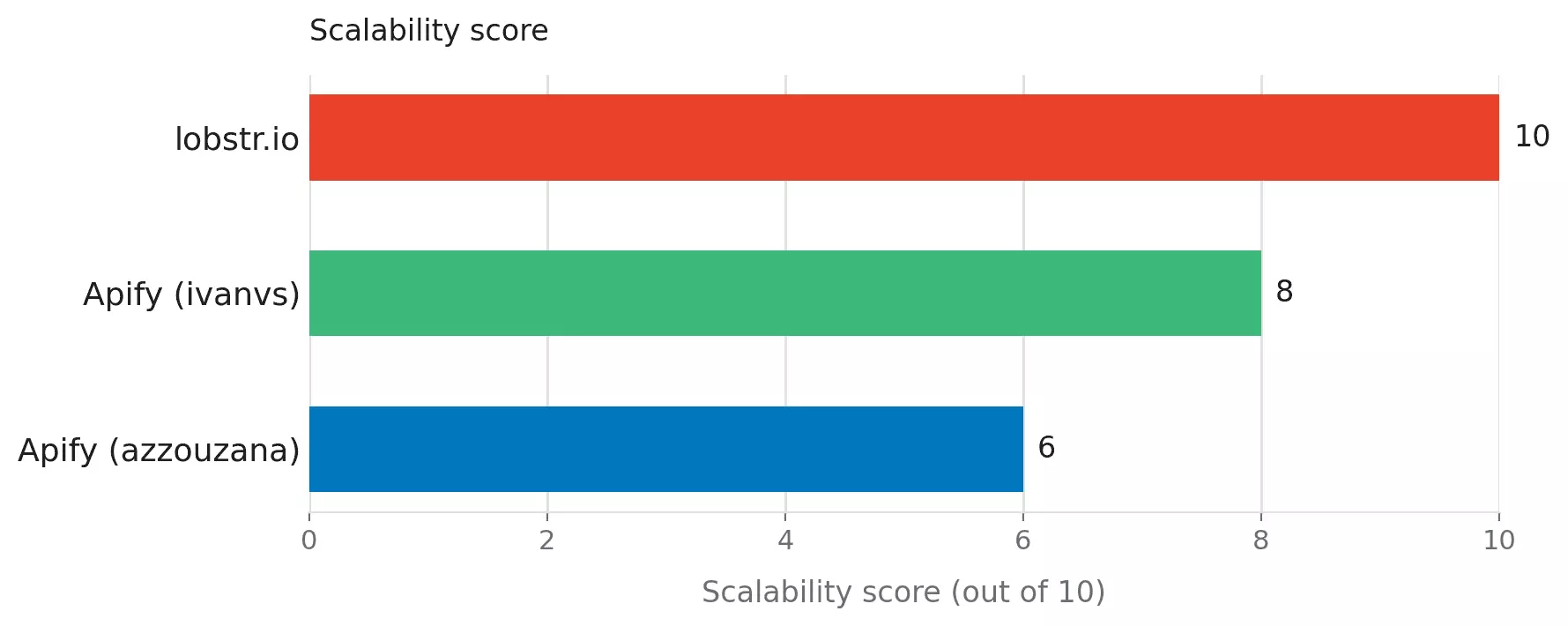
I looked at scaling headroom, sustained reliability, failure recovery, and result retention.
Theoretical monthly capacity is shown for context only. It does not affect the score because it is calculated directly from measured Speed.
Computed concurrency ceilings are also labelled as computed rather than measured.
Customer support
I looked beyond how quickly someone sends the first reply.
I checked direct support channels, public issue handling, technical fixes, support-specific reviews, and evidence that reported problems were actually resolved.
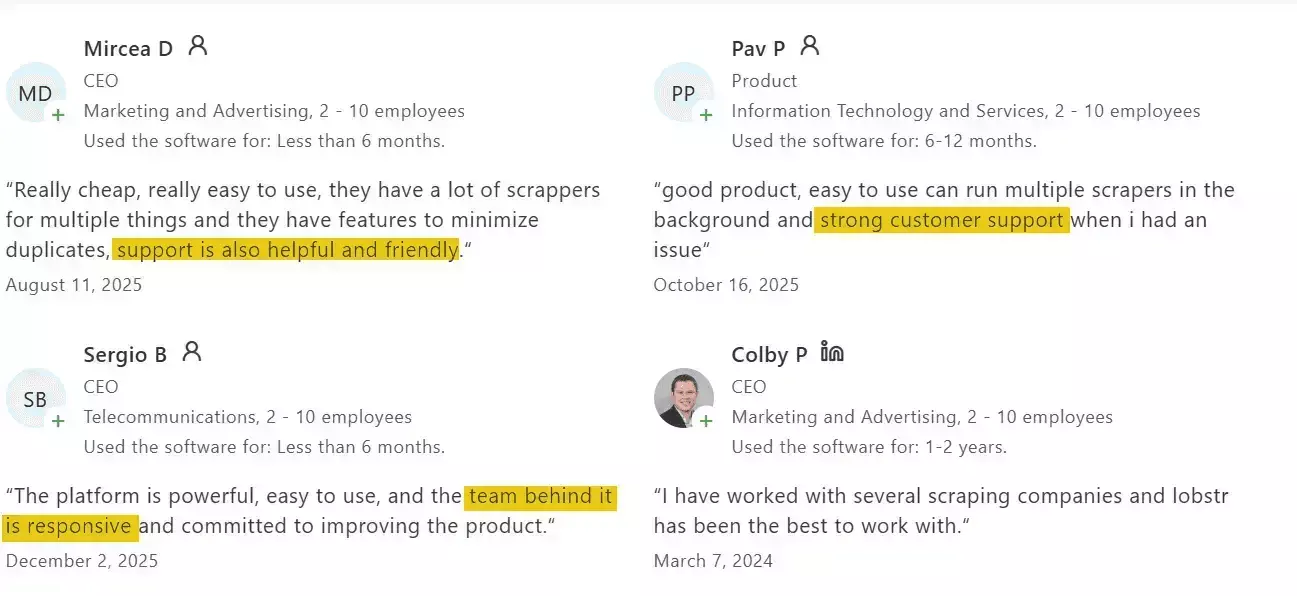
A fast acknowledgement did not count as a fast resolution, and more support channels did not automatically mean better support.
How the scores landed
| Criterion (weight) | Apify's ivanvs actor | Apify's azzouzana actor | lobstr.io |
|---|---|---|---|
| Data (2.2) | 9.71 | 9.91 | 4.06 |
| Cost (2.2) | 3.99 | 8.00 | 9.00 |
| Usability (1.8) | 8 | 7 | 10 |
| Speed (1.8) | 10.00 | 2.17 | 1.31 |
| Scalability (1.0) | 8 | 6 | 10 |
| Support (1.0) | 4 | 8 | 10 |
| Weighted overall /10 | 7.45 | 6.99 | 6.91 |
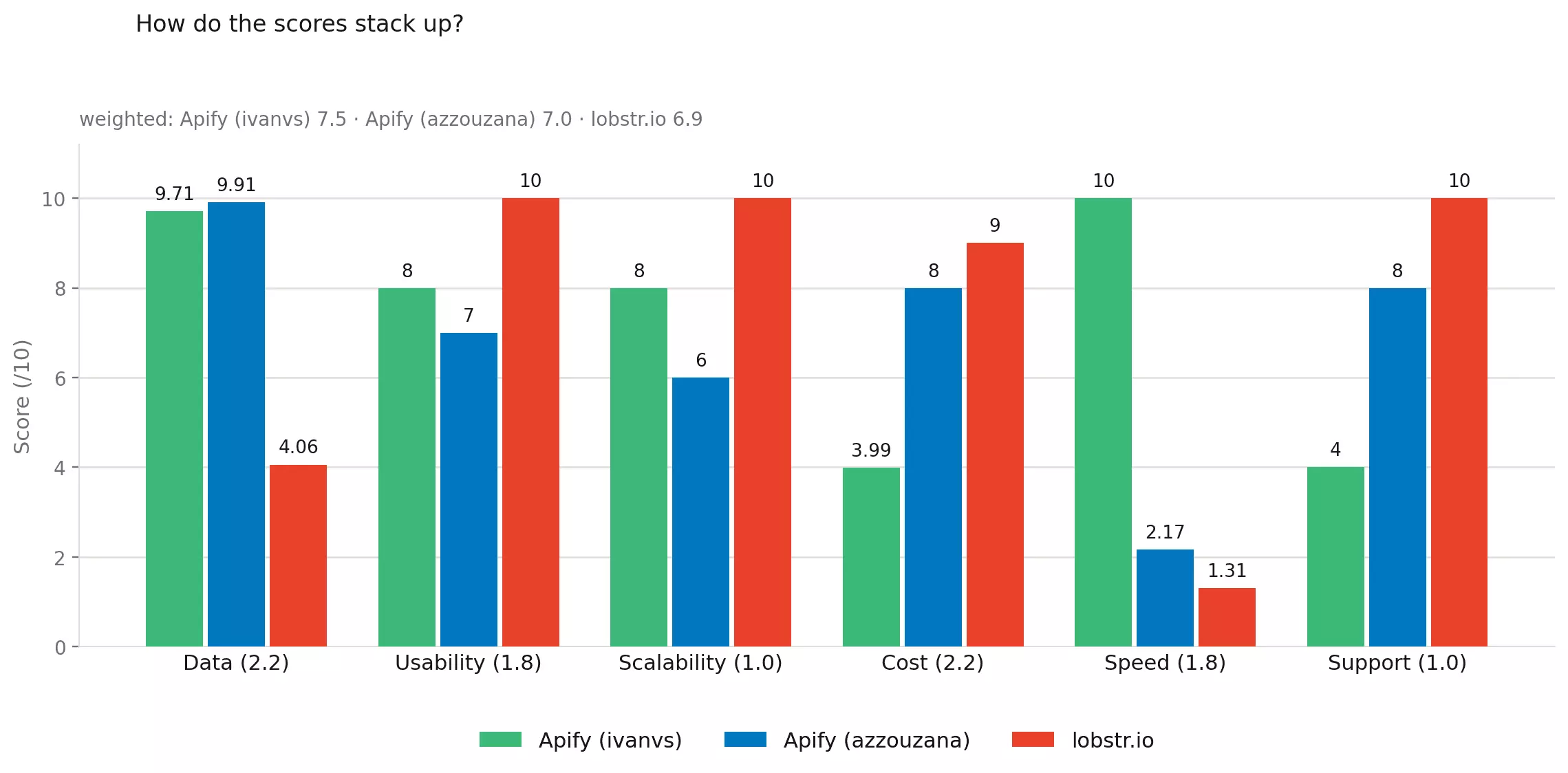
Each criterion is scored from 0-10, then weighted by how much it matters to the buying decision.
Worked out for Apify's ivanvs actor: (9.71×2.2 + 3.99×2.2 + 8×1.8 + 10×1.8 + 8×1.0 + 4×1.0) ÷ 10 = 7.45
Apify's ivanvs actor finishes first because its Speed advantage outweighs the rest of the field.
Apify's azzouzana actor edges ivanvs on Data and costs much less, but a weaker Scalability score narrows the picture.
lobstr.io leads Cost, Usability, and Support outright.
How I narrowed the list
I removed tools that did not fit a production comparison:
- Abandoned projects... stale scrapers are difficult to trust against a changing target.
- Thin marketplace wrappers... unclear ownership, maintenance, or support makes production use harder to defend.
- General-purpose scraping tools... I prioritized scrapers built specifically for Immoweb over tools requiring custom extraction.
- Apify marketplace candidates... no official Immoweb Actor exists, so I filtered by relevance and usage before testing the strongest options.
Three tools made the ranked comparison.
Three more were tested, but each hit a dealbreaker significant enough to stay out of the main ranking.
The best Immoweb scrapers
Why these Apify actors? With no official Immoweb Actor, I filtered the marketplace by relevance, popularity and monthly users, then tested the strongest candidates. Only two made the final ranking.
| Apify — ivanvs/immoweb-scraper | Apify — azzouzana/immoweb-be-mass-scraper-by-search-url | lobstr.io - Immoweb Listings & Phones Scraper | |
|---|---|---|---|
| User rating | No rating yet (0 reviews) | 5.0/5 (4 reviews) | 5.0/5 (33 reviews) |
| Meaningful data points | 120 | 117 | 23 basic → 42 detailed |
| Data consistency | 91.44% | 99.80% | 99.75% basic |
| Avg. photos/listing | 17.46 | 17.46 | 1 basic → 3.99 detailed |
| Multi-unit sub-units | 4,601 (270 projects) | 4,601 (270 projects) | 0 |
| Legal / permit data | ✅ | ✅ | ❌ |
| Phone coverage | 96.7% built-in | 96.7% built-in | 0% basic → 96.6% detailed |
| Search URLs per run | Multiple | 1 | Multiple + CSV/TXT |
| Price /1K (entry → scale) | $4.00 → $3.01 | $1.00 flat | $2.00 → $0.50 |
| Free tier | ✅ | ✅ | ✅ |
| Measured speed /1K | 3m 23s | 15m 37s | 25m 46s |
| Base monthly ceiling | ~12.77M | ~2.77M | ~1.68M |
| Failure behavior | Stops; no auto-resume | Stops; no auto-resume | Partial data kept; resumable |
| Result retention | 31 days | 31 days | 28 days |
| Export formats | CSV, JSON, XLSX, XML, JSONL | CSV, JSON, XLSX, XML, JSONL | CSV, JSON, XLSX, JSONL |
| Programmatic access | API + SDK + MCP + CLI | API + SDK + MCP + CLI | API + SDK + CLI + MCP |
| Support | Email + Issues (Apify) | Email + Discord + Issues (Apify) | Live chat + email |
| Overall score | 7.45/10 | 6.99/10 | 6.91/10 |
1. Apify — ivanvs/immoweb-scraper
| Category | Score |
|---|---|
| Data | 9.71/10 |
| Cost | 3.99/10 |
| Usability | 8/10 |
| Speed | 10.00/10 |
| Scalability | 8/10 |
| Support | 4/10 |
| Overall | 7.45/10 |
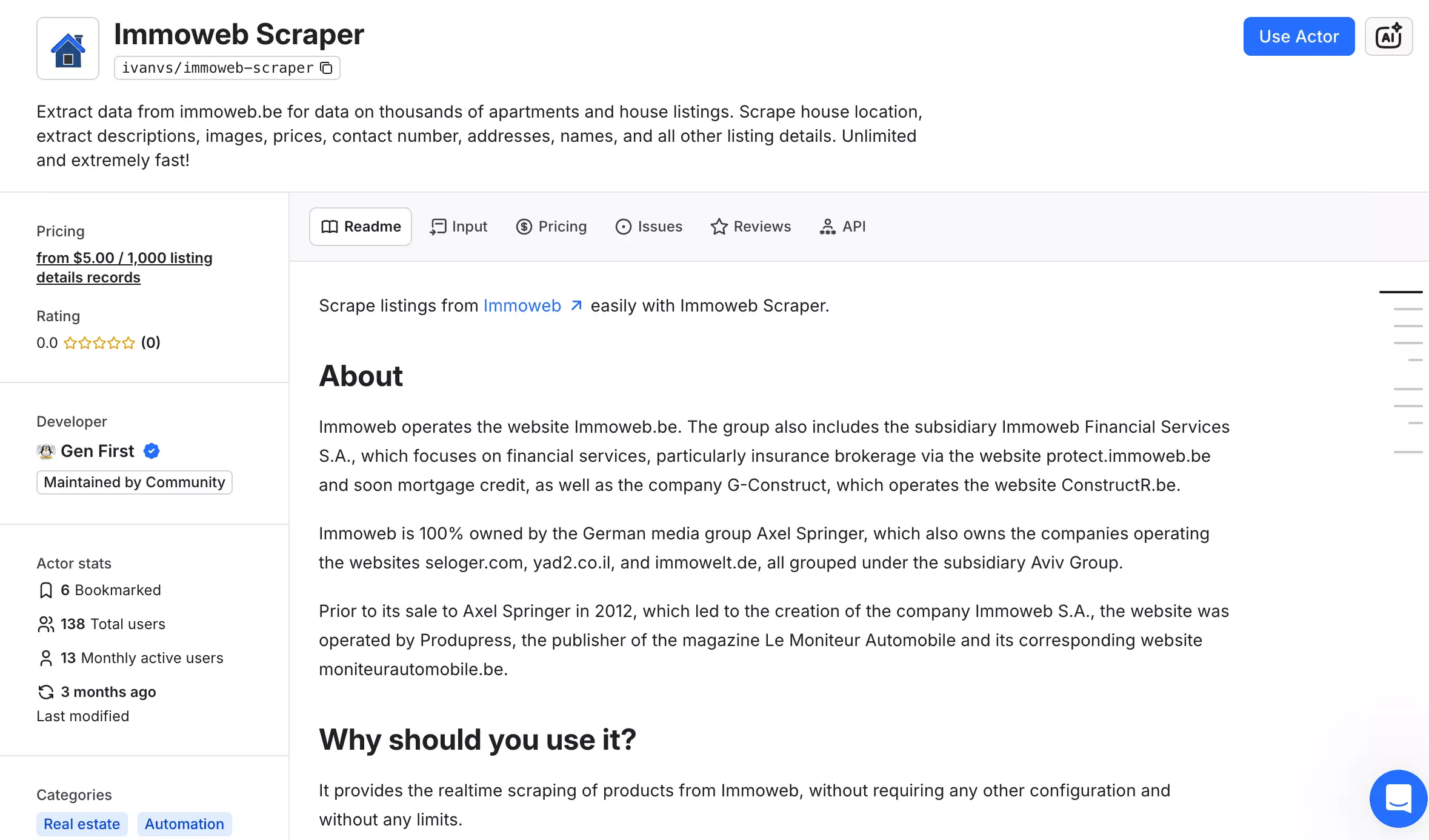
| Pros | Cons |
|---|---|
| Broadest coverage tested: 120 meaningful data points | Expensive at $3.01/1K at scale |
| Fastest measured speed: ~296 listings/min | Deeply nested output needs flattening |
| 17.46 photos/listing and 4,601 sub-units | Lower consistency than azzouzana: 91.44% |
| 96.7% phone coverage by default | Failed runs stop rather than auto-resume |
| Accepts higher memory beyond the tested 1024MB |
Data
Ivanvs exposes 1,784 normalized JSON paths, but 120 represent distinct, useful listing data points.
The low 6.7% ratio mostly reflects its deeply nested output, not a lack of data.
| Category | Data points |
|---|---|
| 🏠 Listing | ID, URL, external reference, type, title, transaction type |
| 💰 Price | price, price type, availability, furnishing, cadastral income |
| 📍 Location | country, region, province, locality, postcode, street, number, box, floor, coordinates, district |
| 📐 Property | surface, bedrooms, bathrooms, toilets, showers, room counts, kitchen, construction year, condition, facade count, parking |
| 🛋️ Amenities | lift, terrace, pool, disabled access, alarm, internet, air conditioning, concierge |
| ⚡ Energy | heating, EPC, consumption, emissions, glazing, heat pump, solar panels |
| 📋 Legal | flood status, permits, planning breaches, asbestos, electrical and other certificates |
| 📷 Media | photos, virtual tours, floor plans, documents |
| 📝 Description | main description plus French and Dutch variants |
| ☎️ Contact | agency, email, IPI number, website, representative, contact hours, phone/mobile |
| 📅 Dates | creation, modification, expiration |
| 📊 Engagement | views, bookmarks |
| 🏢 Projects | project ranges plus unit price, surface, bedrooms, floor, and sale status |
The table shows representative fields rather than all 120 meaningful data points. See the full output below.
The trade-off is consistency. Across 103 comparable data points, ivanvs populated 91.44% of applicable values.
Several gaps were confirmed on the same listings rather than inferred from empty fields.
Depth is a stronger result. Across 998 matched listings, ivanvs returned 17,421 photos, averaging 17.46 per listing.
Phone or mobile numbers were available on 96.7% of listings without a separate enrichment step.
Data score: 9.71/10 — strongest on breadth and depth, held just below azzouzana by lower consistency.
Cost
Apify uses a monthly subscription model, with usage rates changing by account tier.
Standard pricing
- Free tier: $5.00 monthly credit
- Starts at: $4.00 per 1,000 listings
- At scale: about $3.01 per 1,000 listings
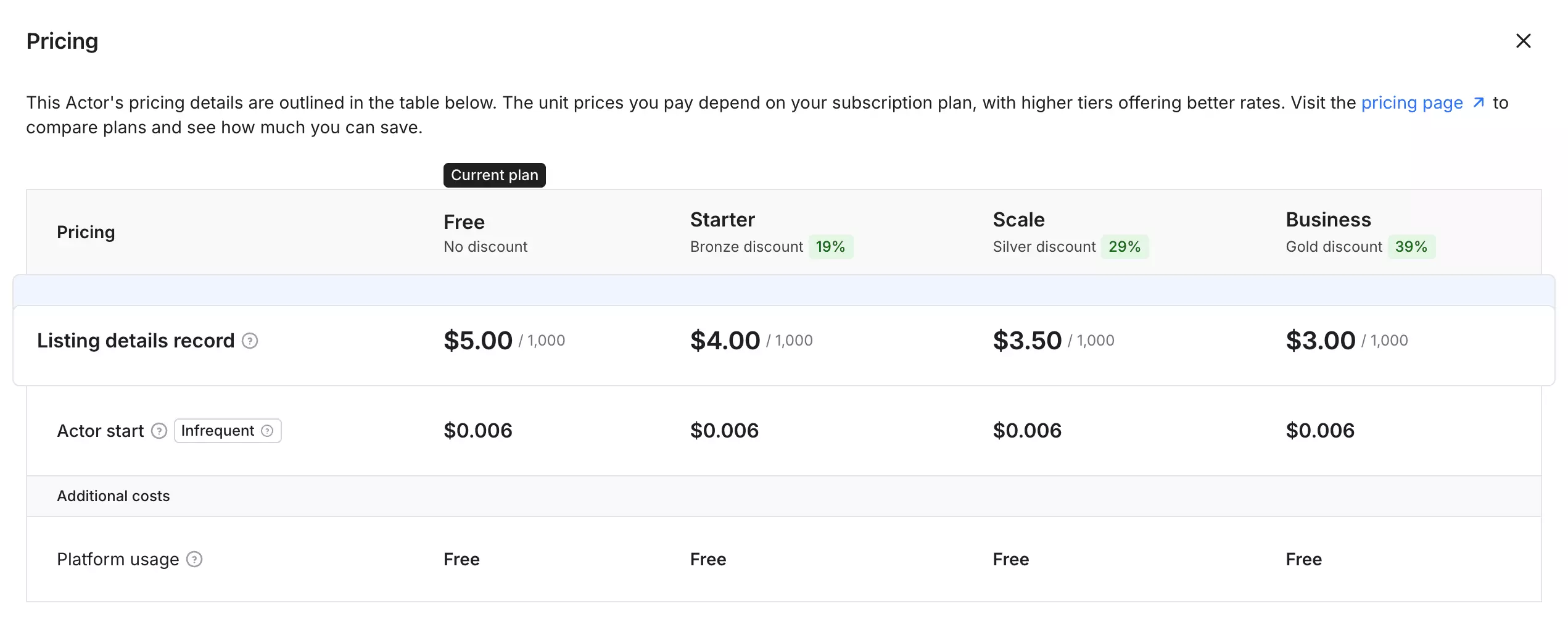
At scale, Apify costs about 6× more than lobstr.io's basic listings... $3.01/1K versus $0.50/1K.
Usability
Apify combines a no-code Actor console with API and SDK access, covering both manual and automated workflows.
Input
It accepts:
- One or multiple Immoweb search URLs per run
- Individual listing URLs
Controls
The main scrape control is:
- maxItems for limiting results
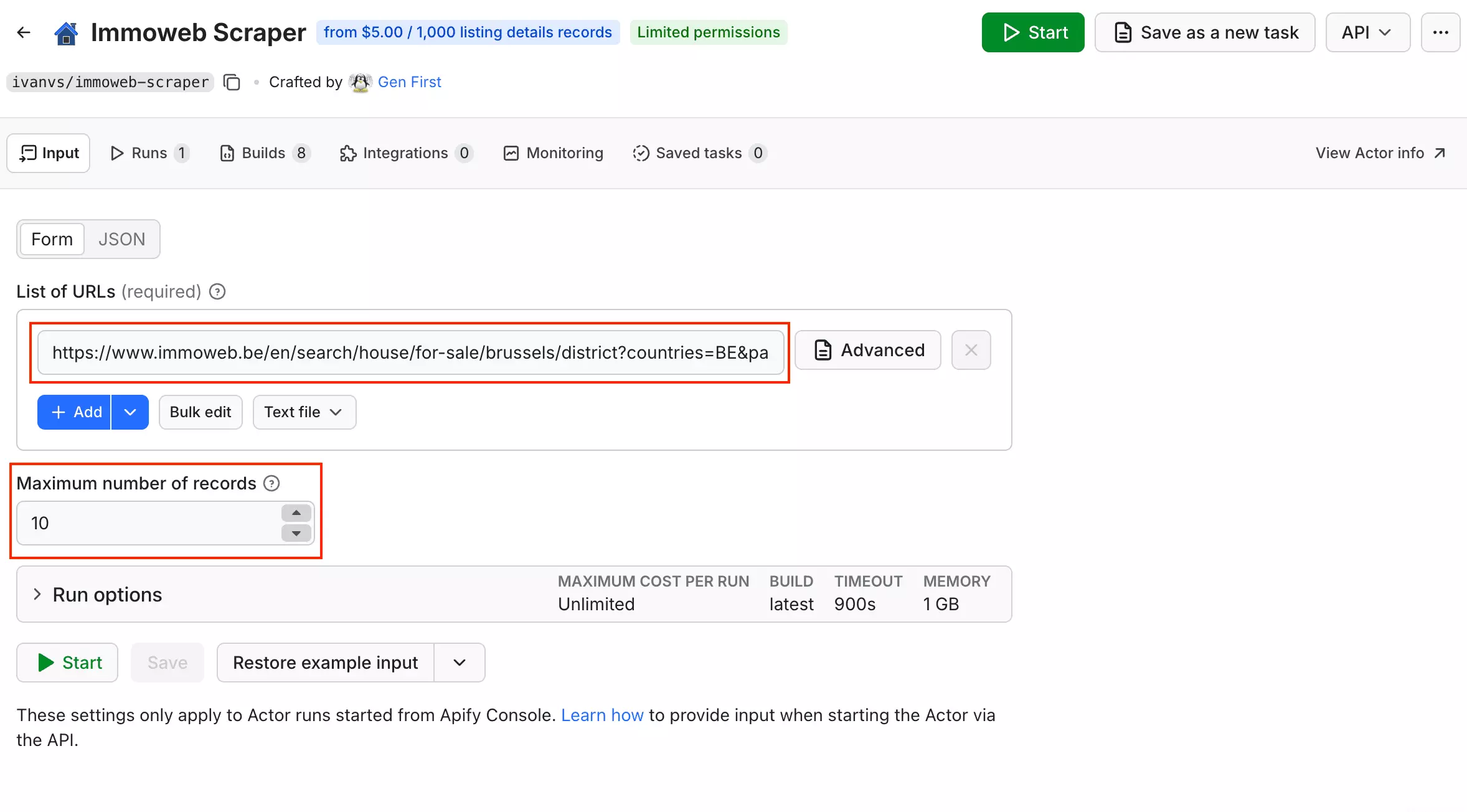
The control surface is fairly minimal.
Workflow & delivery
Runs can be configured and started from the web console.
Results export to JSON, CSV, Excel, and other formats.
For automation, Apify also provides REST API access plus SDKs.
The main friction is post-processing.
Results arrive as deeply nested JSON, so spreadsheet-ready workflows usually need an extra flattening step.
Usability score: 8/10 — easy to run and automate, with search filtering handled through the URL, held back by one meaningful limitation: raw nested-JSON output that needs flattening for spreadsheet-ready use.
Speed
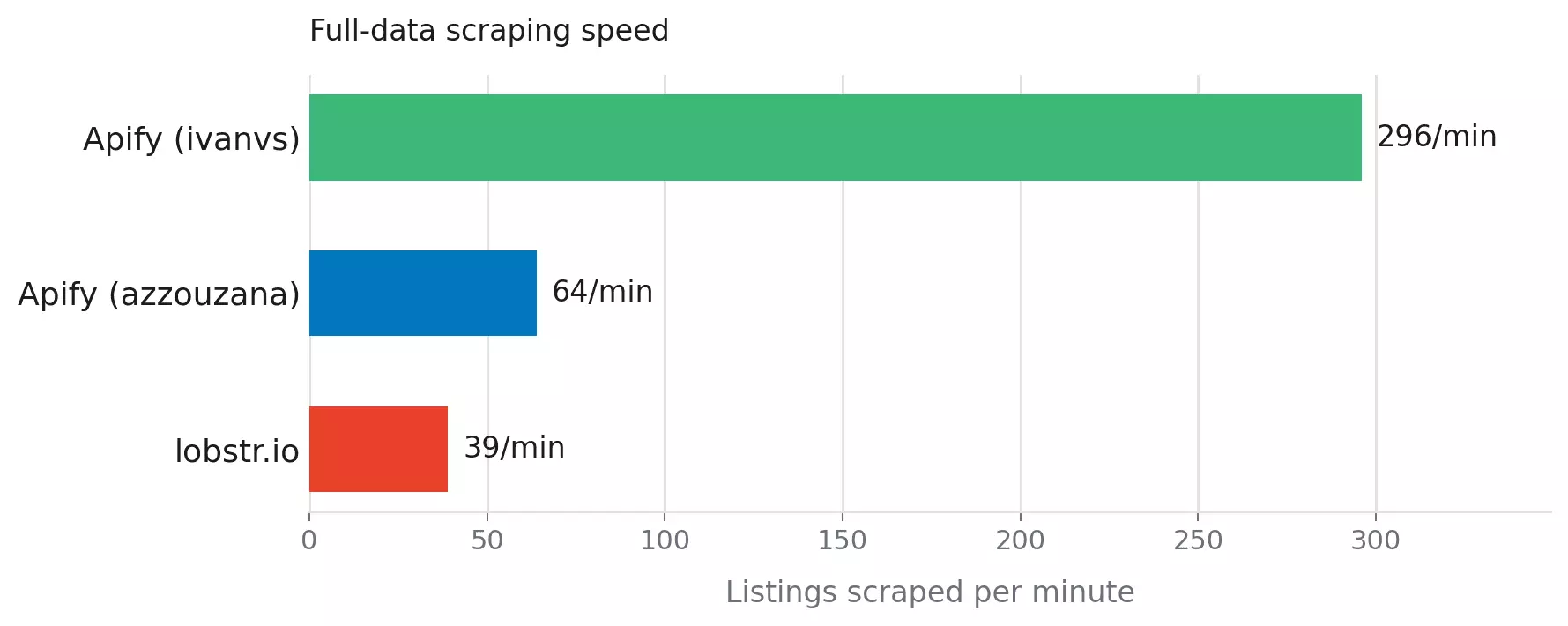
Apify completed the 1,000-listing benchmark in 3 minutes 23 seconds, measured at 1024MB, this actor's default memory tier.
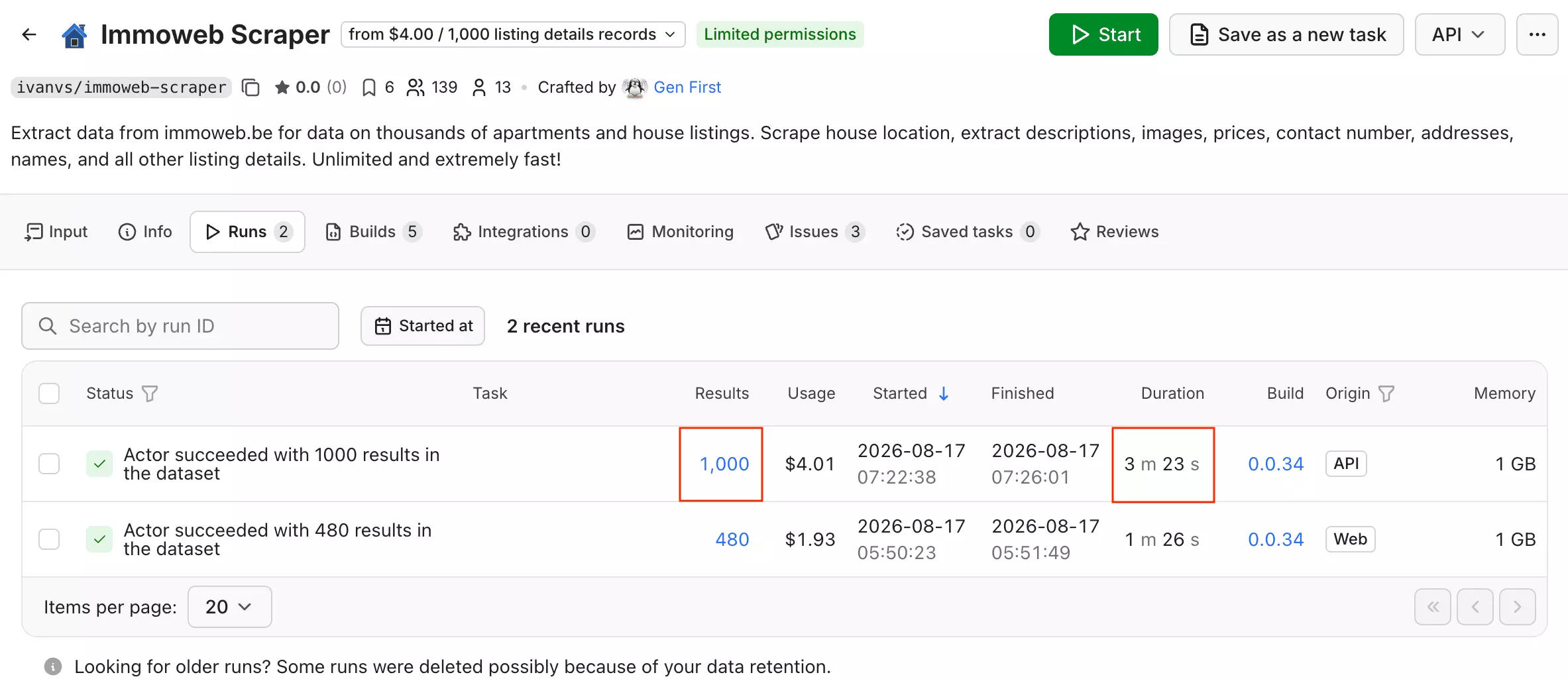
That works out to ~296 listings/min, the fastest ranked result at this configuration.
This actor isn't hard-capped at 1024MB. I tested it directly against a higher memory tier, and unlike azzouzana, it accepted 4096MB without being clamped back down.
A 100-listing sample at 4096MB, run specifically to check for a hard cap, completed in 16 seconds... extrapolating to roughly 369/min, faster than the 1024MB measured rate. That wasn't a full completed benchmark though, and a sample this short carries proportionally more fixed startup overhead than a 1,000-listing run would, so treat it as directional, not a confirmed ceiling.
At the confirmed 1024MB rate, 100,000 listings takes ~5.6 hours. At the higher, unconfirmed rate, that would drop to roughly 4.5 hours.
It was about 4.6× faster than azzouzana and 7.6× faster than lobstr.io basic, at each tool's currently measured configuration.
Speed score: 10.00/10 — fastest ranked throughput measured, with headroom that likely isn't fully captured yet.
Scalability
At the measured 1024MB rate, Ivanvs has a theoretical base capacity of about 12.77M listings/month running continuously.
Apify also allows up to 25 simultaneous Actor runs on this account.
That is platform-level headroom rather than Ivanvs-specific capacity, so I treat it as context rather than measured scraper throughput.
Reliability was strong. The benchmark completed 1,000/1,000 listings, with no duplicates or collection errors.
Public 30-day stats show 799 successful runs from 802 total, or 99.63%.
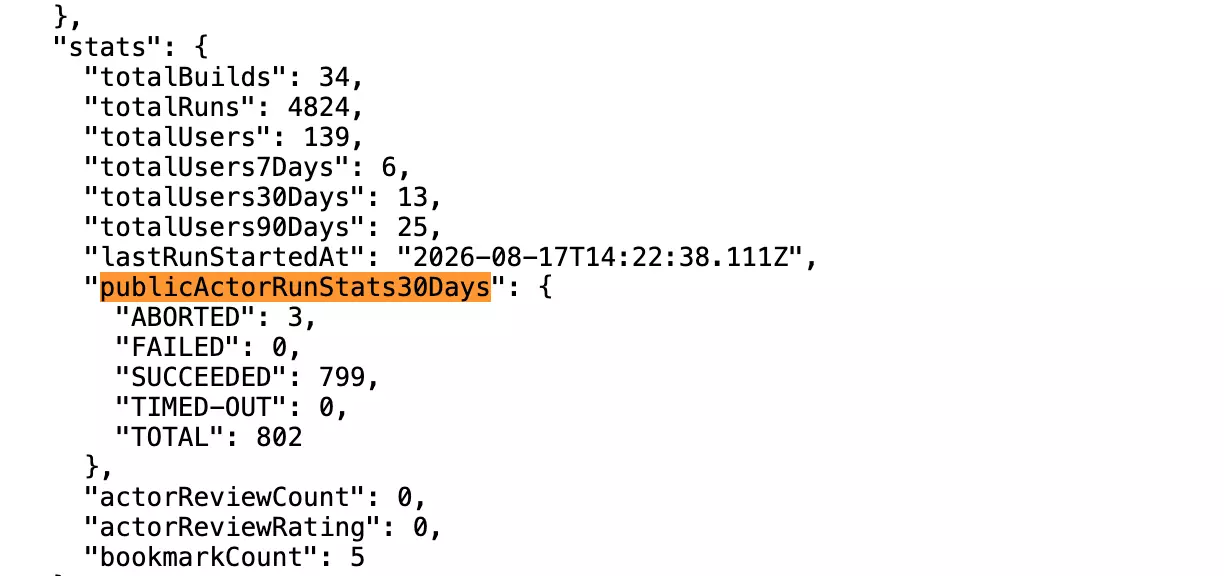
When a run breaks, it stops rather than pauses or auto-resumes.
Completed results remain downloadable for 31 days.
Scalability score: 8/10 — strong sustained capacity and reliable runs, offset by no auto-resume on a broken run.
Customer support
There is no official Apify support for this scraper. Your escalation path is the developer's email and Apify Issues.
I checked all three public issues. One was effectively solved (but still open), while two scraping problems remain unresolved, including incomplete results.
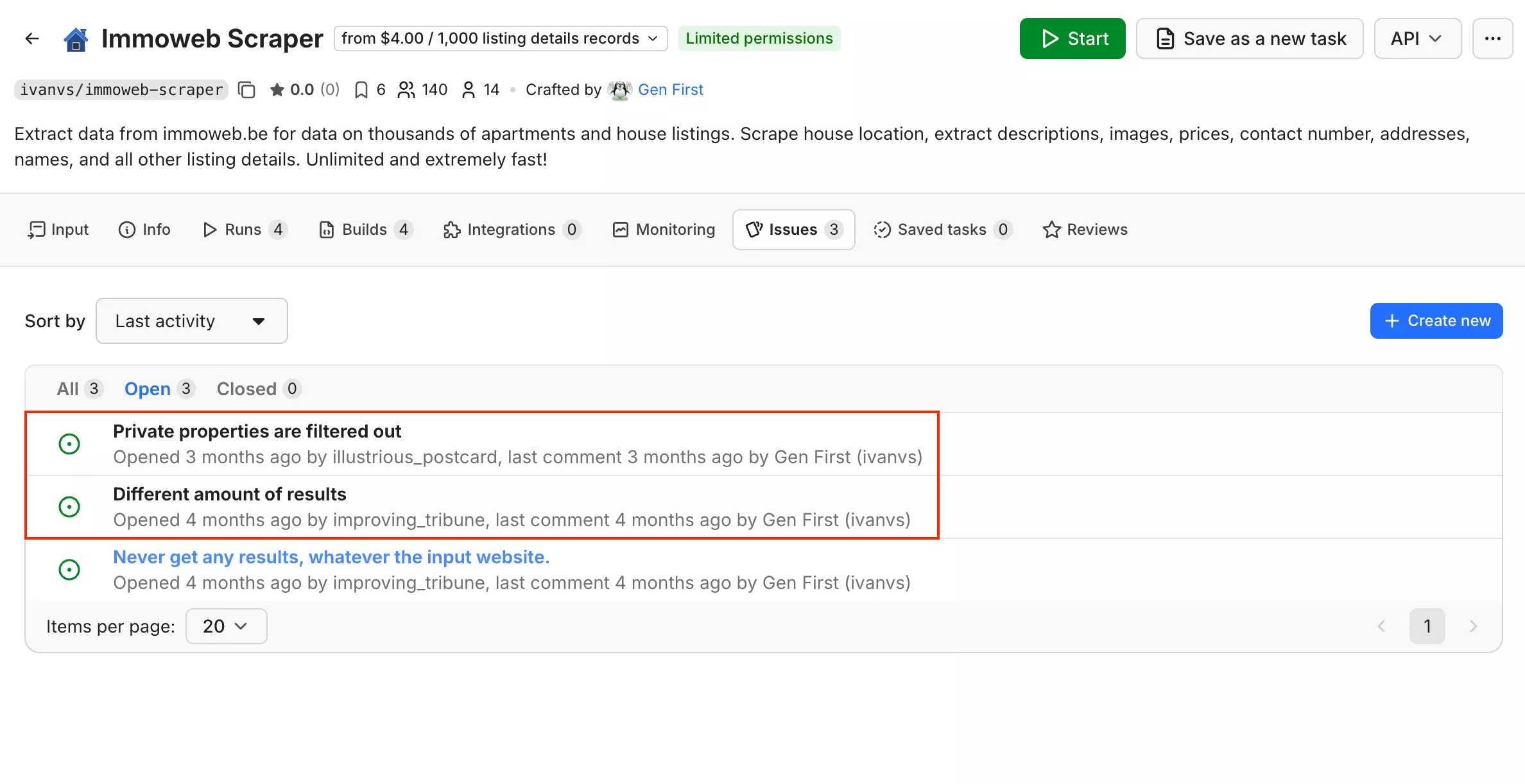
The developer responds, but the public record is stronger on diagnosis than actual resolution.
Support score: 4/10. Reachable and technically helpful, but unresolved issues weaken confidence in long-term support.
Best for: buyers who prioritize speed and broad data coverage over lower cost and cleaner output. It is the fastest ranked scraper, with the widest schema and top-tier photo and multi-unit depth. The trade-off: deeply nested JSON and a higher cost per 1,000 listings.
2. Apify — azzouzana/immoweb-be-mass-scraper-by-search-url
| Category | Score |
|---|---|
| Data | 9.91/10 |
| Cost | 8.00/10 |
| Usability | 7/10 |
| Speed | 2.17/10 |
| Scalability | 6/10 |
| Support | 8/10 |
| Overall | 6.99/10 |
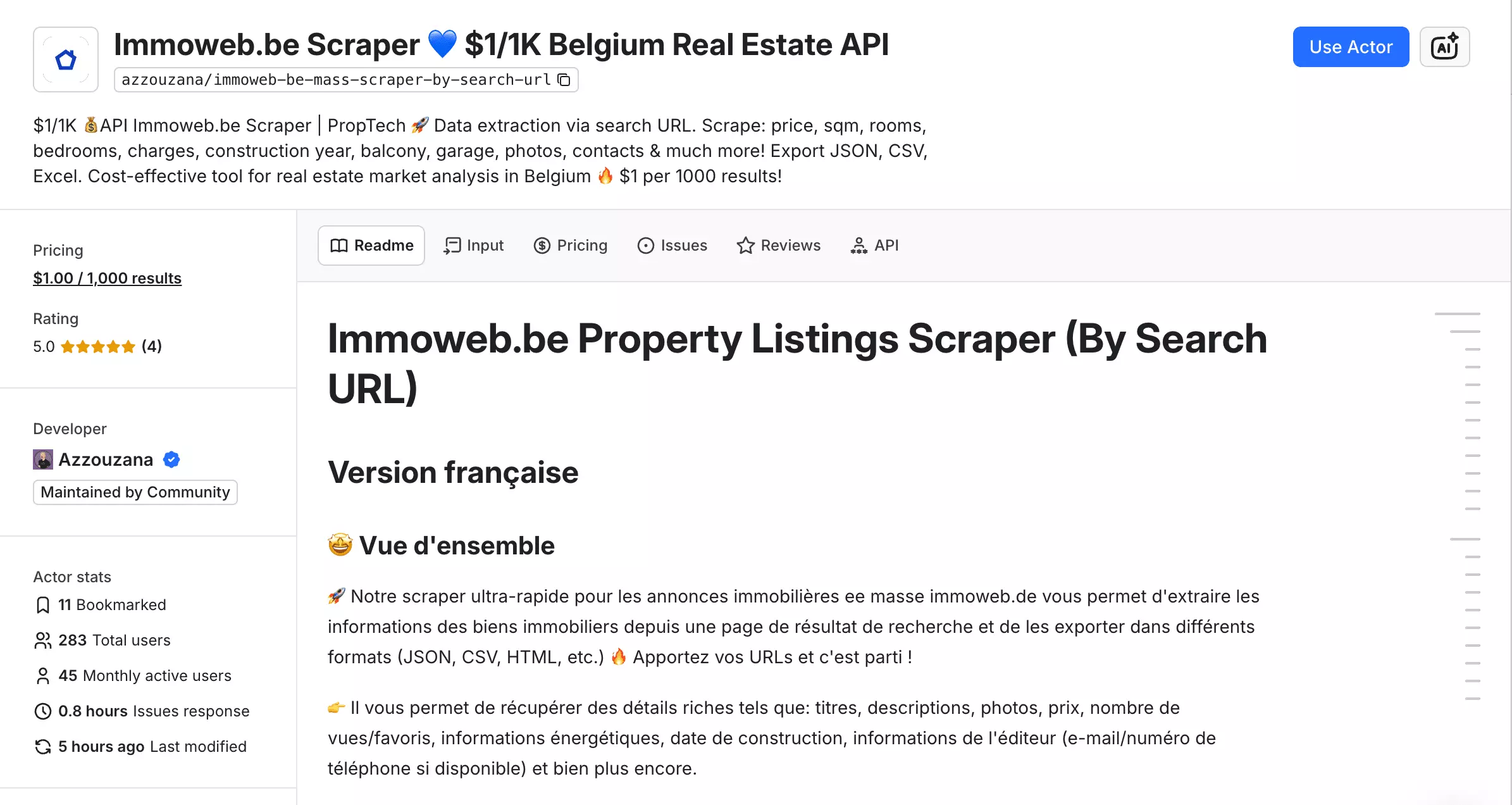
This is a second Apify Actor for Immoweb, structurally distinct from ivanvs despite scraping the same site... different field names, different nesting, but a near-identical depth of data.
| Pros | Cons |
|---|---|
| Highest data score tested: 9.91/10 | One search URL per run |
| Flat $1.00/1K pricing | Deeply nested output needs flattening |
| 99.80% consistency across comparable data points | About 4.6× slower than Apify's ivanvs actor |
| 17.46 photos/listing and 4,601 sub-units | 512MB hard cap, with no higher single-run tier |
| 96.7% phone coverage by default | Failed runs stop rather than auto-resume |
Data
Azzouzana exposes 1,662 normalized field paths, with 117 representing distinct, useful listing data points.
That puts its usable ratio at 7.0% and its overall coverage just behind ivanvs at 120.
| Category | Data points |
|---|---|
| 🏠 Listing | ID, URL, external reference, title, transaction type, title language variants 🎁 |
| 💰 Price | price, cadastral income |
| 📍 Location | country, region, province, locality, postcode, street, number, box, coordinates, district |
| 📐 Property | surface, bedrooms, bathrooms, toilets, showers, kitchen, construction year, condition, facade count |
| 🛋️ Amenities | lift, pool, disabled access, alarm, internet, air conditioning |
| ⚡ Energy | heating, EPC, consumption, glazing, heat pump, solar panels |
| 📋 Legal | flood status, permits, planning breaches, asbestos, electrical and other certificates |
| 📷 Media | photos, virtual tours, floor plans, documents |
| 📝 Description | main description plus French and Dutch variants |
| ☎️ Contact | agency, email, IPI number, website, representative, contact hours, phone/mobile, franchise/network 🎁 |
| 📅 Dates | creation, modification, expiration |
| 📊 Engagement | views, bookmarks |
| 🏢 Projects | unit price, surface, bedrooms, floor, sale status, floor-plan count 🎁, specification count 🎁, picture count 🎁, completion status 🎁 |
The table shows representative fields rather than all 117 meaningful data points. See the full output below.
Its strongest coverage is in legal records, property details, energy data, agency information, media, and multi-unit projects.
Legal and permit coverage is complete at 16 of 16 comparable data points, matching ivanvs field-for-field.
The missing data is limited.
Consistency is the standout.
Across 101 comparable data points, azzouzana populated 99.80% of applicable values, the strongest result tested.
It also filled several fields that ivanvs exposes structurally but leaves blank on the same listings.
Depth is tied with ivanvs. Across 998 matched listings, azzouzana returned 17,421 photos, averaging 17.46 per listing.
Phone or mobile numbers were available on 96.7% of listings in the standard output.
Data score: 9.91/10 — the highest tested, driven by near-ivanvs coverage, stronger consistency, and identical depth.
Cost
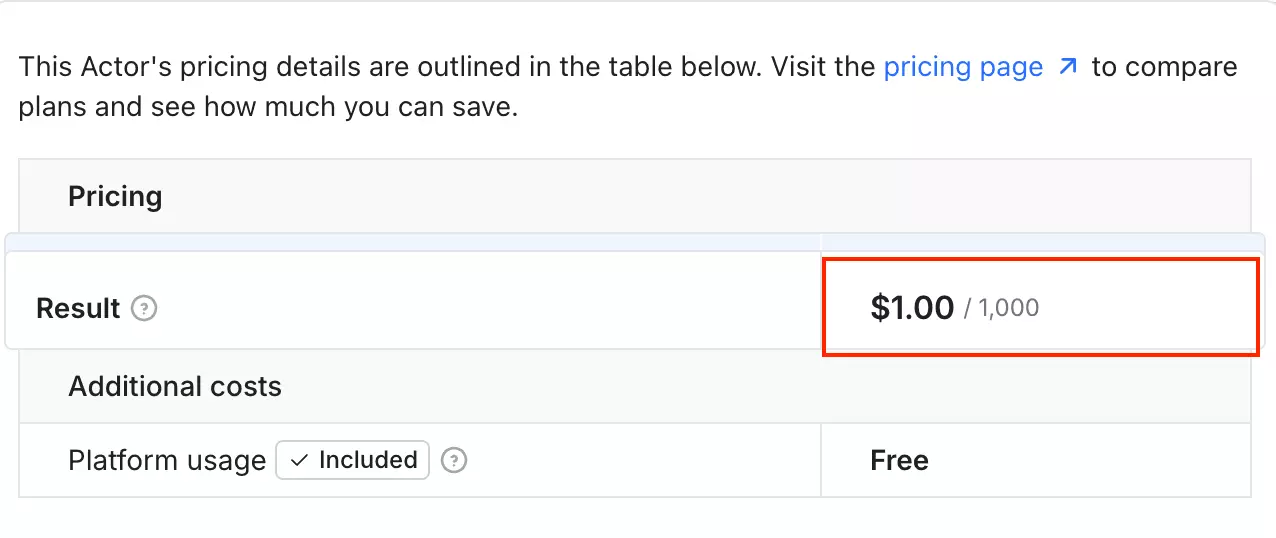
Azzouzana uses pay-per-event pricing, with a flat rate rather than tiered pricing.
Standard pricing
- Rate: $1.00 per 1,000 listings, flat
- Free tier: available, but capacity-limited
The test matched the published rate exactly: 1,000 listings charged $1.00 total.
At scale, that makes azzouzana 2× lobstr.io's basic price but roughly a third of ivanvs's.
Cost score: 8.00/10 — based on the $1.00/1K flat rate against the $5.00/1K scoring ceiling, the same fixed benchmark used for the other two tools.
Usability
Azzouzana combines a no-code Actor console with API and SDK access, the same Apify platform as ivanvs.
Input
It accepts:
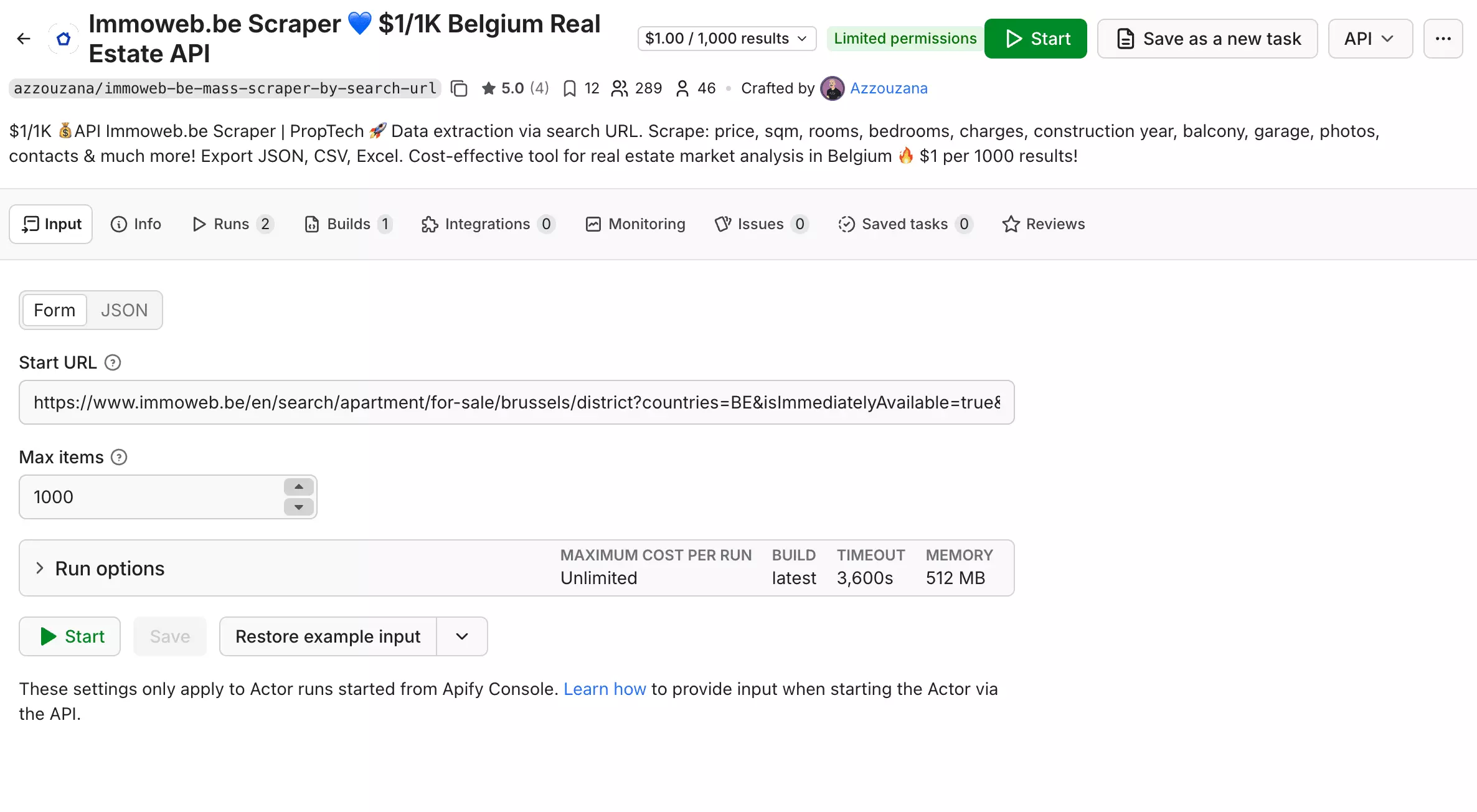
- One Immoweb search URL per run
- maxItems for limiting results
The input schema has no array field for multiple URLs, so batching means multiple separate runs.
Controls
The main scrape control is the same as ivanvs:
- maxItems for limiting results
Workflow & delivery
Runs can be configured and started from the web console.
Results export to CSV, JSON, XLSX, XML, JSONL.
For automation, azzouzana also provides REST API access plus SDKs, same as ivanvs.
The main friction is twofold: the same nested-JSON post-processing ivanvs requires, plus the single-URL input limit above.
Usability score: 7/10 — one point below ivanvs, reflecting two meaningful limitations instead of one.
Speed
Azzouzana completed the 1,000-listing benchmark in 15 minutes 37 seconds at 512MB.
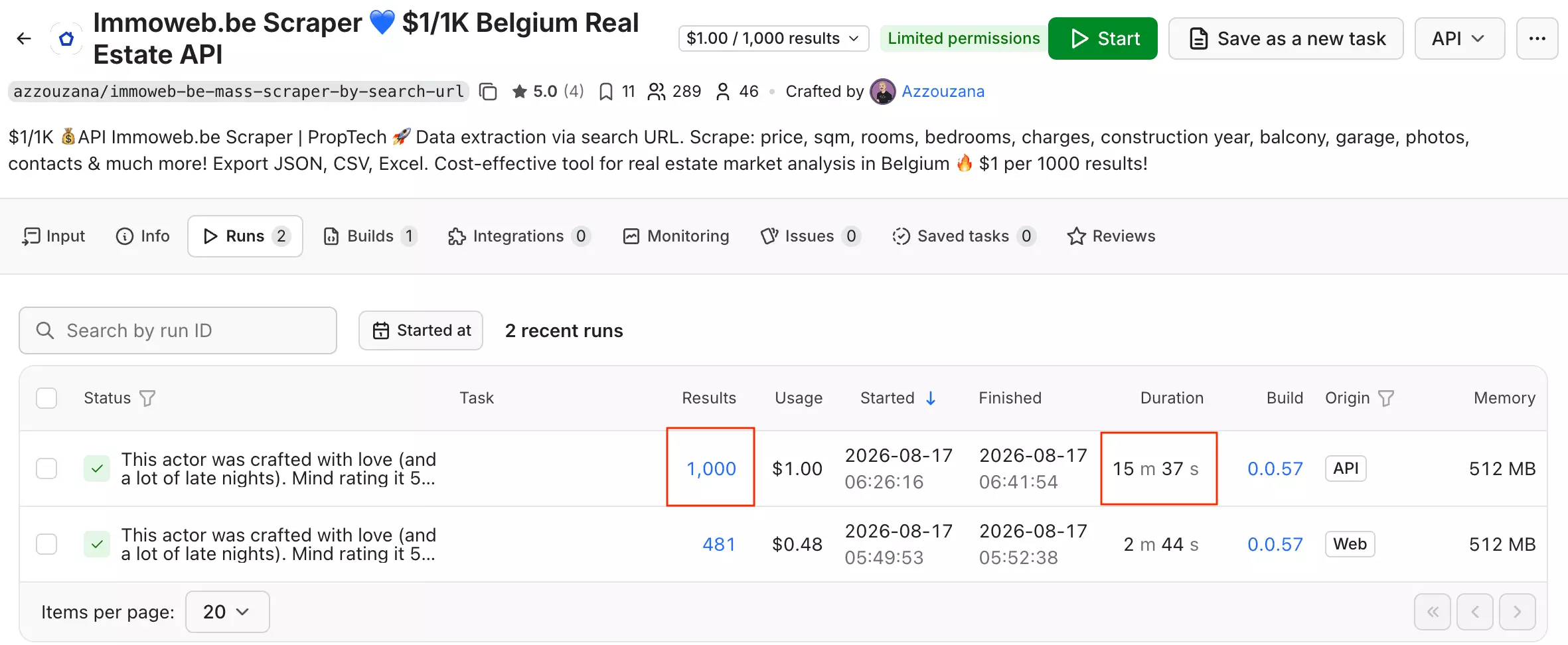
That works out to ~64 listings/min.
512MB is the actor's tested ceiling. Higher-memory requests were automatically clamped back to 512MB.
So unlike ivanvs, there is no additional single-run memory headroom.
At that rate, 100,000 listings would take about 26 hours.
Azzouzana is faster than lobstr.io basic, but about 4.6× slower than ivanvs on the common benchmark.
Speed score: 2.17/10 — ~64 listings/min at the actor's confirmed maximum configuration.
Scalability
At 64.03 listings/min, azzouzana has a theoretical base capacity of about 2.77M listings/month running continuously.
Apify allows up to 25 simultaneous Actor runs on this account, but that is platform-level headroom rather than actor-specific capacity.
The bigger operational limit is input handling. Azzouzana accepts one search URL per run.
Covering 500 searches therefore means orchestrating 500 separate runs rather than loading them into one job.
Reliability was strong. The benchmark returned 1,000 unique listings, with no duplicates or collection errors.
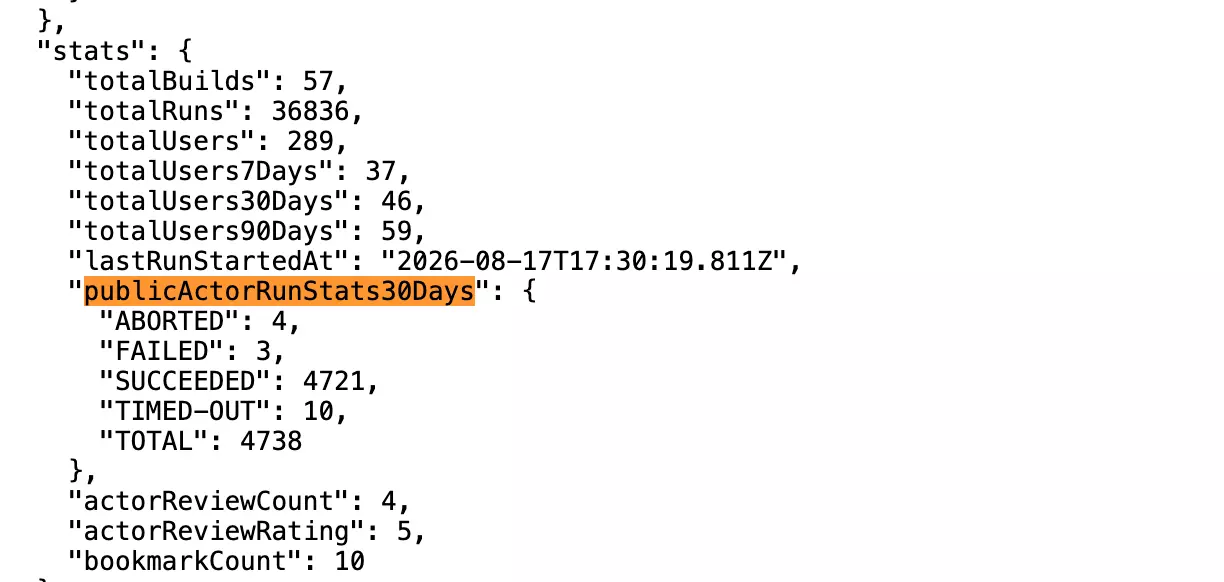
Public 30-day stats show 4,721 successful runs from 4,738 total, or 99.64%.
When a run breaks, it stops rather than pauses or auto-resumes. Finishing the job means starting another run.
Completed results remain downloadable for 31 days, same with ivanvs.
Scalability score: 6/10 — reliable benchmark and parallel runs, offset by a 512MB cap and no auto-resume... real operational friction stacking together.
Customer support
There is no official Apify support for this scraper. Your escalation path is the developer's Discord, email, and Apify Issues.
All six public issues are closed on time.
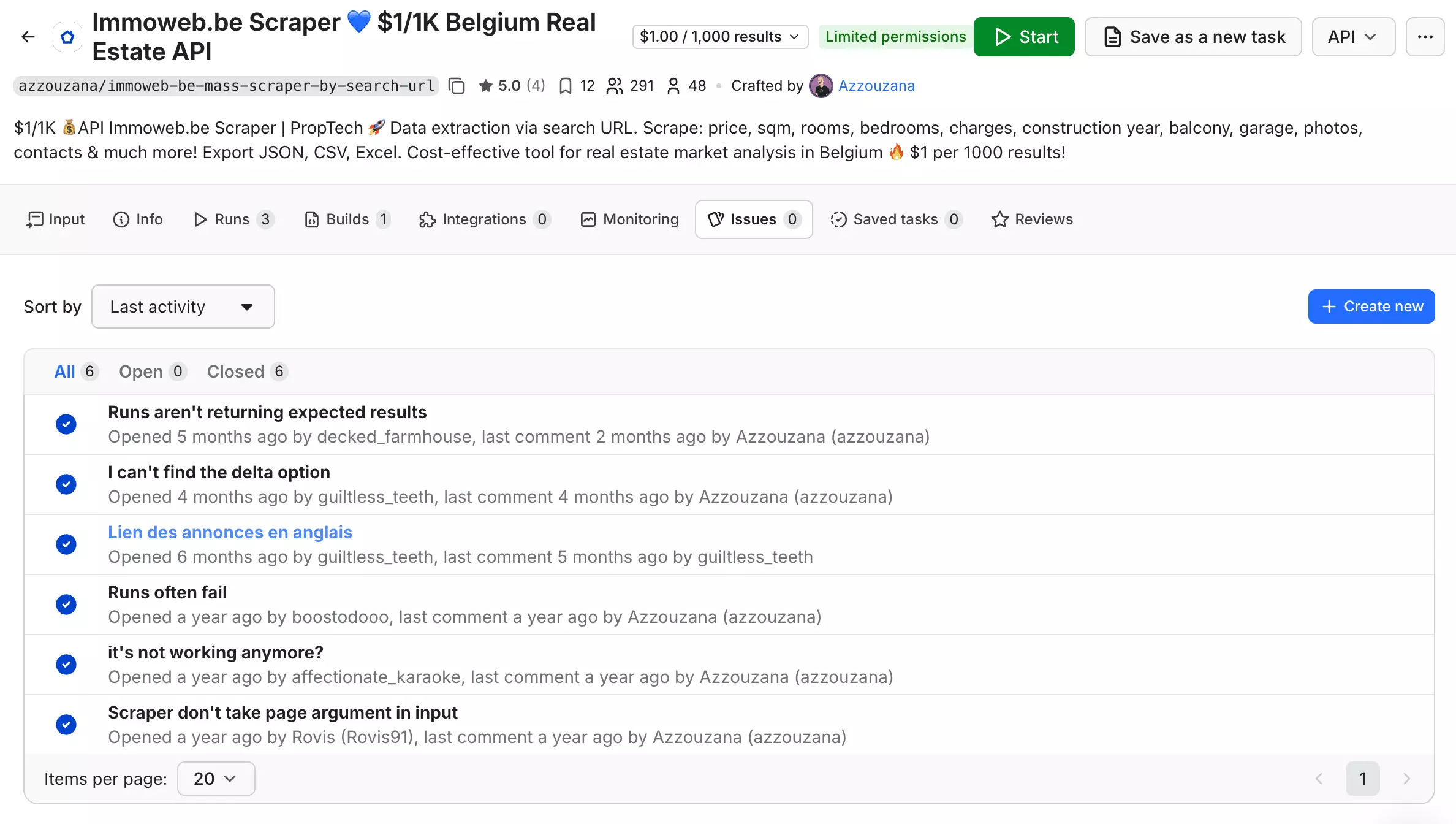
That's a strong record for a community actor, though support still depends on one developer.
Support score: 8/10. The developer is accessible and has a solid record of fixing reported issues, but still no safety net.
Best for: buyers who want near-ivanvs data depth at much lower cost. Azzouzana matches ivanvs on photo and multi-unit depth, with stronger consistency, at about a third of the price. The trade-off: slower runs and one search URL per run.
3. lobstr.io - Immoweb Listings & Phones Scraper
| Category | Score |
|---|---|
| Data | 4.06/10 |
| Cost | 9.00/10 |
| Usability | 10/10 |
| Speed | 1.31/10 |
| Scalability | 10/10 |
| Support | 10/10 |
| Overall | 6.91/10 |
| Pros | Cons |
|---|---|
| Cheapest ranked option at scale: $0.50/1K | Narrower coverage: 23 meaningful data points in basic mode |
| Flat, easy-to-parse output | No sub-unit breakdown for multi-unit projects |
| Buyer-controlled concurrency up to 20 Slots | Slow baseline speed: ~39 listings/min at 1 Slot |
| Partial results are kept and runs can resume | Get Listing Details costs 5× more and runs 8.03× slower |
| Live chat + strong third-party support evidence | Detailed mode still averages only 3.99 photos/listing |
Data
Basic mode is leaner at 23 meaningful data points.
| Category | Basic mode | Get Listing Details adds |
|---|---|---|
| 🏠 Listing | internal ID, native ID 🎁, URL, type, title, transaction type | external reference |
| 💰 Price | price, price type | — |
| 📍 Location | country, region, province, locality, postcode, street, number, box, floor, coordinates | — |
| 📐 Property | habitable surface, land surface, bedrooms | bathrooms, condition, construction year, facade count, floor count, furnished |
| 🛋️ Amenities | — | lift, terrace, garden |
| ⚡ Energy | — | EPC score, heating type |
| 📷 Media | cover photo | description, photo gallery |
| ☎️ Contact | — | agency type, agency name, email, phone/mobile |
| 📅 Dates | — | creation, modification, expiration |
lobstr.io's main exclusive is native_id, which neither Apify actor returns.
Basic mode covers the essentials, but skips agency data, phone numbers, EPC, descriptions, listing dates, several property details, and most amenities.
What it does return is highly consistent. Across 18 comparable data points, basic mode populated 99.75% of applicable values.
Detailed mode stayed nearly as consistent at 99.68% across 36 comparable data points, with usable phone or mobile numbers on 96.6% of listings.
Depth is the bigger limitation. Basic mode returns one cover image per listing, not a gallery.
Detailed mode adds galleries, but averaged just 3.99 photos per listing, versus more than 17 for both Apify actors.
Project depth does not improve. Across 270 developments, lobstr.io returned the project listings but no individual sub-unit data in either mode.
Data score: 4.06/10 — strong consistency, held back by a narrow base schema, shallow media, and no project-unit extraction.
Cost
lobstr.io uses credit-based pricing, with separate rates for basic listings and the optional Get Listing Details setting.
Basic listings
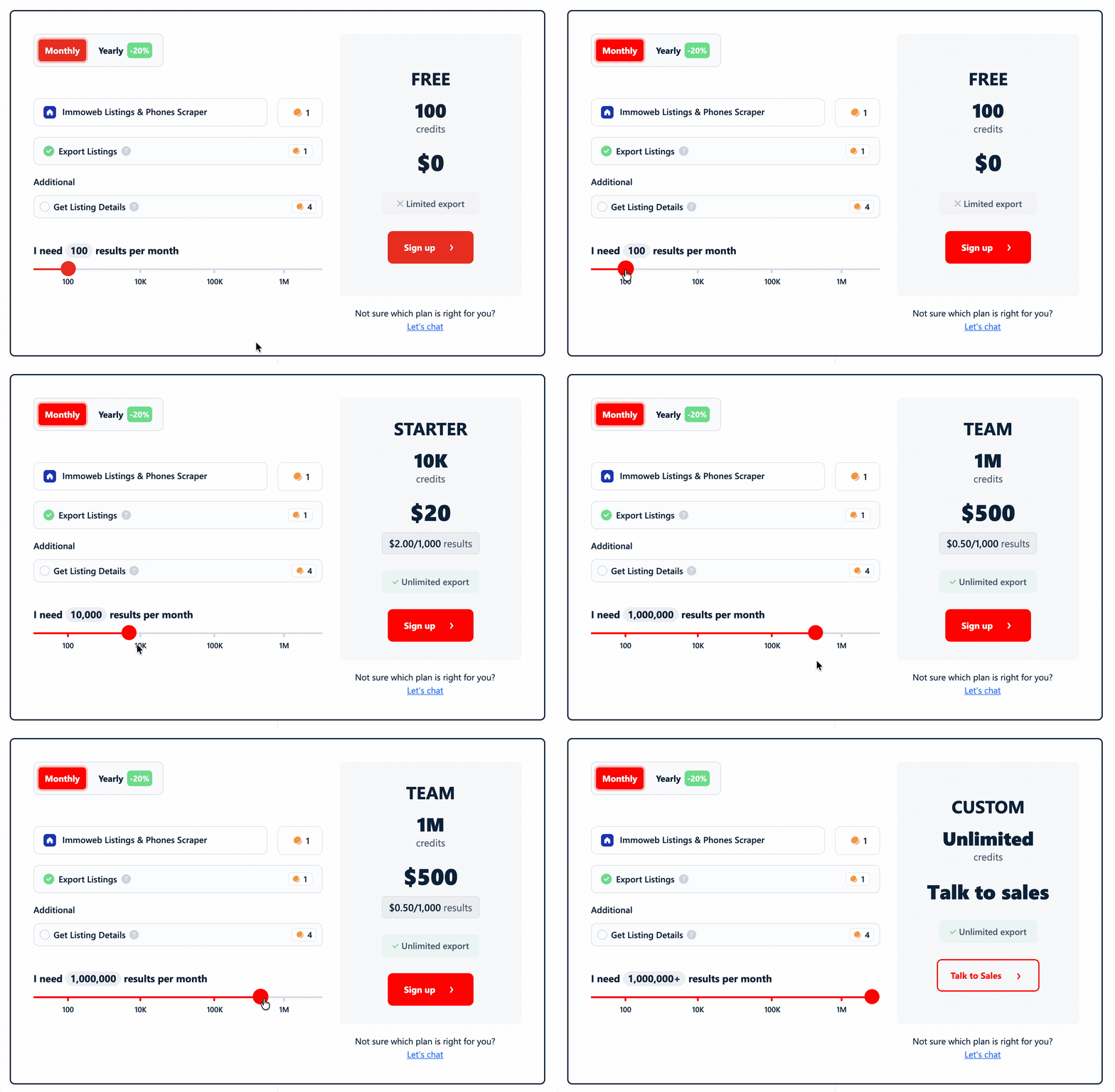
- Free: 100 credits/month
- Starts at: $2.00 per 1,000 listings
- At scale: $0.50 per 1,000 listings
With listing details
Enabling Get Listing Details increases the price.
- Starts at: $10.00 per 1,000 listings
- At scale: $2.50 per 1,000 listings
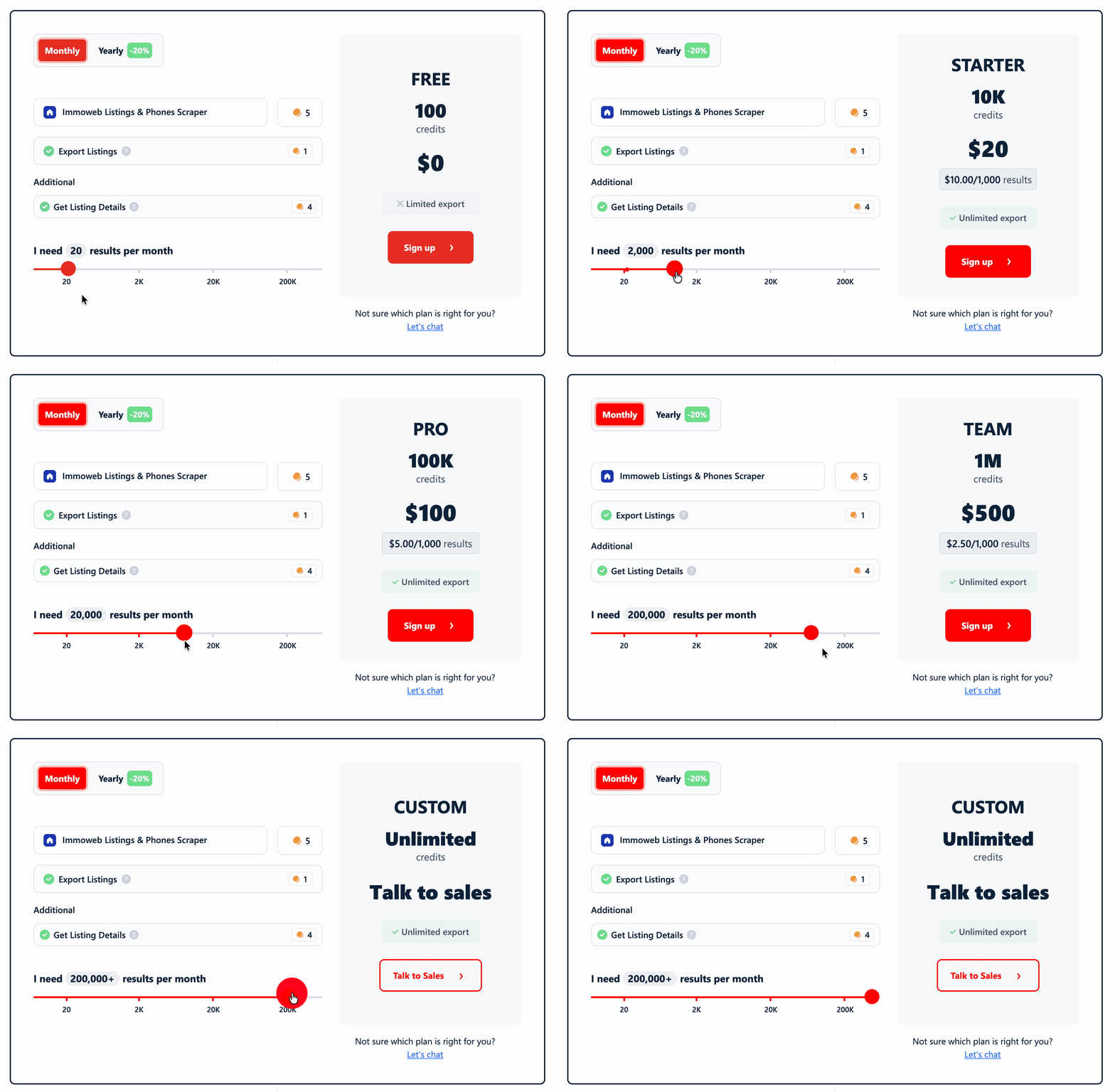
That makes listings with details exactly 5× more expensive than basic listings.
Cost score: 9.00/10 — based on the $0.50/1K scale price for the common baseline job.
Usability
lobstr.io covers the full workflow without code, with a well-documented, developer-friendly API for teams that want to automate it.
Input
It accepts:
- Immoweb search URLs
- Individual listing URLs
- CSV or TXT files for bulk input
Controls
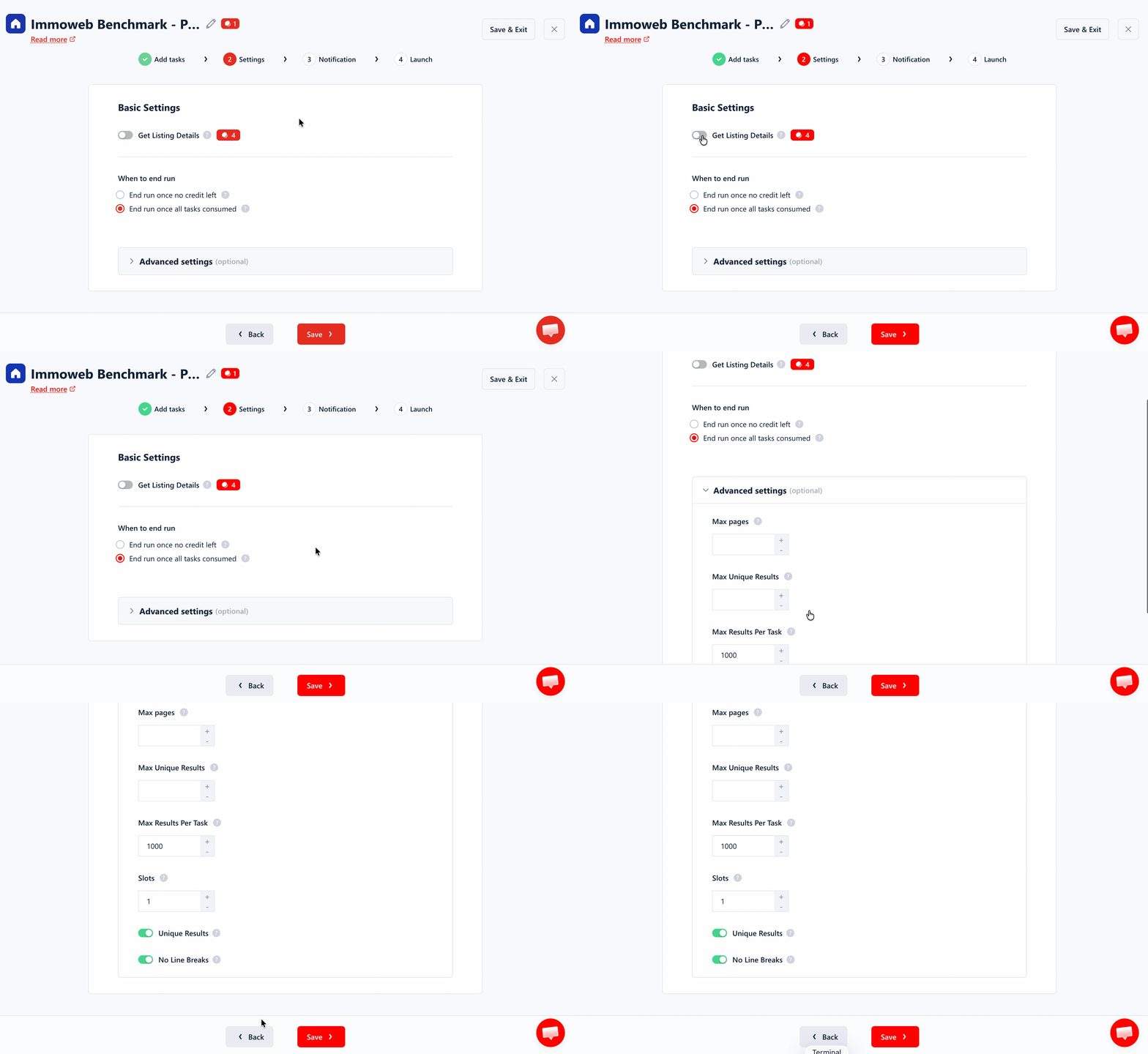
Useful scrape controls include:
- max_pages and max_results
- get_listing_details
- Unique-results-only mode
- Remove line breaks
- Concurrency from 1 to 20
Workflow & delivery
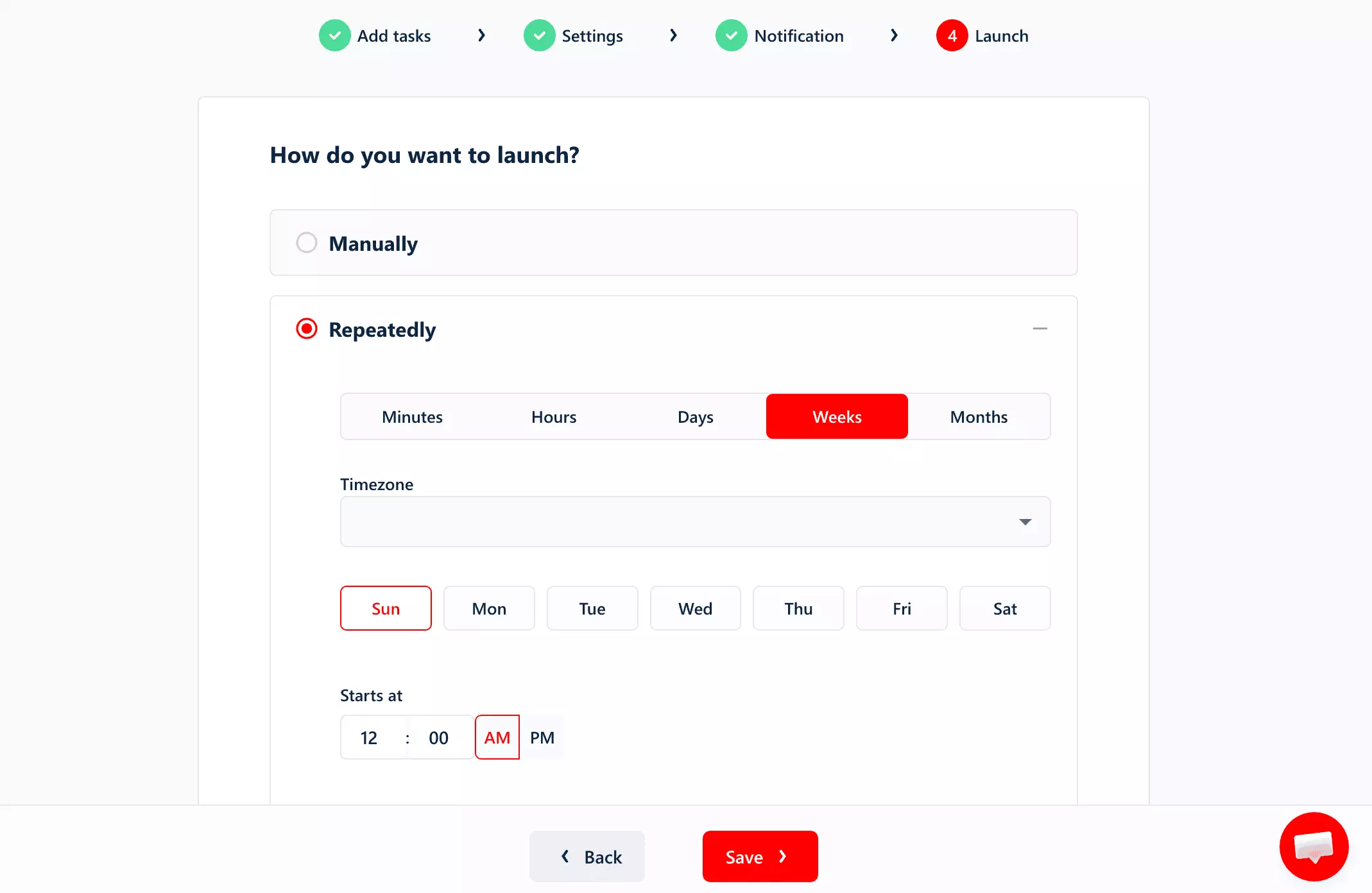
Runs can be scheduled by minute, hour, day, week, or month, with timezone control.
Results can be delivered through CSV, JSON, Excel, Google Sheets, S3, SFTP, email, or webhooks.
For programmatic workflows, lobstr.io also provides an API, Python SDK, CLI, and MCP support.
Usability score: 10/10 — useful controls, built-in scheduling and delivery, plus strong no-code and developer workflows.
Speed
lobstr.io completed the 1,000-listing benchmark in 25 minutes 46 seconds at 1 Slot.
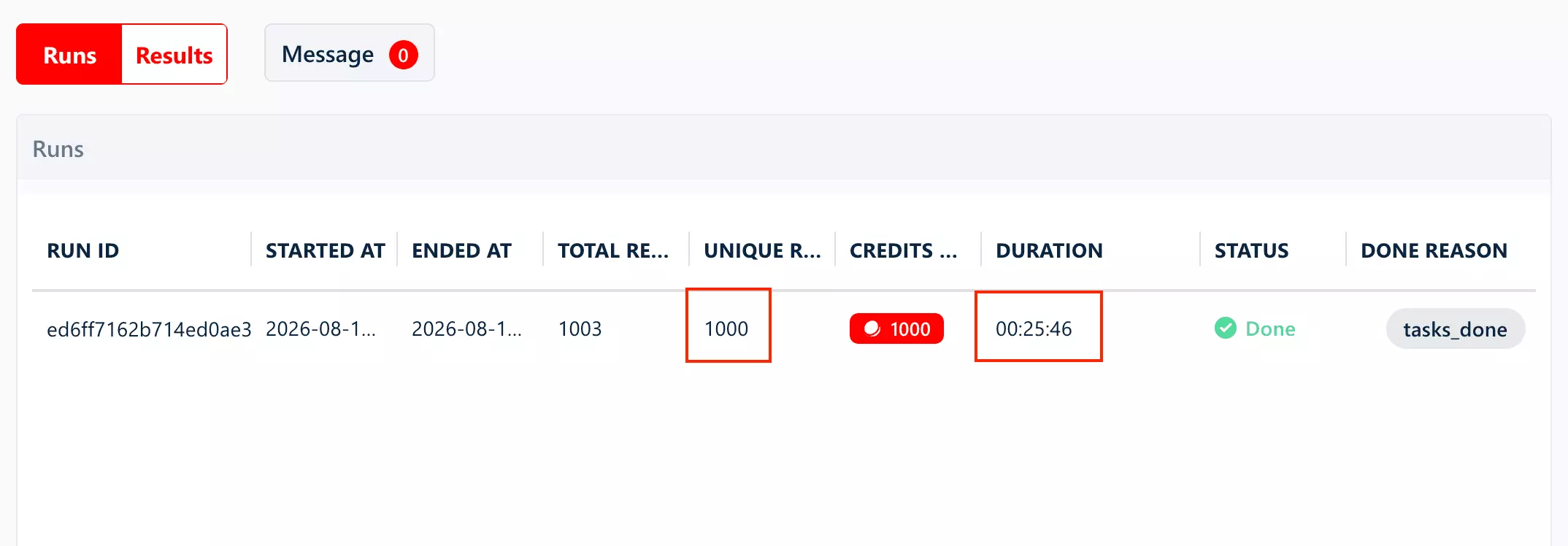
That works out to ~39 listings/min in basic mode.
The scraper supports up to 20 Slots per Squid, but I only benchmarked the 1-Slot configuration.
Assuming linear scaling, 20 Slots would reach roughly 776 listings/min. That figure is computed, not measured.
At 1 Slot, 100,000 listings would take about 42.9 hours. At the computed 20-Slot rate, that drops to roughly 2.1 hours.
With Get Listing Details enabled, the same 1,000-listing job took 3 hours 27 minutes at 1 Slot.
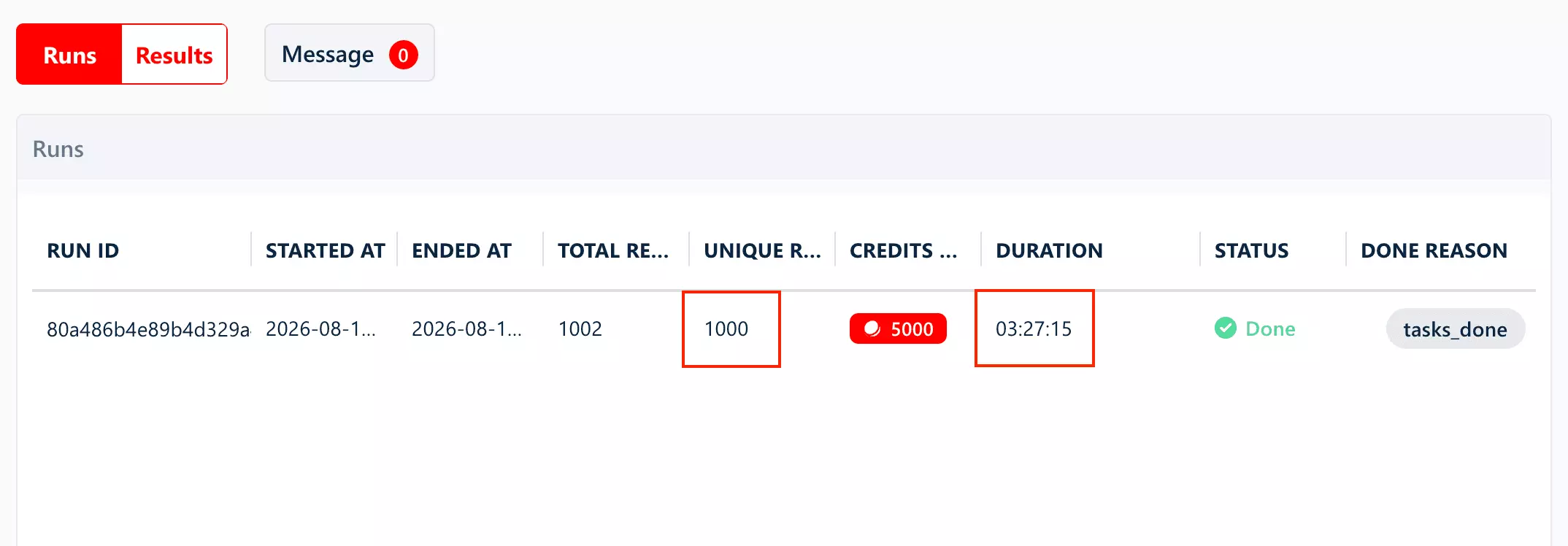
That works out to ~4.8 listings/min, an 8.03× slowdown versus basic mode.
lobstr.io is the slowest at the tested 1-Slot baseline, but the only ranked scraper with buyer-controlled concurrency up to 20 Slots.
Speed score: 1.31/10. Based on the measured ~39 listings/min basic-mode benchmark at 1 Slot.
Scalability
At the measured 1-Slot rate, lobstr.io has a theoretical base capacity of about 1.68M listings/month.
The scraper supports up to 20 Slots per Squid, with each Slot acting as a separate worker.
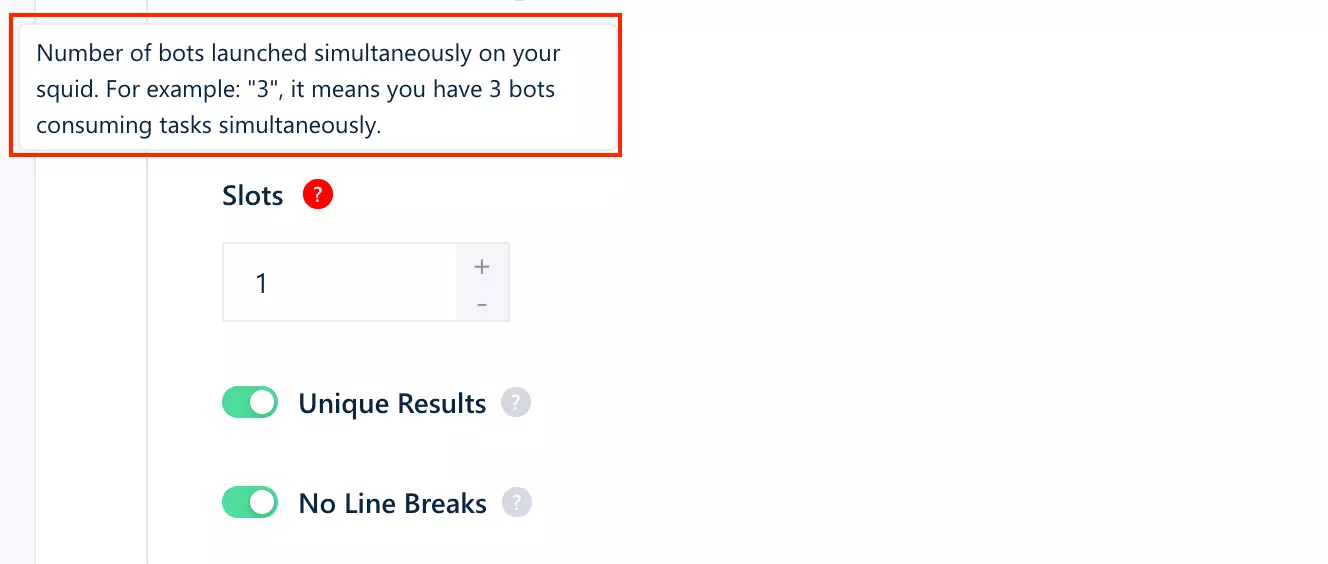
Assuming linear scaling, that raises theoretical capacity to about 33.5M listings/month. Again, that ceiling is computed rather than measured.
Unlike the Apify actors, concurrency is controlled inside the same job rather than by launching separate Actor runs.
Reliability was strong. The benchmark returned 1,000 unique listings with no pagination errors.
lobstr.io reports 99.95% task success and 99.90% incident-free runs over the last 90 days.
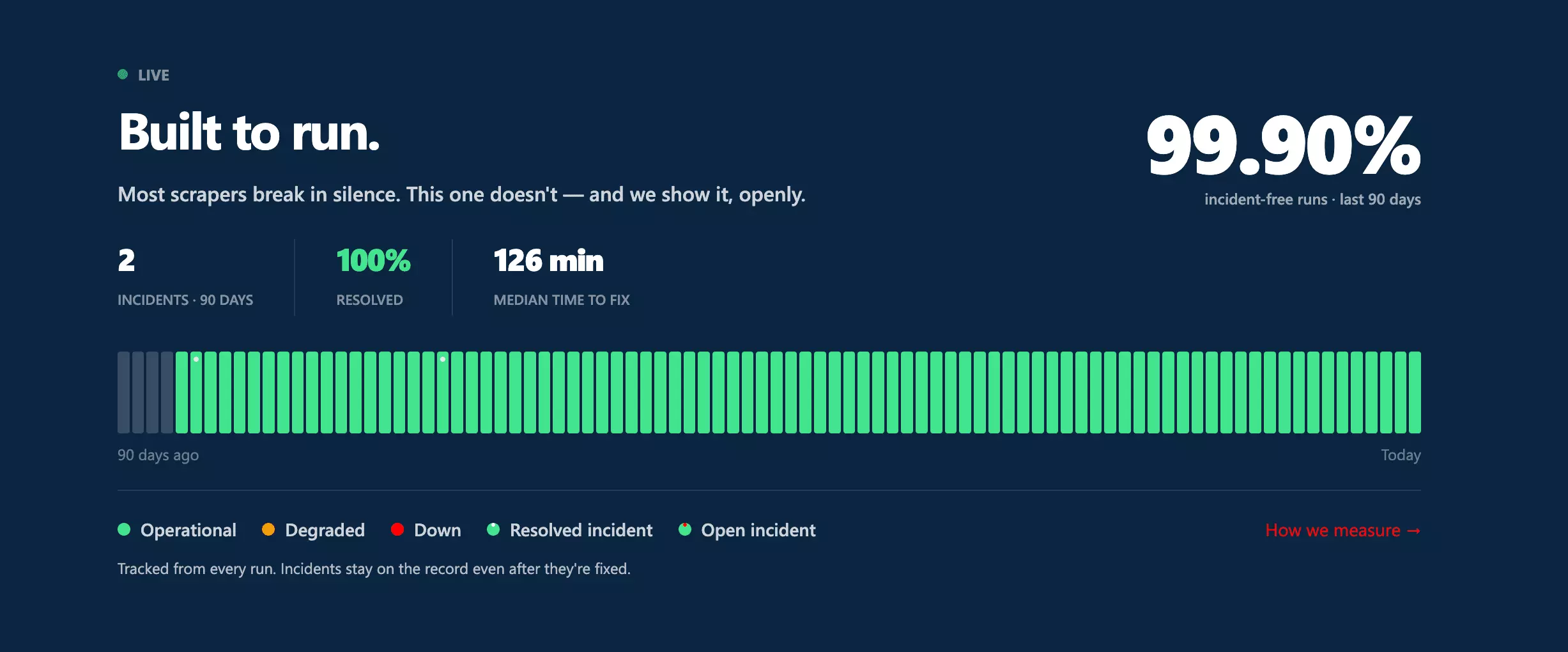
If a run stops, lobstr.io keeps the results already collected.
You can download the partial output or resume the run without redoing completed tasks.
Results remain downloadable for 28 days.
Scalability score: 10/10 — strong recovery, 20-Slot headroom, a clean benchmark, and strong published reliability.
Customer support
lobstr.io provides live chat and email, with support handled by the company rather than a single community developer.
On Capterra, 21 of 33 reviews mention support, and Customer Service holds a 5.0/5 score.
That's product-resolution evidence, not reply speed, but it shows problems are actually being fixed.
Support score: 10/10. The strongest support setup tested, with direct channels, substantial review evidence, and published resolution data.
Tools that didn't make the list
Three more scrapers were tested, but each hit a limitation serious enough to keep it out of the ranked comparison.
Apify — memo23/immoweb-scraper
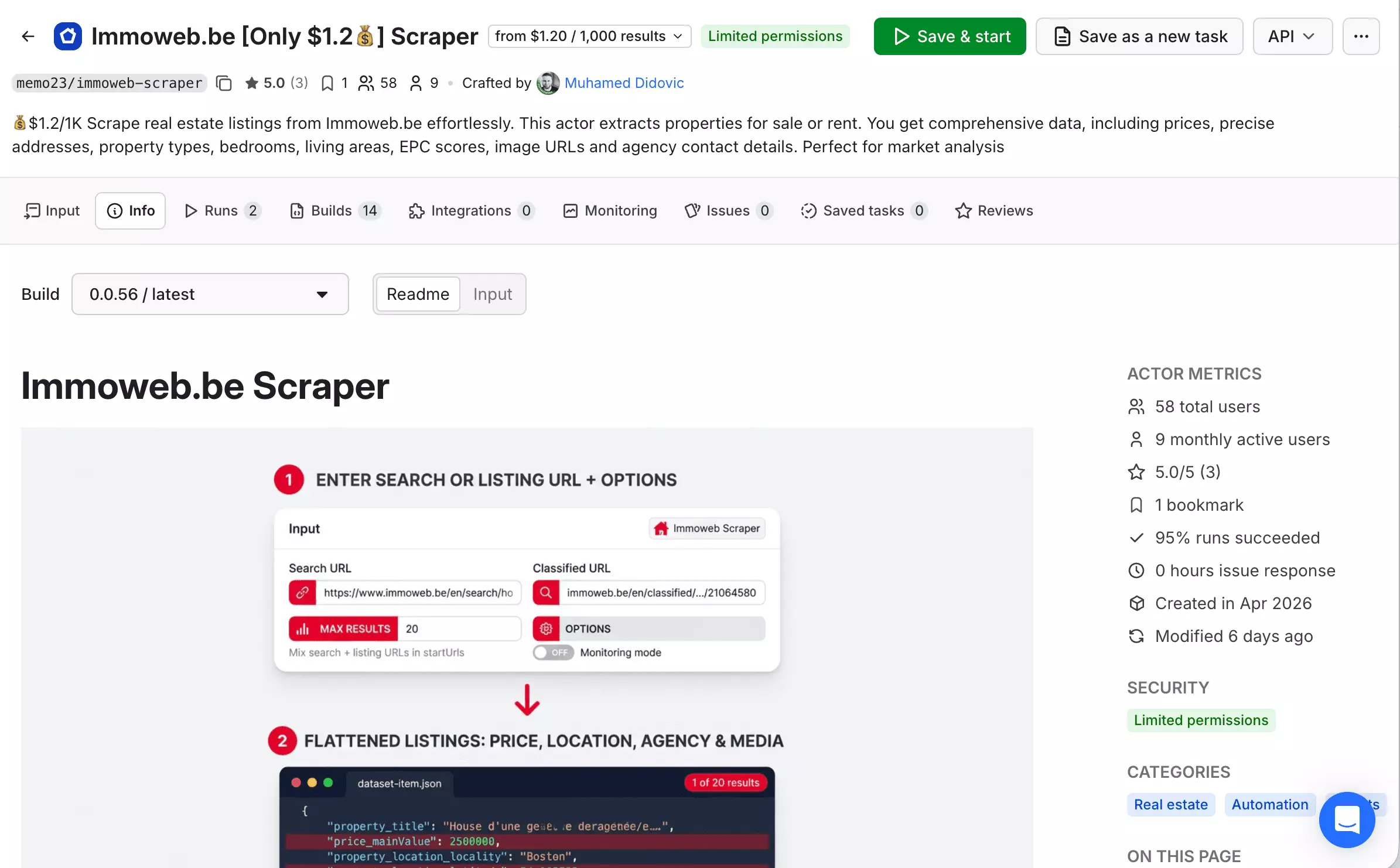
This Actor exposes unusually strong controls, including proxy targeting, concurrency settings, email enrichment, and lead-qualification options.
Why it didn't rank: two consecutive attempts returned 0 of 1,000 requested listings.
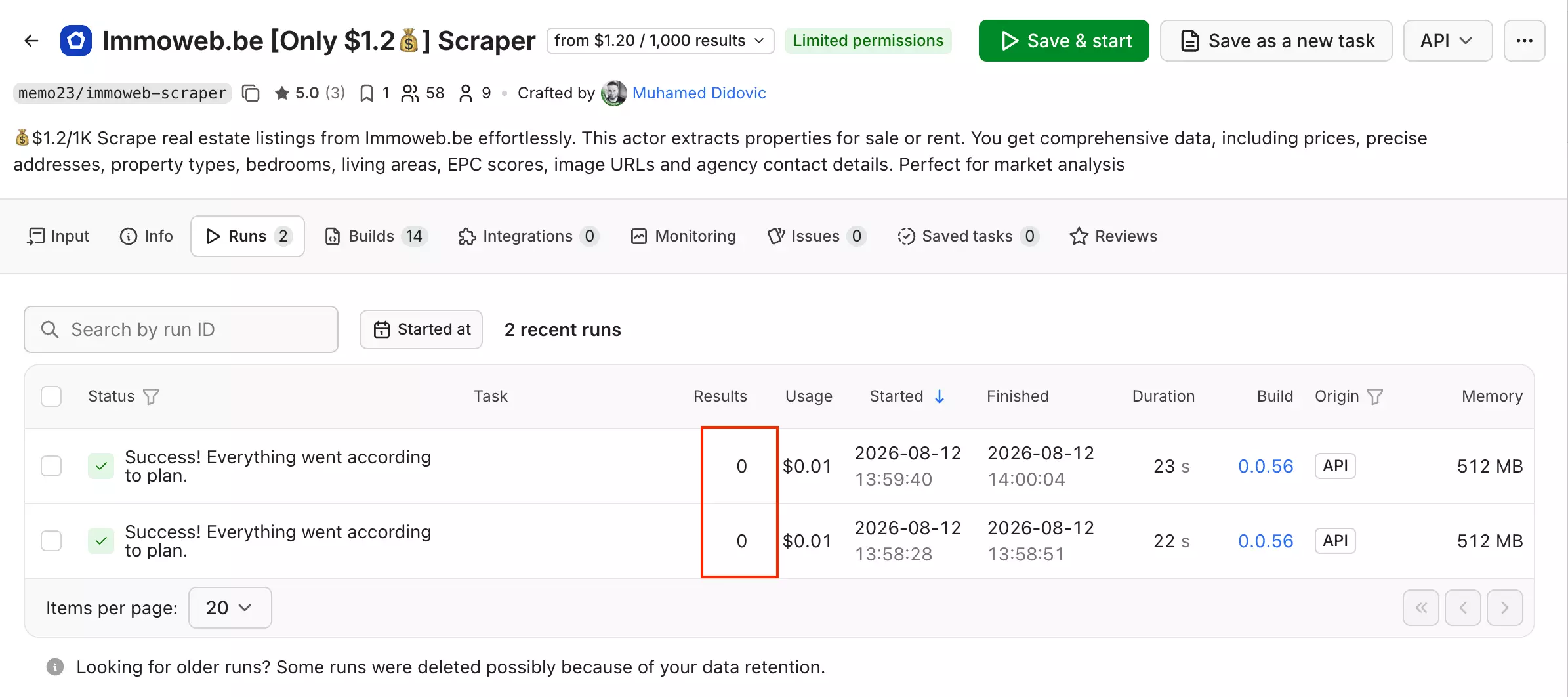
Both runs reported success, but the logs showed repeated failures in the primary fetcher and HTML fallback.
That makes the current reliability problem difficult to ignore, regardless of how good the input controls look.
Still worth knowing: the configuration is genuinely useful for lead-generation workflows.
Apify — crawlerbros/immoweb-scraper
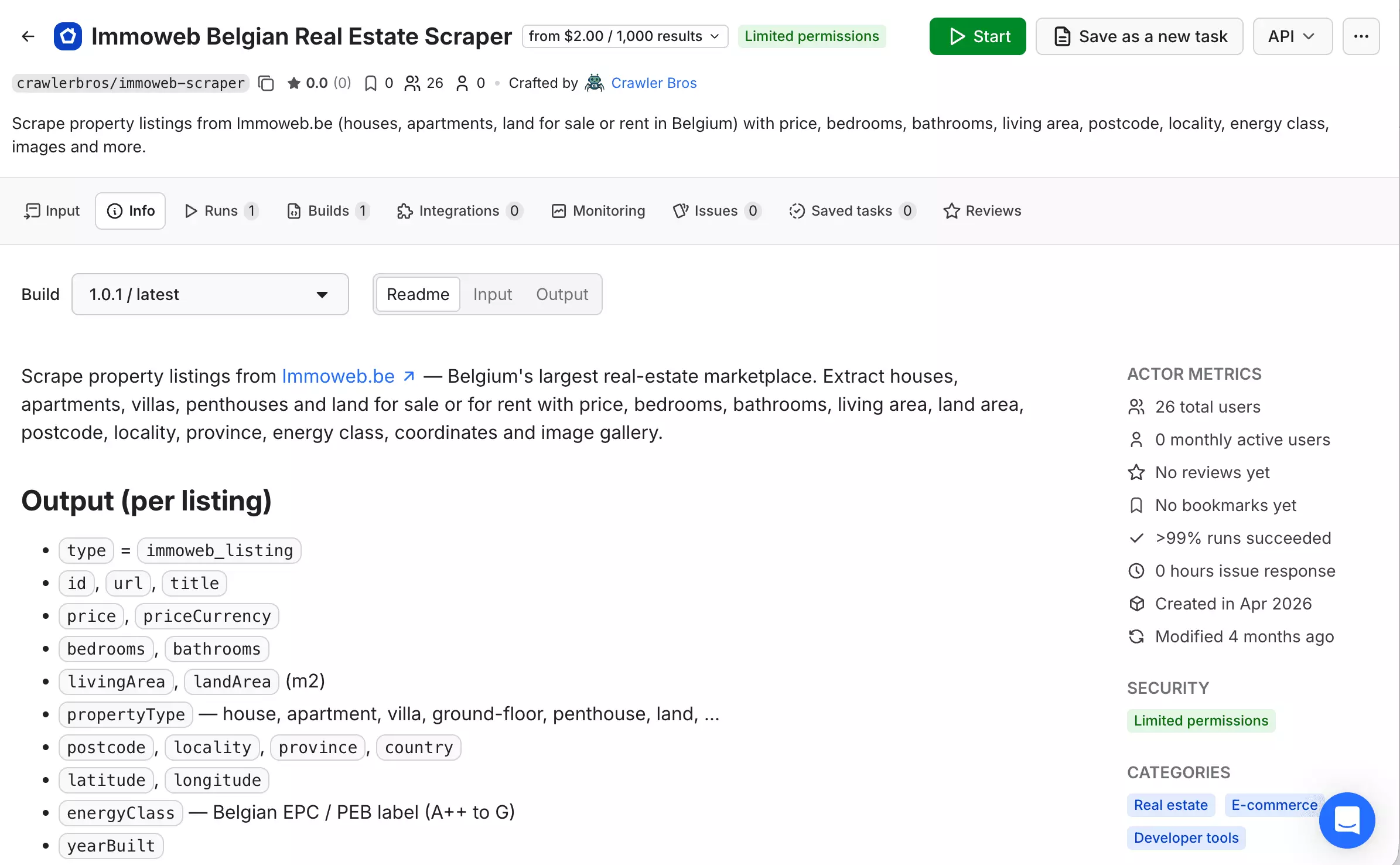
This Actor uses browser automation with a Belgian residential proxy rather than a lighter direct-request approach.
Why it didn't rank: the run stopped after an undocumented 270-second total execution budget.
That limited a single run to roughly 27 listings, regardless of the requested result count.
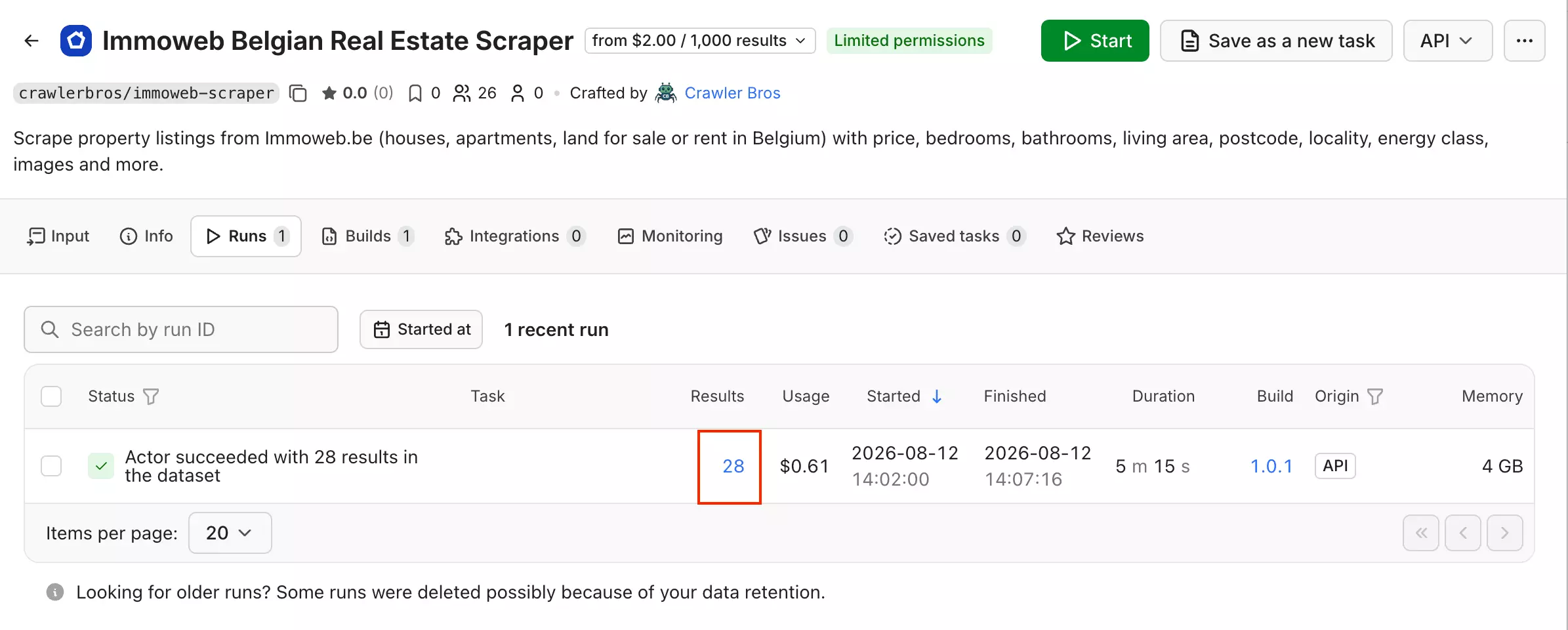
The measured cost was also about 8× higher than the headline per-result calculation once residential proxy bandwidth was included.
Its error reporting was better than most, though. Blocked sessions were written into the dataset instead of disappearing silently.
Still worth knowing: the browser-based approach works, but it is better suited to small repeated pulls than large single runs.
immoweb-scraper — feldeh
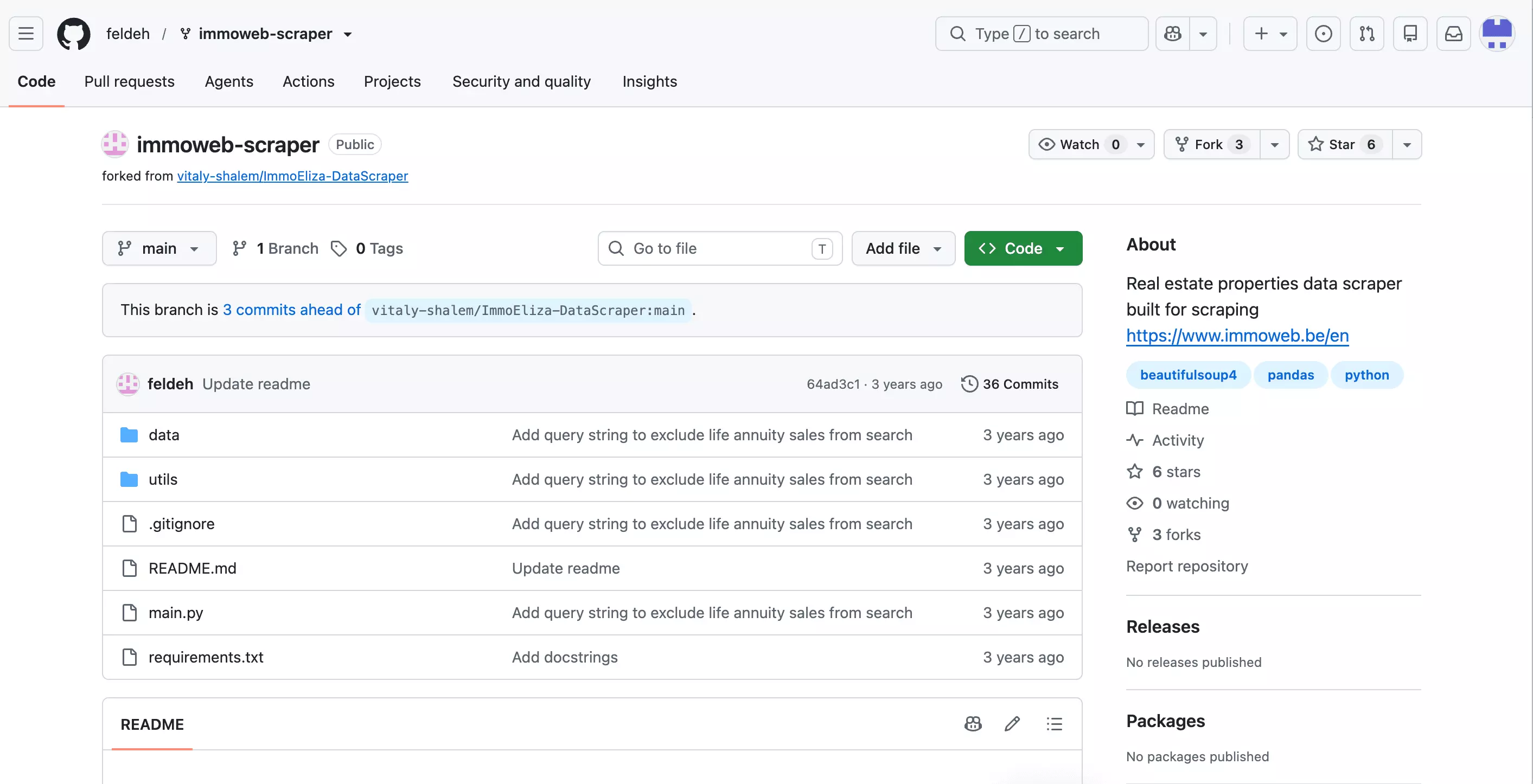
This public GitHub scraper is a lightweight Python project last updated in 2023, with no license or support channel.
Why it didn't rank: as published, it returned 0 of 1,000 listings because every detail-page request hit HTTP 403.
Getting it working required browser-style request headers and a source edit for the tested property type.
That makes it unsuitable for an out-of-the-box comparison with hosted tools.
Still worth knowing: once patched, it reached 458.33 listings/min... faster than either ranked scraper.
For developers willing to maintain their own code, that throughput is notable.
FAQ
Do these scrapers return agency phone numbers?
Yes, from both Apify actors. ivanvs and azzouzana both include phone or mobile data in their standard output, at 96.7% coverage.
lobstr.io reaches 96.6% with Get Listing Details, but basic mode returns none... phone fields don't exist in basic mode's schema at all, and enrichment costs 5× more.
Can I collect multiple Immoweb searches in one run?
With lobstr.io and Apify's ivanvs actor, yes. lobstr.io accepts multiple search URLs, including CSV or TXT bulk input. ivanvs also accepts multiple search URLs in a single run.
Apify's azzouzana actor doesn't. Its input schema takes one search URL per run, so batching means multiple separate runs.
What is the cheapest Immoweb scraper?
lobstr.io. Basic mode costs $0.50/1K at scale, versus $1.00/1K flat for Apify's azzouzana actor and about $3.01/1K for Apify's ivanvs actor.
That makes lobstr.io roughly 6× cheaper than ivanvs, and 2× cheaper than azzouzana.
What is the fastest Immoweb scraper?
Apify's ivanvs actor, among the ranked tools. It reached ~296 listings/min, about 7.6× faster than lobstr.io's baseline and 4.6× faster than azzouzana.
The patched GitHub scraper reached 458.33 listings/min, but failed as published and therefore was not ranked.
What is the best scraper for multi-unit or new-development research?
Apify's ivanvs and azzouzana actors, tied. Both captured 4,601 sub-units across 270 matched projects, including per-unit price, surface, bedrooms, floor, and sale status... verified identical, listing by listing.
lobstr.io returned the project shell, but no sub-unit breakdown.
Why are there two Apify actors in this comparison?
Because they're genuinely different tools that happen to scrape the same site. ivanvs and azzouzana use structurally different schemas, and azzouzana was originally excluded after a free-tier account capped it at 5 of 1,000 requested listings.
A retest on a paid account delivered the full 1,000/1,000, with data depth nearly matching ivanvs at a third of the cost... different enough on Cost, Speed, and Usability to earn its own ranked spot, not a footnote under ivanvs.
What is the best Immoweb scraper for developers on a budget?
For a working hosted option, lobstr.io is the better budget pick at $0.50/1K, with API, SDK, and CLI access.
If you need Apify-level data depth specifically, azzouzana at $1.00/1K is a cheaper alternative to ivanvs.
The GitHub scraper is free, but needs code fixes and ongoing maintenance.
Why isn't the feldeh GitHub scraper ranked?
Because it failed out of the box. All 1,000 detail-page requests returned HTTP 403, producing zero listings.
Getting it working required browser-style headers and a source edit for the tested property type.
Conclusion
Apify's ivanvs actor owns speed and coverage. It's the default pick if you want the widest tested coverage and fastest measured collection, and can live with nested output and higher cost.
Apify's azzouzana actor owns value for deep data. It delivers the highest data score, matches ivanvs on photo and multi-unit depth, and costs $1.00/1K. The trade-off is speed and one search URL per run.
lobstr.io owns cost, workflow simplicity, and support. It's the better fit if you want clean, low-cost collection and easier operations over maximum coverage and depth.
Three other tools were tested and cut. One returned zero results twice, another capped runs near 27 listings, and the open-source GitHub scraper failed as published.
The patched GitHub version later reached ~458 listings/min, but needing source-level fixes kept it outside the ranked comparison.
Pricing, scraper behavior, and available data can change... so I'll update this comparison when the numbers do.