Introducing lobstr.io API v2: Web Data for AI Agents
Today we're launching the lobstr.io API v2: 32 operations on 10 sites that your AI agent calls one at a time, with JSON back in seconds. v1 stays as it is.

By Sasha Bouloudnine
Founder @ lobstr.io
23 Nov 2026
5 min read
Contents
Today we're launching the lobstr.io API v2: 32 operations on 10 sites that your agent calls one at a time, with JSON back in seconds.
For five years, lobstr.io has been a point-and-click tool. That tool stays exactly as it is: if you use it today, nothing changes for you. In this post you'll learn:
- what the API v2 is, and what we took out on purpose;
- how a trip to Capri started it;
- how agents keep every operation fresh;
- why nothing changes on v1, apart from one word.
What the API v2 is: one call, JSON back
An operation is one action on one site: search places on Google Maps, list the reviews of a place, get a tweet. You call it, and the answer comes back in the same request.
curl https://api.lobstr.io/v2/run \
  -H "Authorization: Bearer $LOBSTR_API_KEY" \
  -H "content-type: application/json" \
  -d '{
    "source": "google_maps",
    "operation": "reviews/list",
    "options": {
      "place": "ChIJ39Y-tdg1fYcRQcZcBb499do",
      "sort": "newest"
    }
  }'
That call returns:
- 20 reviews, as JSON;
- what the call cost;
- the exact call for the next page.
Each operation has its own page in the store.
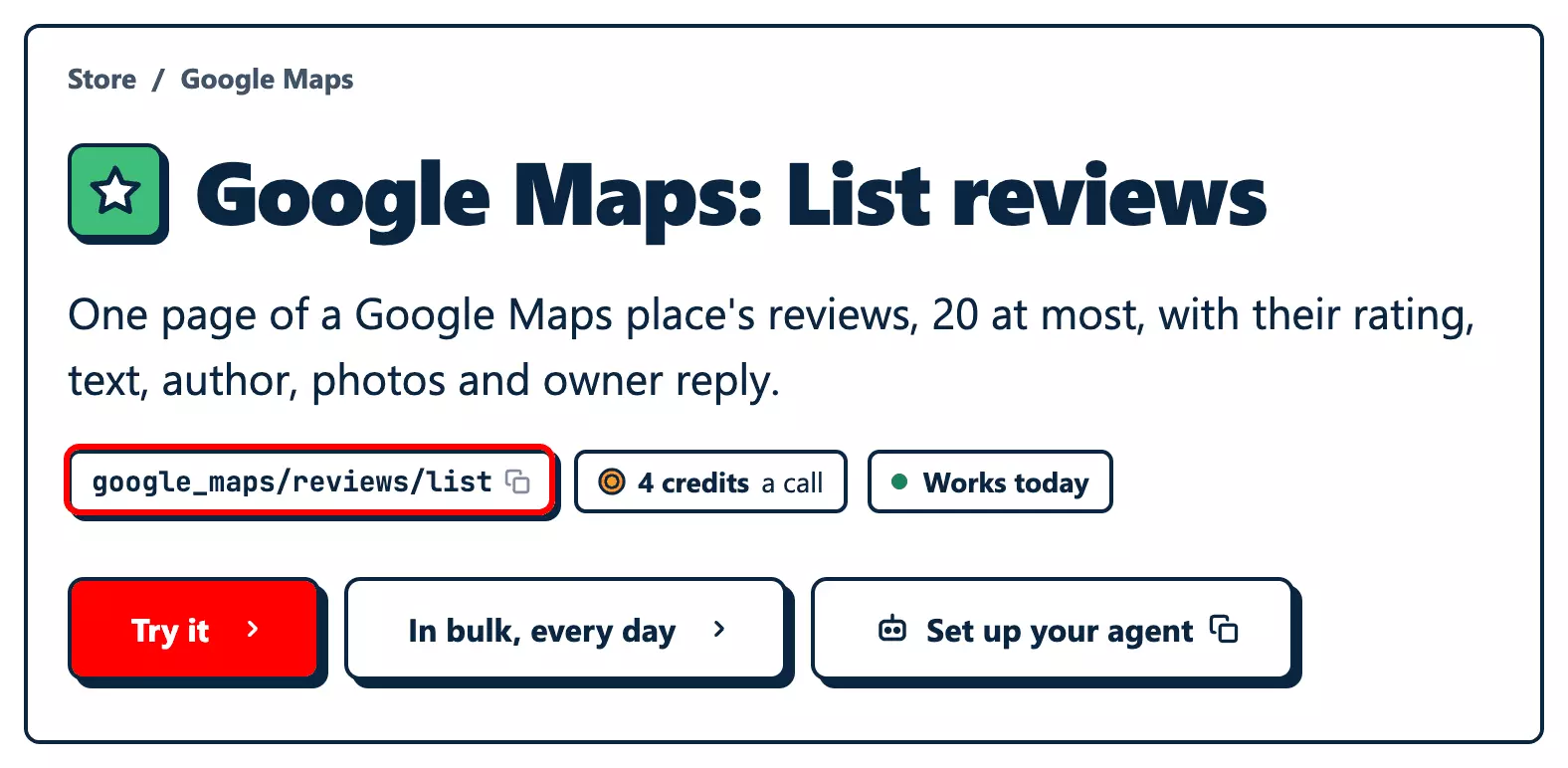
Three choices shape every operation.
Synchronous
Your agent gets its answer in the same request, in seconds. A batch makes you launch, wait, then collect: right for 50,000 tasks overnight, wrong in the middle of a thought.
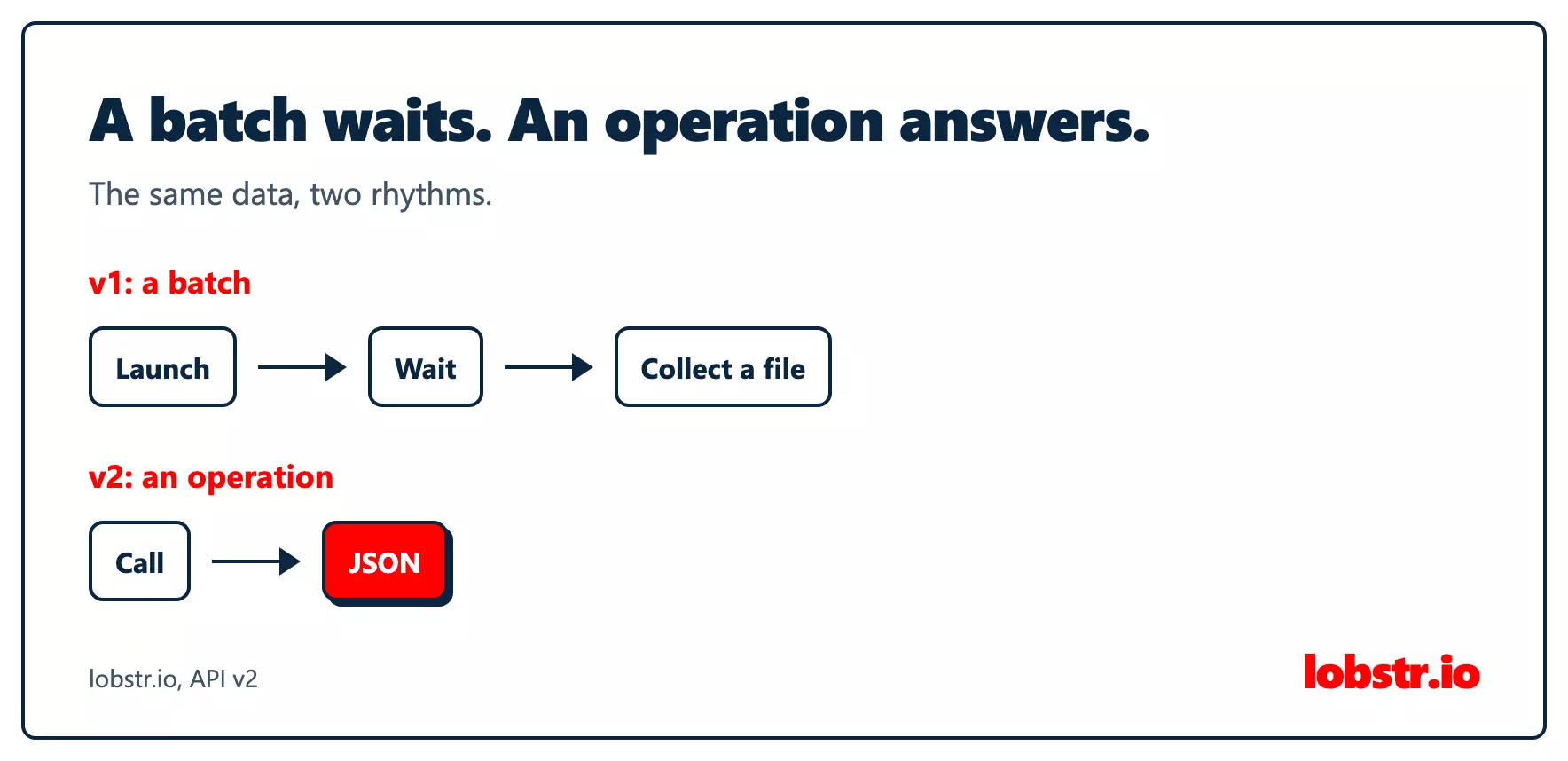
On google_maps/reviews/list, the median call takes 1.1 seconds.
JSON first
Your agent gets typed records: numbers as numbers, dates in UTC, and null when the site says nothing. There is no CSV to parse.
{
  "object": "review",
  "position": 1,
  "rating": {
    "value": 5,
    "scale": 5
  },
  "text": "The best croissant in the district.",
  "published_at": "2026-10-25T08:12:40Z",
  "owner_reply": null,
  "source_url": "https://www.google.com/maps?cid=15777584755905447489",
  "observed_at": "2026-10-26T09:00:00Z"
}
Every record has the same fields every time, and says where it was read and when.
Atomic operations, one contract each
An operation does one thing, and its name says which.

It is the grammar developers know from REST APIs, with four verbs so far: search, get, list and check. Each operation also ships with a contract in Markdown, versioned, with its changelog.
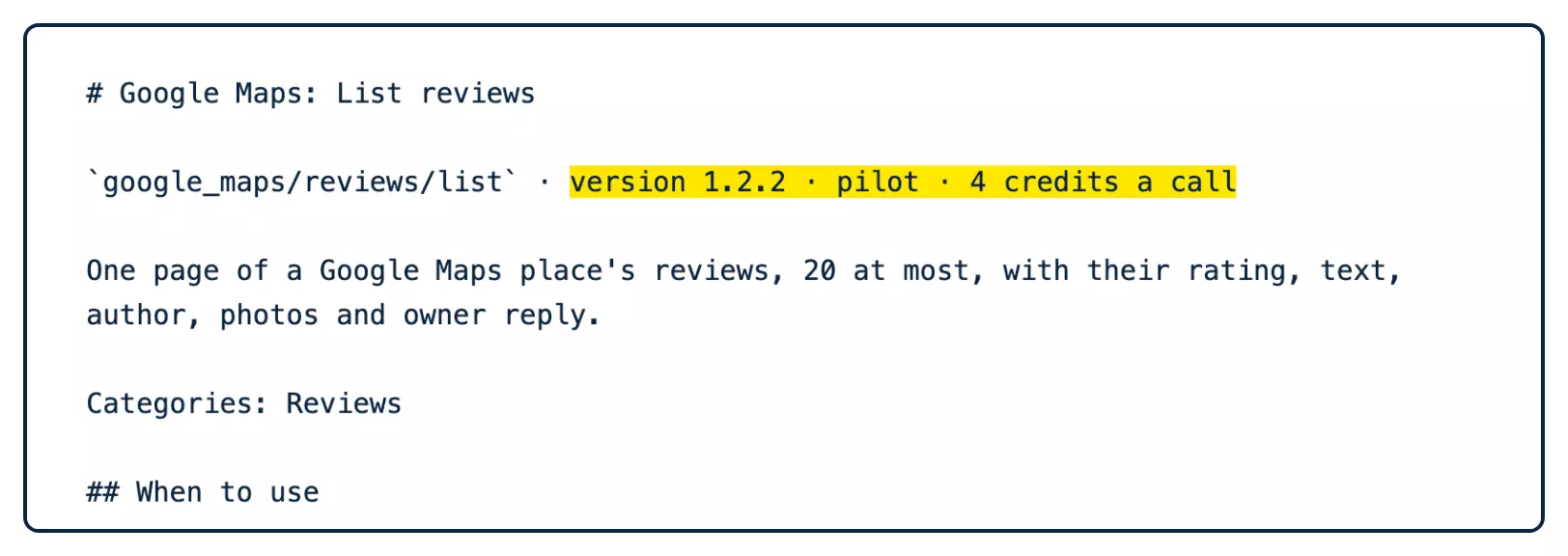
Agents plug in through the MCP server v2, the whole API in four tools:
claude mcp add --transport http lobstr https://api.lobstr.io/v2/mcp \
  --header "Authorization: Bearer YOUR_API_KEY"
The docs were rebuilt for it, with a page for agents, structured errors and a dated changelog.
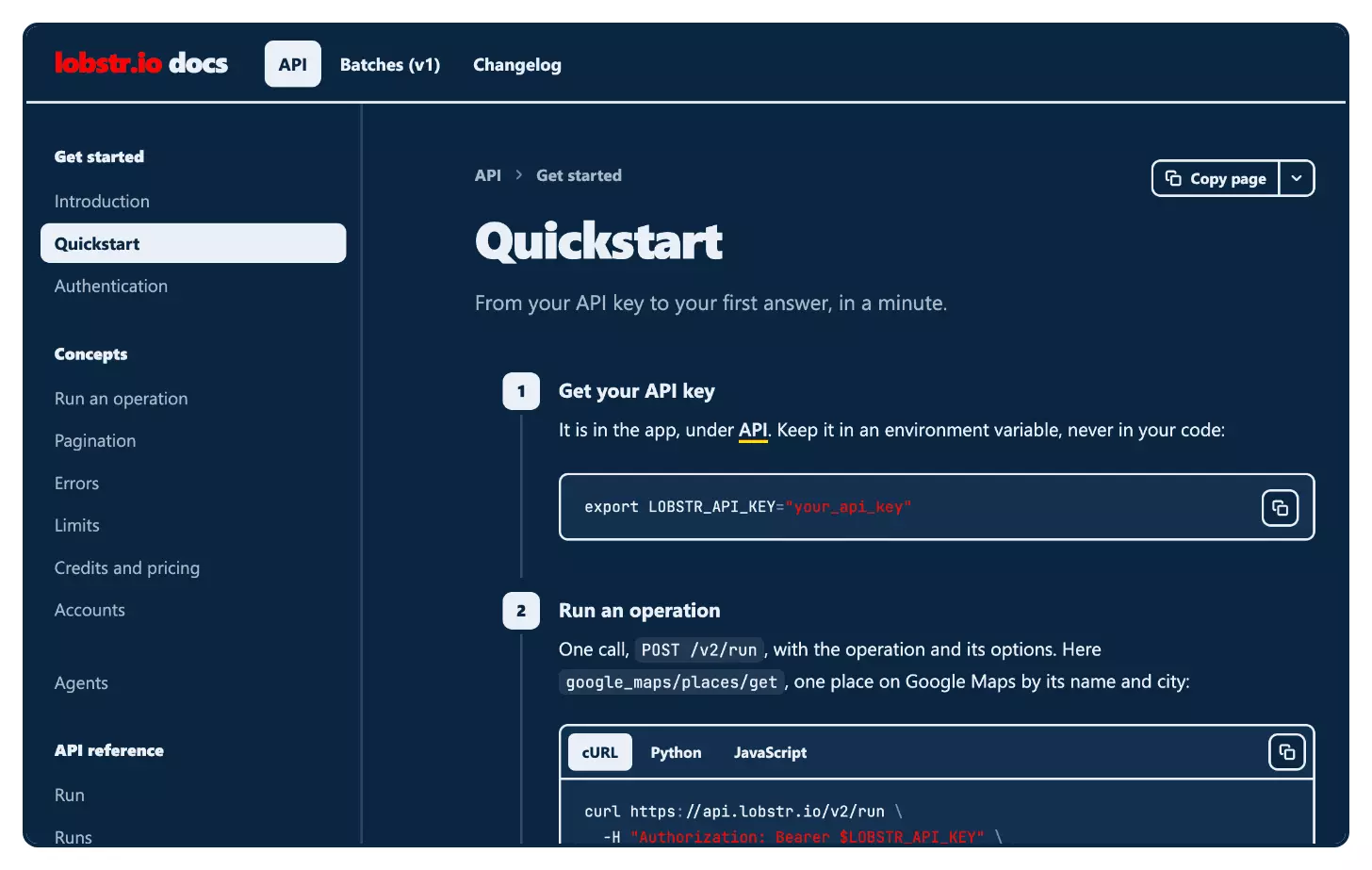
Pricing stays the same: your plan, your credits, your API key. Listing 20 Google reviews costs 4 credits, the same 0.2 credit a review as the scraper. An empty page and a failed call are free.
That is the product. The reason it exists is less technical: I wanted a weekend away.
How it started: a trip to Capri
This autumn I wanted to take my partner to Capri, and I wanted my agent to plan it: find the place, compare prices, check the reviews.
It struggled. Airbnb has no API an agent can call, so I handed it my browser.
That works, but it runs on my own machine, one tab at a time, and the agent has to read every page to find the data in it.
So I did what we do for a living: I turned Airbnb's search into an API call.
curl https://api.lobstr.io/v2/run \
  -H "Authorization: Bearer $LOBSTR_API_KEY" \
  -H "content-type: application/json" \
  -d '{
    "source": "airbnb",
    "operation": "homes/search",
    "options": {
      "search": "https://www.airbnb.com/s/Capri--Italy/homes?checkin=2027-05-14&checkout=2027-05-17&adults=2",
      "currency": "EUR"
    }
  }'
It came back with 18 homes in 2.8 seconds, for 1 credit. Then I ran the real job: for each home, its host and its 3 latest reviews. One agent with a browser, one with the API.
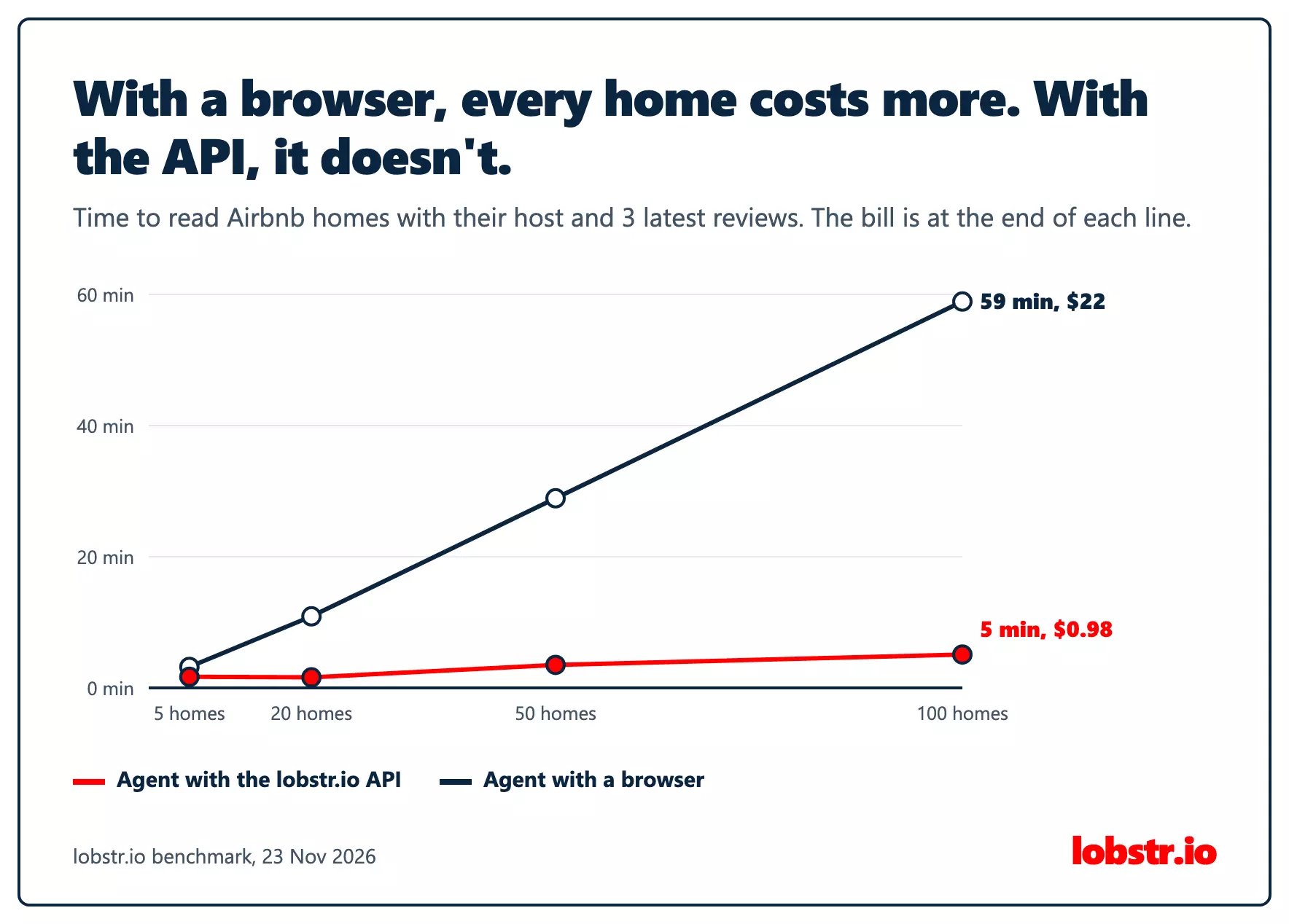
For 100 homes, the browser agent needs about an hour and $22. The API agent needs 5 minutes and less than a dollar.
Why? With a browser, the agent reads every page itself: each home adds 35 seconds and 21 cents. With the API, it stops reading at 20 homes. It writes a script and lets it run.
At that pace, 1,000 homes are 10 hours and $200 one way, 45 minutes and $4 the other.
One problem, one solution. Here is where we stayed; I took the photo from the terrace.

The lesson outlasted the trip: an agent that cannot book a weekend cannot do much on the web. Fixing that takes more than one operation, and it takes keeping each one alive.
Maintained by agents
Websites change all the time. An API over a website is only worth what it is worth this morning.
So every morning at 07:00 UTC, an agent opens a real browser and does each operation's real action, the way a person would.
We compare what the page asked its site with what our operation asks. Any gap opens a pull request, so we can fix it before a customer's call breaks. Here is one the agent opened on 18 November.
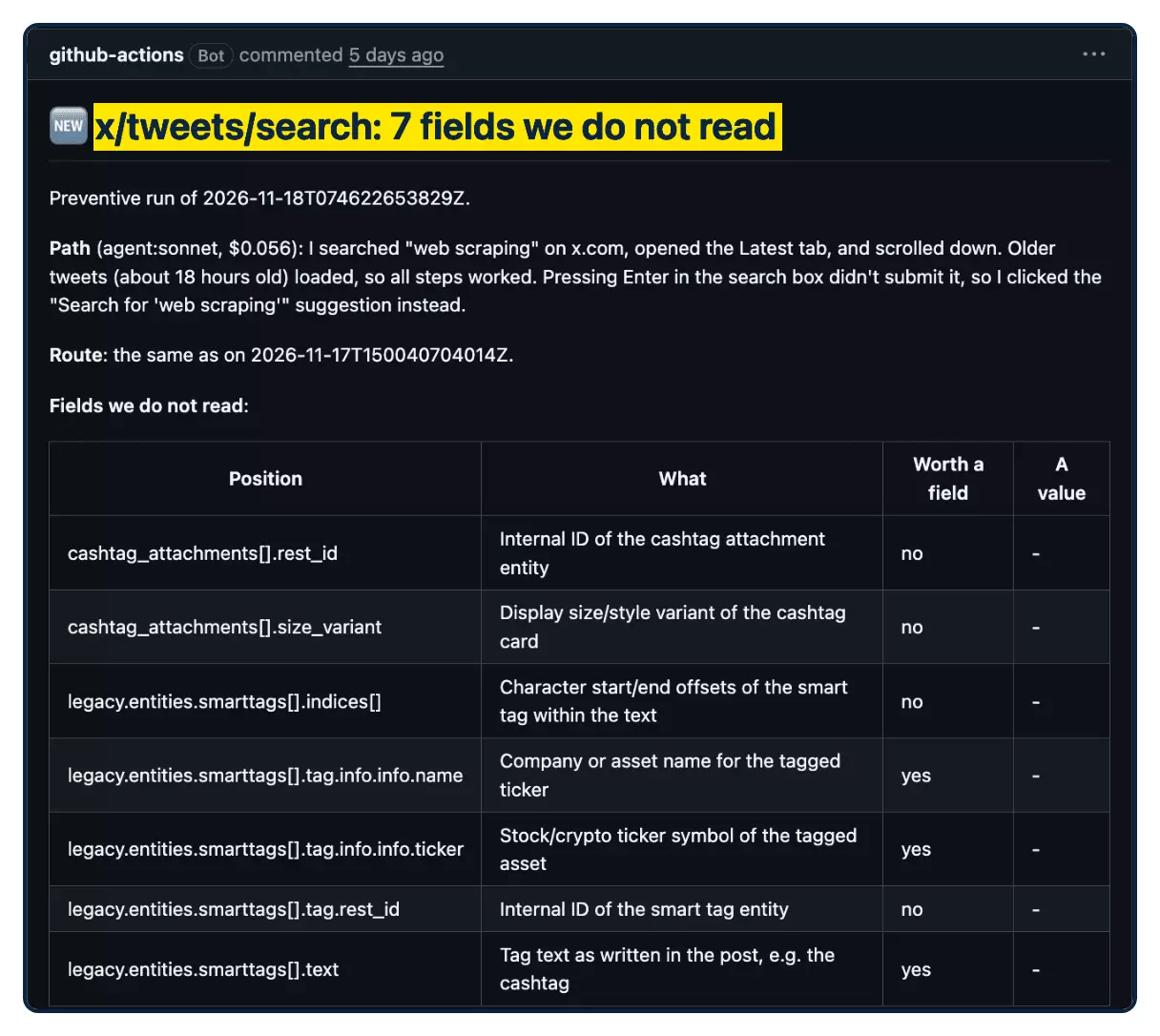
The result is public on each operation's page, and we commit to it: a 99.5% SLA, counted on every call.
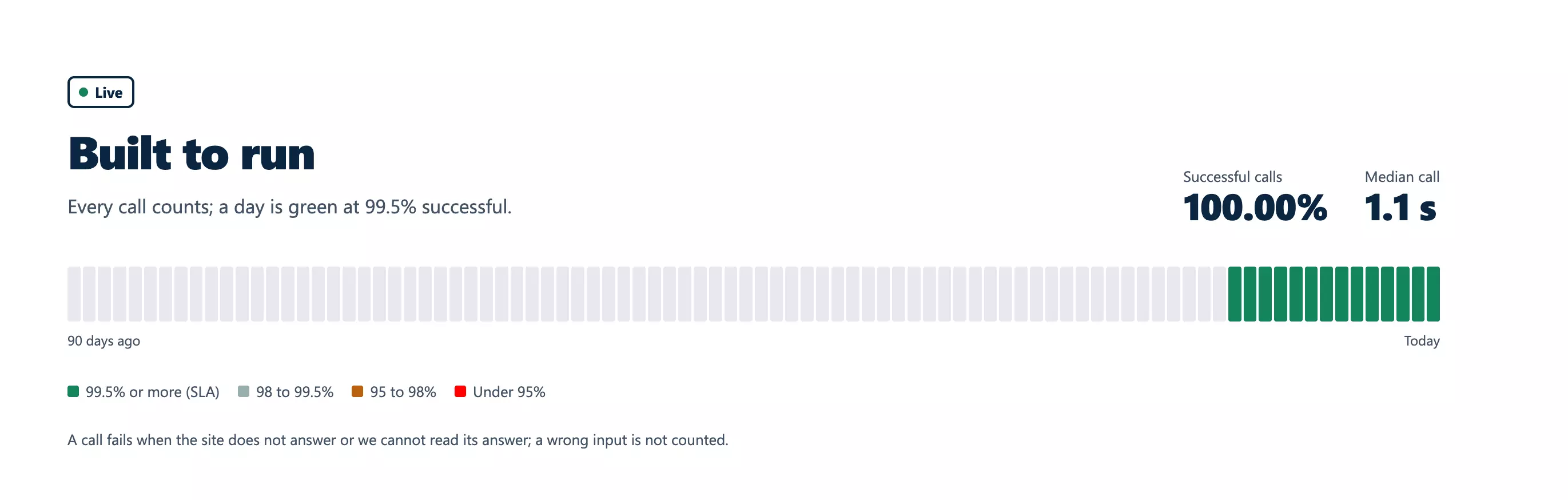
Data infrastructure for agents, maintained by agents. That is the standard we hold ourselves to.
Data infrastructure for the agents economy
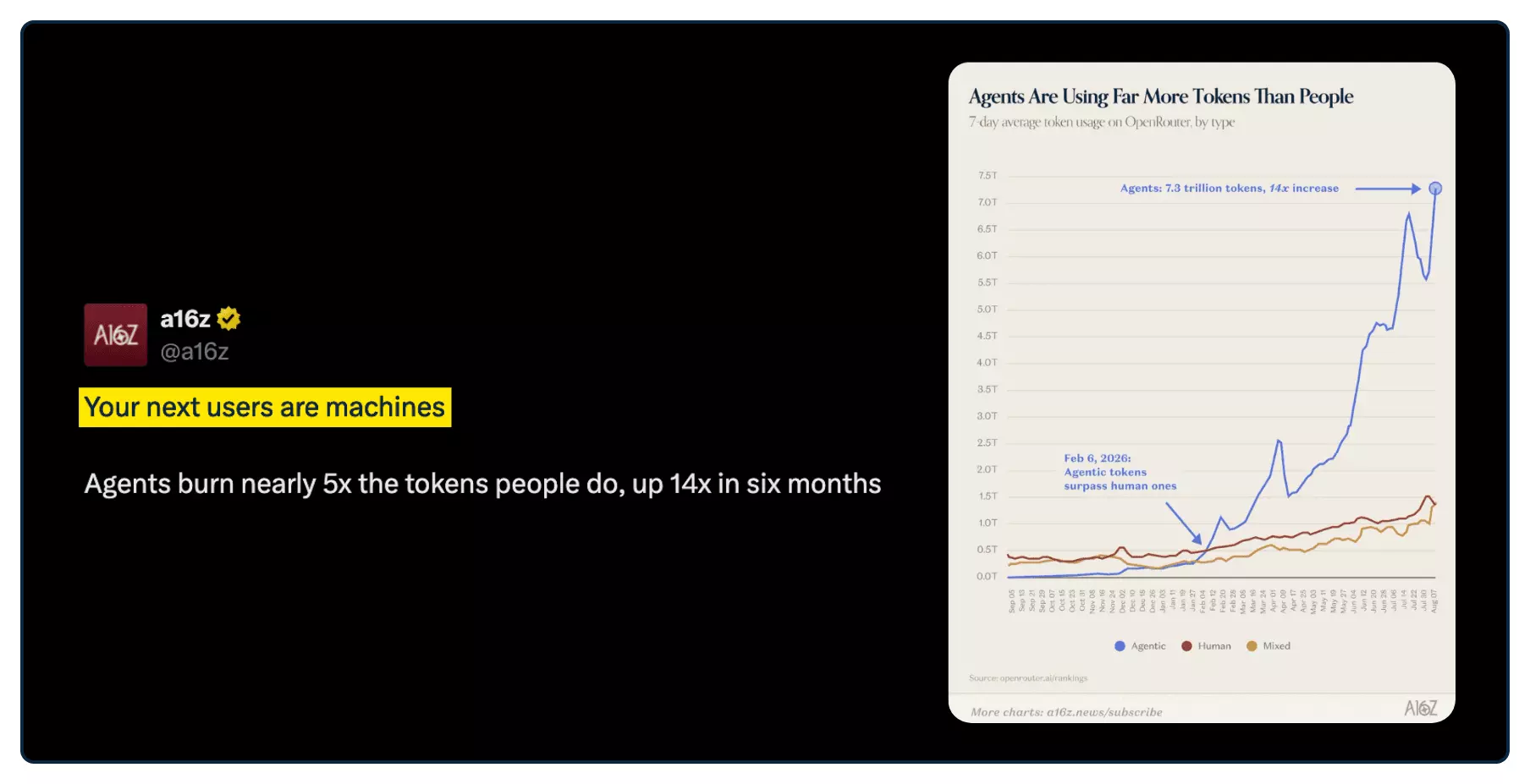
The economy we know is human first: a person opens a tool, does one action, gets one result. The next one runs on agents, steered by people. a16z put it in five words.
A soul, a body, and knowledge
An agent needs three things: a model to think with, a machine to act from, and knowledge of the world.
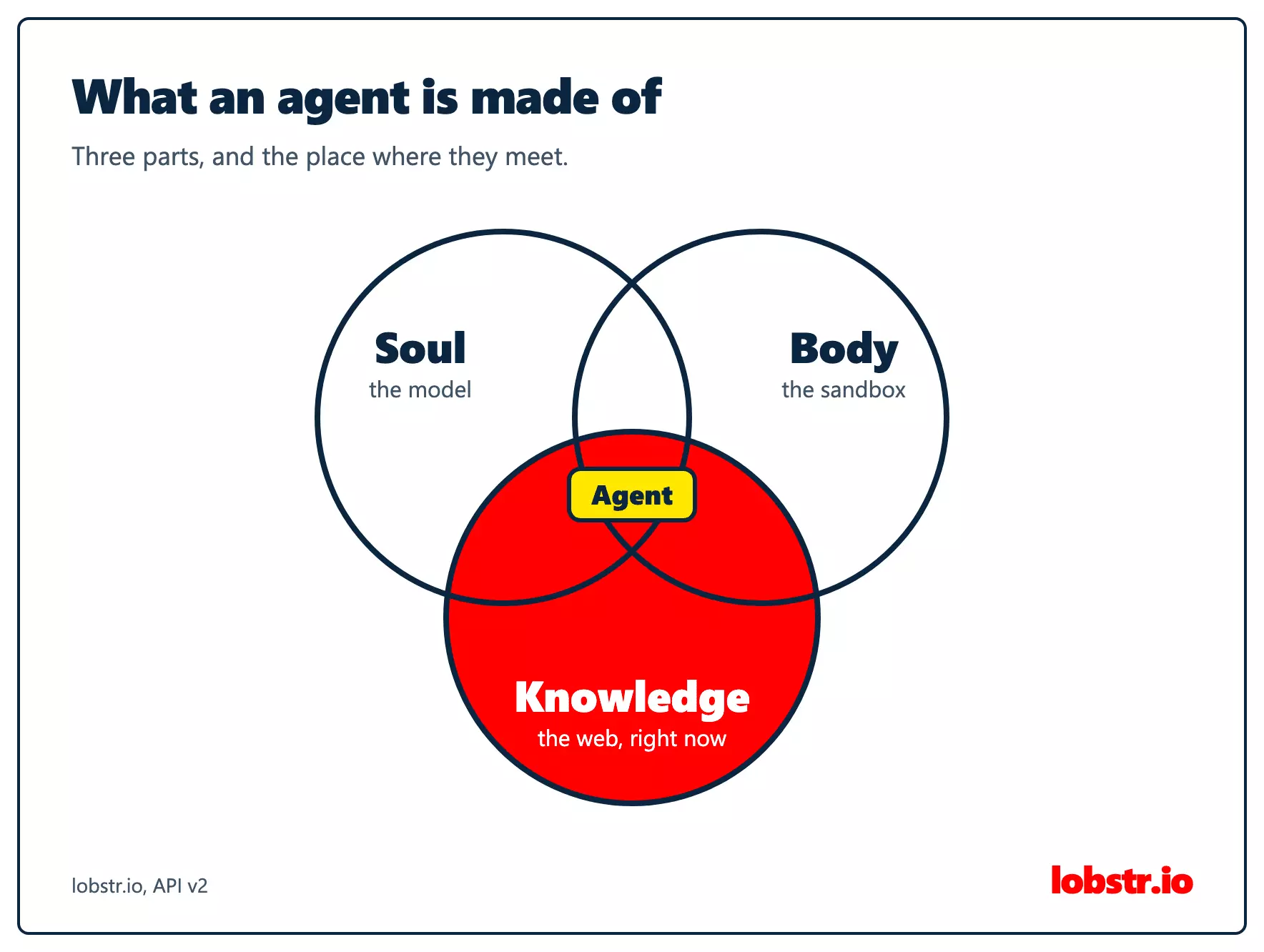
Not the knowledge a model was trained on, which is a stock. A contact with the web as it is right now. That third part is our job, and what your agent does with it is wide open:
- lead generation: it searches places on Google Maps, then reads each company's website for its emails;
- real estate investing: it runs a Leboncoin search every morning, then checks which listings are gone;
- social listening: it searches X for a brand, then reads the replies under each post.
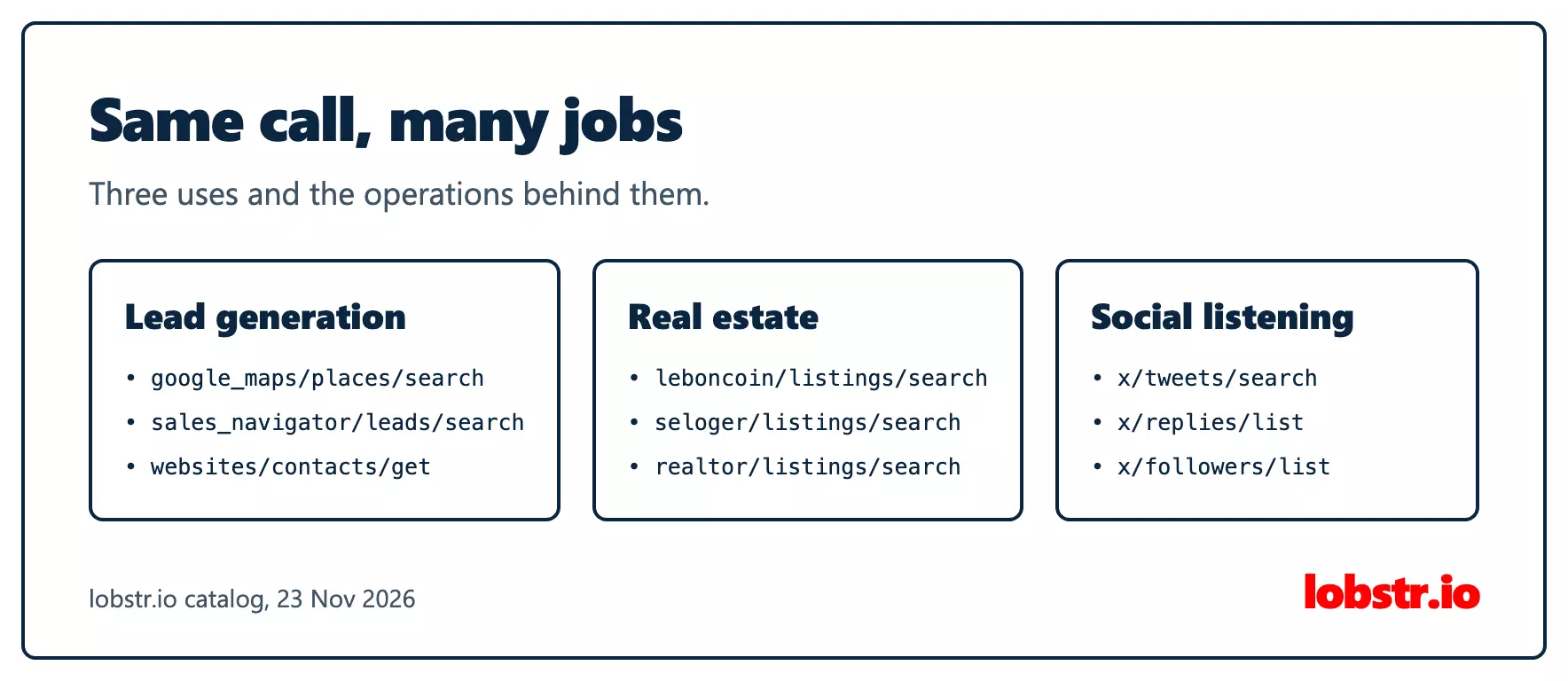
Our side is simple: public data should stay reachable, by people and by their agents.
That is the mission behind the API v2: make the web callable for agents.
Nothing changes on v1 (squids are now batches)
To everyone who uses lobstr.io today: thank you. You are the reason there is a v2 at all, and for you nothing changes.
Your scrapers, tasks, schedules and exports run as they did yesterday. Same plans, same credits, same price.
One word moves: what the app called squids, it now calls batches.
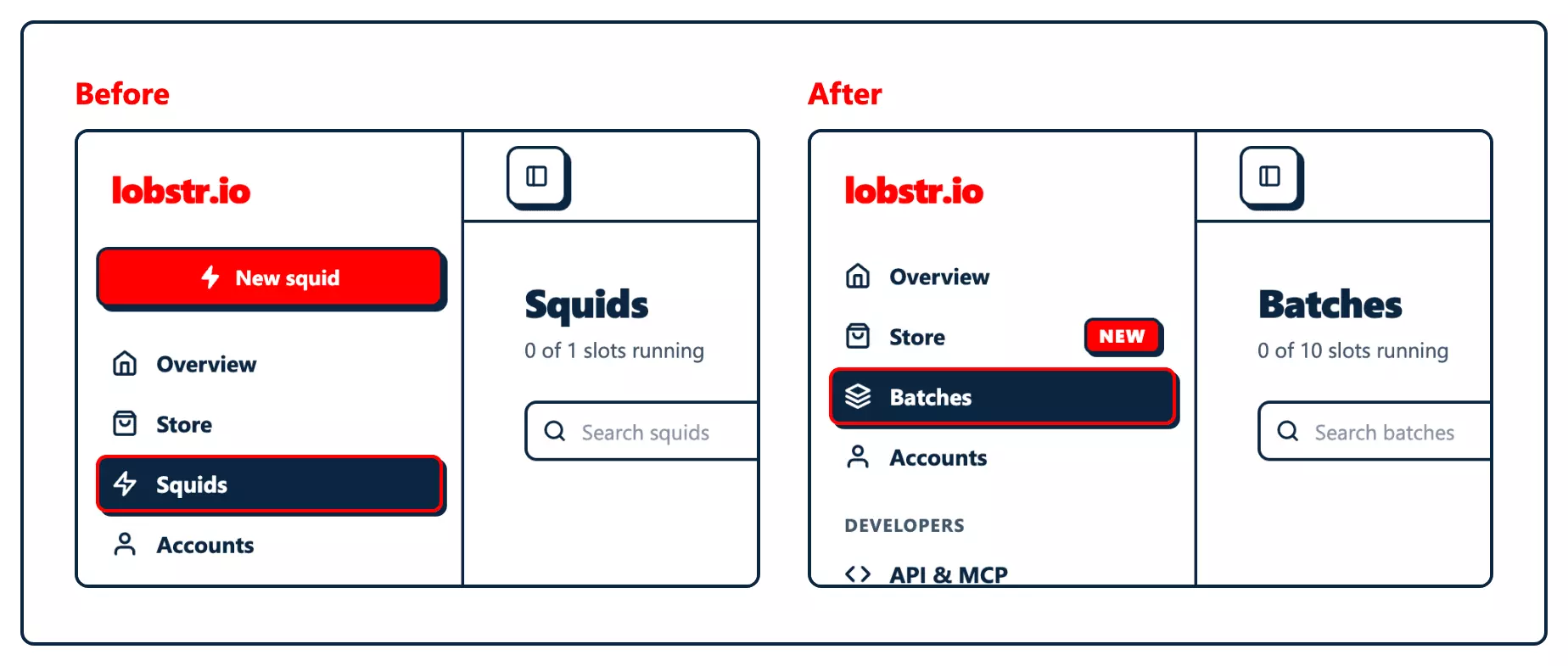
The API v1 does not move at all. Its routes still say /v1/squids, so your scripts, Make scenarios and n8n workflows keep working untouched.
Why rename, then? Because the app now has two doors: Batches for work in bulk, Operations for a single call.
Get started
The API v2 is small today: 32 operations, listed here. Our goal is 10,000 by the end of 2027.
Your API key already works, and the plans are the same. Is there a site you want as an API? Ping me on LinkedIn, I read everything.
The tweet in this post was read with x/tweets/get, and Capri with airbnb/homes/search, 1 credit a call. The web, one call at a time.
Ready to scrape?
- 100 free credits every month
- No card needed
- API and MCP included
Are you an AI agent? Read lobstr.io/llms.txt
Keep reading
- Sasha Bouloudnine28 Apr 2023CodeHow to scrape any product page with Python and ChatGPT?
- Sasha Bouloudnine25 Oct 2026Product Updates — October 2026
- Sasha Bouloudnine25 Oct 2026Product Updates — September 2026
 Shehriar Awan23 Sept 2026Product Updates — August 2026
- Shehriar Awan11 Aug 2026Product Updates — July 2026